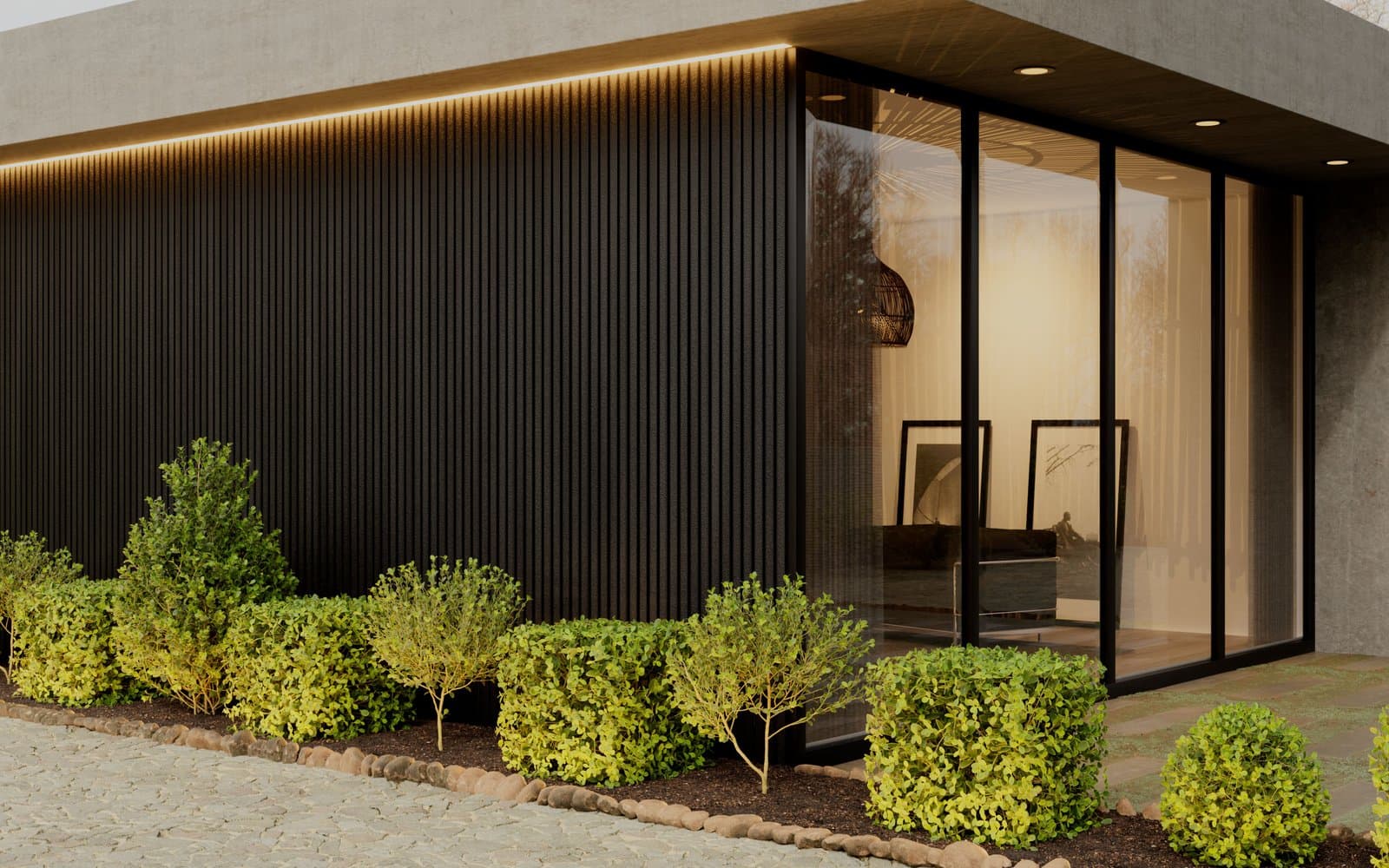
Start with Physical Samples Under Natural Light
The most effective way to evaluate siding and cladding colors and finishes is by observing physical samples at your project site. Digital representations and printed brochures can offer a preliminary idea, but they cannot fully replicate how natural light interacts with the material's texture and color.
Request samples of your preferred materials, such as thermally modified wood, Brazilian hardwood, or Norx composite cladding. Place these samples directly on the wall or in the intended area where they will be installed. Observe them at different times of day—morning, midday, and late afternoon—to see how changing light conditions affect their appearance. Note how shadows play across profiles and how the sun illuminates the surface. This step is crucial for understanding the true visual impact.
Understand Material-Specific Color Characteristics
Different siding and cladding materials possess inherent color characteristics and how they accept finishes. For example, thermally modified wood, like Ayous or Ash, often features a rich, consistent tone that can be further enhanced or protected with various finishes. Its modification process can contribute to a more stable color over time compared to untreated wood. Maximo Accoya, an acetylated wood product, also offers stability and can be painted or stained in a wide range of colors.
Brazilian hardwoods such as Ipe, Cumaru, Garapa, Angelim, Jatoba, and Tigerwood each have distinct natural colors, from golden to deep reds and varied grain patterns. These natural tones can deepen or lighten with exposure to UV light and weathering. Norx composite cladding offers a consistent color palette, often designed to mimic natural wood or modern solid tones, providing predictable results. The choice of material directly influences the base color and how it will evolve.
Evaluate the Impact of Site-Specific Lighting
The lighting conditions at your project site are unique and will profoundly influence how siding and cladding colors are perceived. Consider the orientation of the walls: a north-facing wall will receive indirect, cooler light, making colors appear darker and more muted. South-facing walls, conversely, will experience intense, warm light, which can make colors appear brighter or lighter.
East-facing walls will be bathed in warm morning light, while west-facing walls will catch the intense, often reddish light of the late afternoon. Overcast days will present colors differently than bright, sunny days. Take photos of your samples on-site at various times and under different weather conditions to capture these nuances. This visual record can be invaluable when making your final decision.
Consider the Surrounding Environment and Context
The colors and finishes you choose should complement the existing elements of your property and its surroundings. Look at the roof color, trim, window frames, and any stone or brick elements. Do you want the siding to blend in harmoniously or create a striking contrast?
Also, observe the natural environment: the colors of trees, landscaping, and neighboring buildings. A facade that looks stunning in a rural setting might not suit an urban environment, and vice-versa. For instance, a dark Norx London Black composite cladding might create a modern, bold statement in a contemporary setting, while a lighter thermally modified Ayous cladding could offer a softer, more natural appearance. The goal is to create a cohesive and visually pleasing overall impression.
Worked Example: Selecting Siding for a South-Facing Wall
Imagine a project involving a single-story, south-facing residential wall, approximately 20 feet wide by 9 feet high. The homeowner desires a modern aesthetic with a natural wood look. They are considering two options: Thermally Modified Ash with a clear finish (to maintain its light, warm tone) and Maximo Accoya with a light gray stain.
On initial review of small samples indoors, the Ash appears light and airy, while the Accoya with stain looks sophisticated. However, when samples (each 24 inches long) are placed on the actual south-facing wall:
1. **Midday Sun (bright, direct):** The Ash, with its clear finish, reflects a significant amount of light, appearing almost bleached out and lighter than anticipated. The grain is less defined. The light gray stained Accoya, under the same direct sun, appears much lighter than indoors, almost white, with subtle hints of gray.
2. **Late Afternoon Sun (warm, indirect):** The Ash's natural warm tones are enhanced, and the grain becomes more visible, giving it a richer appearance. The light gray Accoya takes on a warmer, almost beige-gray hue due to the golden hour light, still appearing lighter than its indoor sample.
This observation reveals that the south-facing exposure significantly lightens both options under direct sun. The homeowner, seeking a more defined natural wood look, realizes the clear-finished Ash might be too bright at midday. They decide to explore a slightly darker stain for the Ash or a medium-gray stain for the Accoya to counteract the intense southern light and achieve a more consistent appearance throughout the day. This hypothetical example highlights the importance of on-site evaluation for accurate color perception.
For this 180 square foot wall, if using 6-inch wide (nominal) boards, approximately 360 linear feet of material would be needed. This translates to roughly 45 pieces of 8-foot-long boards, before accounting for cuts and waste. The samples themselves, being 24 inches, are illustrative and not structural.
Before you order
- Obtain physical samples of all preferred siding and cladding materials and finishes.
- Place samples on the actual project wall(s) or intended application area.
- Observe samples at different times of day (morning, midday, afternoon) and under varying weather conditions (sunny, overcast).
- Take photographs of samples on-site for later comparison and discussion.
- Consider the orientation of the wall(s) and how it affects light exposure (north, south, east, west).
- Evaluate how the chosen color/finish complements existing architectural elements (roof, trim, windows).
- Assess harmony with the surrounding natural and built environment.
- Decide if you want the siding to blend or contrast with other elements.
- Confirm the long-term appearance: will the material weather or change color over time?
- Review manufacturer guidelines for any recommended finishes or treatments for color retention.
Confirm installation details, approved uses and warranty terms in the current instructions for the exact product and profile. Your installer should verify the substrate, structure and applicable project requirements.
Questions to help you decide
How does surface texture influence color perception?
Surface texture plays a significant role. A smooth finish will reflect more light, making a color appear brighter and potentially lighter. A rougher or textured finish will absorb more light, making the same color appear darker and richer, with more pronounced shadows and depth. For example, a deeply grooved cladding profile will cast more shadows, impacting the overall perceived color.
Can I use interior paint color samples for exterior siding?
It is not recommended to use interior paint color samples for exterior siding. Exterior paints and stains are formulated differently to withstand outdoor elements, and their color pigments are designed to perform under natural light, which is much more intense and varied than indoor lighting. Always use actual exterior product samples or paint swatches specifically designed for outdoor use.
How do different finishes (e.g., clear, stain, paint) affect the final color?
A clear finish will enhance the natural color and grain of the wood, offering protection without significantly altering the tone. Stains add pigment while allowing some of the wood grain to show through, providing a translucent color. Paint, on the other hand, creates an opaque layer, completely covering the natural wood color and grain with a solid color. The choice depends on whether you want to highlight the material's natural beauty or achieve a uniform, specific color.
Ready to Plan Your Siding and Cladding Project?
Request a material quote with your project dimensions, exact profile preferences, and ZIP code. Confirm current availability and service options for your chosen siding and cladding products.
Request a material quote →