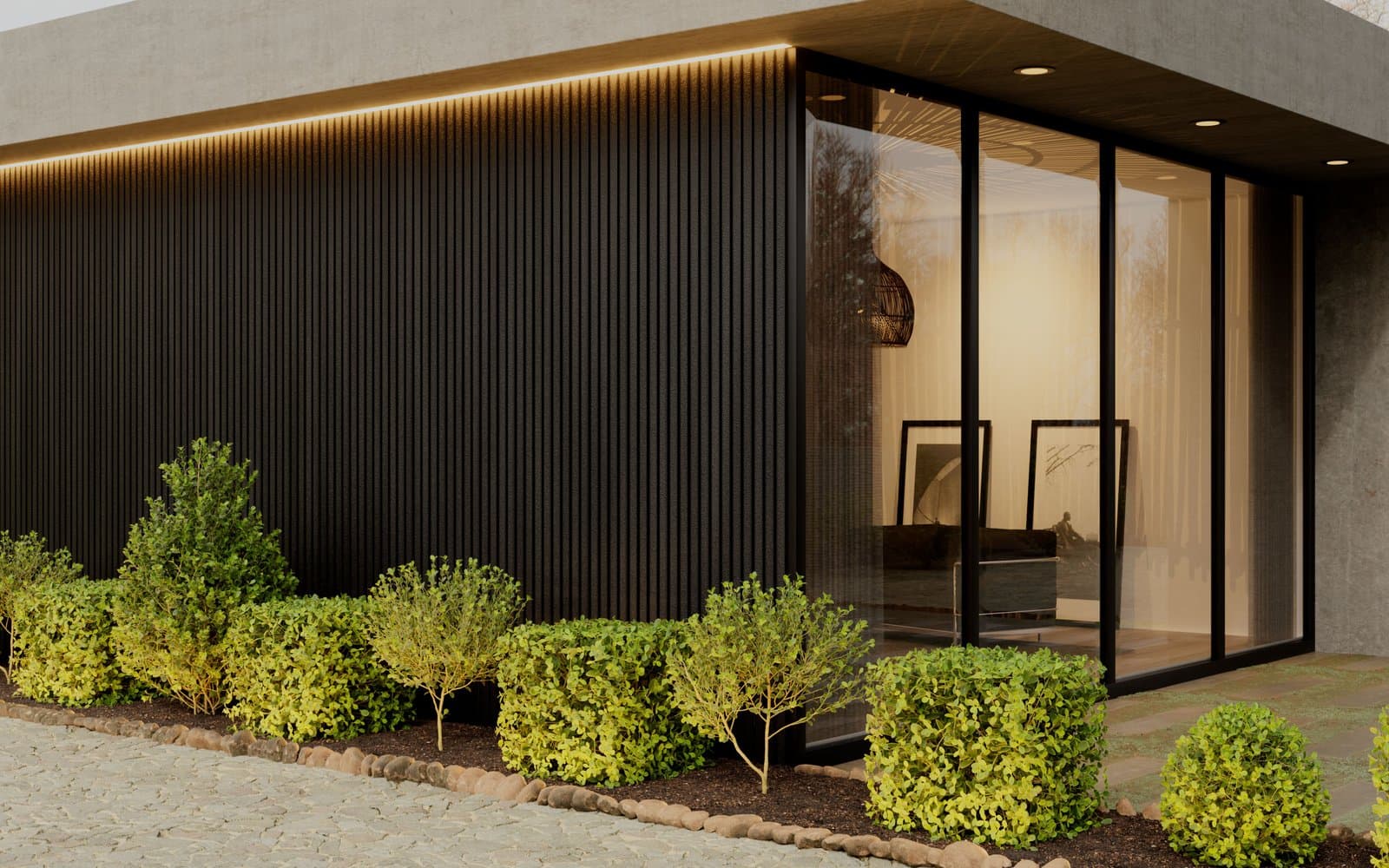
The Importance of Natural and Artificial Lighting
The way light interacts with siding and cladding samples is perhaps the most crucial factor in selection. What appears as a rich, deep tone indoors under artificial light might look entirely different in direct sunlight or overcast conditions. For instance, a thermally modified Ayous cladding might show subtle variations in its natural color palette when viewed in morning light versus late afternoon.
When evaluating samples, observe them at different times of day and under varying weather conditions if possible. If the material is for an interior feature wall, consider both natural light from windows and the specific artificial lighting fixtures that will be used in the space. Darker materials, such as a Norx composite cladding in a London Black finish, can absorb more light, appearing even darker in shaded areas, while lighter materials like thermally modified Clear Radiata might reflect more, changing their perceived warmth or coolness. Hold samples vertically, as they will be installed, to best understand how shadows and highlights will play across their surface.
Assessing Texture and Profile
Beyond color, the texture and profile of siding and cladding contribute significantly to its overall appearance and character. A smooth-faced board will reflect light differently than a textured or grooved profile. For example, a Brazilian hardwood like Ipe or Cumaru may have a naturally smoother surface, while some thermally modified woods might retain a subtle grain that adds depth.
Consider how the chosen profile will create shadow lines. A shiplap or tongue-and-groove profile will cast distinct shadows, influencing the perceived depth and rhythm of the wall. Hold multiple samples together to visualize how the repeating pattern will look across a larger area. Run your hand over the samples to feel the texture; this tactile experience can inform your decision, especially for accessible interior walls or entryways.
Harmonizing with Adjacent Finishes
Siding and cladding rarely stand alone. They are almost always paired with other materials such as windows, doors, trim, roofing, stone, stucco, or other wall finishes. Bring samples of these adjacent finishes to compare with your siding and cladding options. A Maximo Accoya sample, known for its stability and consistent finish, should be evaluated next to your window frame color, gutter material, or even a sample of the landscaping stone.
Pay attention to the undertones of each material. A warm-toned wood might clash with a cool-toned paint or metal accent, even if the primary colors seem compatible. The goal is to create a cohesive palette where all elements complement each other. This step is vital for both exterior facades and interior feature walls, where flooring, furniture, and other decor elements also come into play.
Understanding Product Documentation and Labels
Each physical sample should come with clear product documentation. This typically includes the material type (e.g., Scandinavian Thermally Modified Wood, Maximo Accoya, Norx composite), its specific profile (e.g., shiplap, tongue-and-groove), dimensions, and any pre-finishing details. Do not rely solely on the appearance of the sample; verify that the label matches your project requirements.
For example, if you are considering thermally modified Ash for an architectural board application, confirm the sample label specifies 'thermally modified Ash' and the correct dimensions. Different species, even within the same product family, can have subtle differences in grain, color, and density. Always cross-reference the sample with the product specifications provided by Lumber Plus for accuracy. This also helps in understanding potential variations in appearance over time, such as weathering or patination.
A Hypothetical Sample Evaluation Scenario
Consider a project where a homeowner is selecting siding for a 10-foot by 20-foot exterior wall on the west side of their house, exposed to afternoon sun. They are deciding between two options: thermally modified Ayous cladding and Norx composite cladding in a 'Navona Black' finish. They have also selected a dark bronze aluminum window frame.
Upon receiving samples, the homeowner places both vertically against the existing wall. In the morning, the Ayous sample shows a warm, inviting tone, while the Navona Black Norx appears deep and uniform. As the afternoon sun hits, the Ayous reveals more of its subtle grain pattern and a slightly lighter, almost golden hue. The Norx, however, shows a slight sheen under direct light that wasn't apparent indoors, and the dark bronze window frame blends seamlessly with its deep tone, creating a monolithic look. The homeowner observes that the texture of the Ayous provides a more organic feel, while the Norx offers a sleek, modern aesthetic. By evaluating the samples across different lighting and against the actual window frame, they can make an informed decision that aligns with both their aesthetic preference and the practical realities of the wall's sun exposure.
Complementary Products for a Complete Wall System
Selecting the right siding or cladding is one part of a complete wall system. Consider how your chosen material integrates with other components. For thermally modified wood products, appropriate fasteners and a rainscreen assembly might be necessary to ensure long-term performance. Explore options like our selection of Thermally Modified Wood to understand the full range of species and profiles. For composite options, consider the specific installation system recommended by the manufacturer, such as those associated with Norx composite cladding, which can offer specific aesthetic and functional benefits.
Don't forget the importance of proper substructure. Whether you're using Maximo Accoya or a Brazilian hardwood, the support system behind the cladding is critical for stability and longevity. Consult with your contractor or project manager to ensure all components of your wall system are compatible and specified correctly.
Before you order
- Obtain physical samples of all siding/cladding options.
- View samples in varying natural light conditions (morning, noon, afternoon, overcast).
- View samples under proposed artificial lighting (for interior applications).
- Hold samples vertically against the intended wall surface.
- Compare samples against all adjacent finishes (windows, doors, trim, other wall materials).
- Feel the texture of each sample to understand its tactile quality.
- Confirm the product identity, profile, and dimensions on the sample label match your specifications.
- Consider how shadow lines will be created by the chosen profile.
- Discuss long-term appearance changes (e.g., weathering) with your supplier.
Confirm installation details, approved uses and warranty terms in the current instructions for the exact product and profile. Your installer should verify the substrate, structure and applicable project requirements.
Questions to help you decide
How many samples should I request for a project?
It is advisable to request at least two to three samples of each material you are seriously considering. This allows you to place them in different areas of your project, compare them side-by-side, and observe them under various lighting conditions simultaneously.
Should I view samples horizontally or vertically?
Always view siding and cladding samples vertically, as this mimics their installed orientation on a wall. This is crucial for understanding how light will reflect off the surface and how shadow lines will be cast by the profile. The appearance can change significantly when a material is viewed flat versus upright.
What if the sample doesn't perfectly match the delivered product?
While suppliers strive for consistency, natural wood products, in particular, can exhibit variations in grain, color, and knots. Samples provide a representative indication of the material's typical appearance. Discuss expected variations with your supplier and review product specifications to understand acceptable ranges. For manufactured products like composite cladding, consistency is generally higher, but minor batch variations can still occur.
Ready to Select Your Siding and Cladding?
Request a material quote with your project dimensions, exact profile preferences, and ZIP code to confirm current availability and service options. Our team can assist you in making the best choice for your project.
Request a material quote →