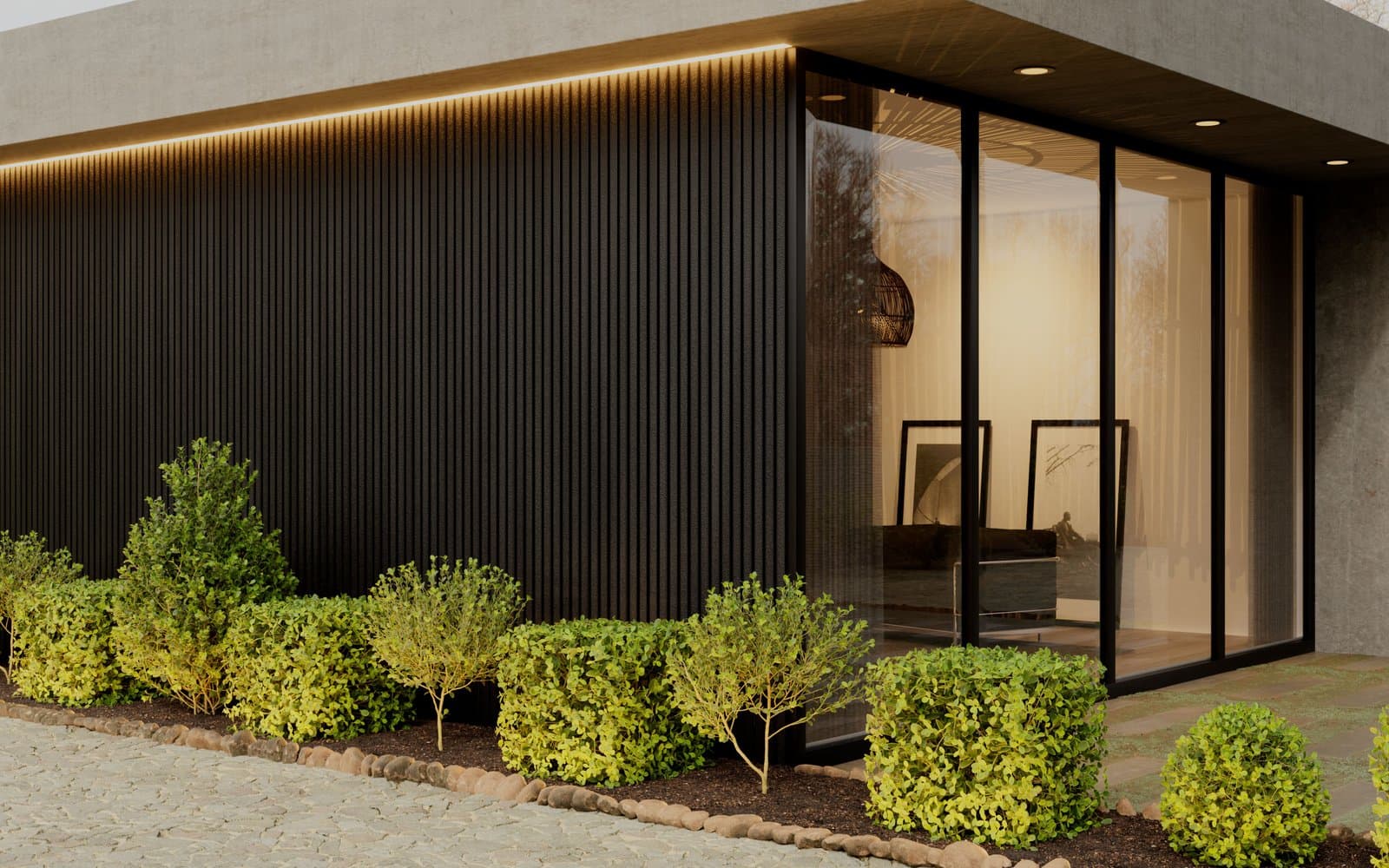
Understanding the Hospitality Wall Environment
Hospitality walls are more than just structural elements; they are integral to the guest experience and brand identity. They often face unique challenges, including potential for scuffs and impacts in high-traffic zones, exposure to varied climates, and the need for easy cleaning and maintenance. The material chosen must not only look appealing but also be robust enough to handle these demands.
Consider the specific function of the wall: Is it an exterior facade exposed to weather, an interior feature wall in a lobby, or part of a covered outdoor dining area? Each scenario presents different requirements for durability, moisture resistance, and aesthetic impact. For example, a restaurant's exterior cladding might need to resist grease and food stains, while a hotel lobby wall could prioritize acoustic properties and a luxurious finish. Selecting materials that align with these operational realities is crucial for a successful project.
Material Options for Hospitality Walls
Lumber Plus offers a range of siding and cladding materials suitable for hospitality projects, each with distinct characteristics.
Thermally modified wood, such as Ayous and Ash, provides enhanced stability and durability compared to untreated wood, making it a good choice for both interior and exterior applications where a natural wood look is desired. Scandinavian thermally modified wood, including Pine, offers Nordic character engineered for various climates. These woods undergo a heat treatment process that improves their resistance to moisture and decay.
Maximo Accoya is acetylated wood, known for its exceptional stability and resistance to rot, making it a robust option for facades that require long-term performance and minimal movement. It maintains its dimensions well, which can simplify detailing and reduce maintenance over time.
Brazilian hardwoods like Ipe, Cumaru, Garapa, Angelim, Jatoba, and Tigerwood offer natural density and strength, along with rich colors and prominent grain patterns. These are often chosen for their natural beauty and inherent durability, particularly in exterior applications where resistance to impact and wear is important.
Norx composite cladding provides a low-maintenance alternative with consistent color and texture. Composite materials are engineered to resist fading, staining, and rot, making them a practical choice for hospitality settings where consistent appearance and minimal upkeep are priorities. Norx offers various profiles and finishes, including those that mimic natural wood.
Choosing the Right Profile and Finish
The profile of the siding or cladding significantly influences the wall's visual impact and shadow lines. Common profiles include tongue-and-groove, shiplap, and board-and-batten. Tongue-and-groove offers a smooth, continuous surface, while shiplap creates distinct shadow lines. Board-and-batten adds a classic, vertical accent. The choice of profile should complement the architectural style and desired aesthetic of the hospitality space.
Finishes also play a crucial role. Natural wood can be left unfinished to weather to a silver-gray patina, or treated with stains and sealers to maintain its original color or achieve a specific hue. Composite cladding often comes pre-finished with a range of colors and textures, offering consistent appearance without the need for periodic refinishing. Consider how the finish will interact with natural and artificial lighting, and how it contributes to the overall ambiance of the space.
For exterior applications, consider finishes that offer UV protection to mitigate color changes over time. For interior walls, VOC-compliant finishes may be a priority to ensure indoor air quality.
Worked Example: Designing a Restaurant Facade
Let's consider a hypothetical restaurant facade measuring 20 feet wide by 10 feet high, requiring a durable and visually appealing cladding. The design brief calls for a modern aesthetic with a natural wood look and low maintenance.
We opt for Norx composite cladding in a contemporary dark finish, specifically the London Black profile, installed horizontally. Each Norx panel is 6 inches wide and available in lengths up to 16 feet. For a 20-foot wide wall, we will need to plan for staggered joints.
The total wall area is 20 ft x 10 ft = 200 square feet. Each 6-inch (0.5 ft) wide panel provides 0.5 ft x 16 ft = 8 square feet of coverage. To cover 200 square feet, approximately 200 / 8 = 25 panels would be needed if there were no waste or cuts. However, the 20-foot width means each 16-foot panel will require an additional 4-foot piece to complete the run. This suggests cutting some panels.
For optimal material use and to create a visually appealing staggered pattern, we might plan to use full 16-foot panels for the majority of the runs, and cut 4-foot sections from other 16-foot panels. For each horizontal course, one 16-foot panel and one 4-foot cut will be needed. Since the wall is 10 feet high, and each panel is 0.5 feet wide, we need 10 ft / 0.5 ft = 20 courses.
Therefore, we would need 20 full 16-foot panels for the main sections, and 20 additional 4-foot sections. These 4-foot sections can be sourced by cutting 20 / 4 = 5 additional 16-foot panels (assuming efficient cutting with minimal waste). This brings the total to 25 full 16-foot panels. Always factor in an additional 10-15% for waste, cuts, and potential future repairs. So, 25 panels * 1.15 = 28.75 panels, rounded up to 29 panels.
The Norx composite offers the desired aesthetic with minimal maintenance, aligning with the low-maintenance requirement. For the sub-structure, a rainscreen system with appropriate furring strips would be specified to ensure proper ventilation and moisture management behind the cladding.
Maintenance and Longevity
The long-term performance and appearance of hospitality walls depend heavily on the chosen material's maintenance requirements. Natural wood, while beautiful, may require periodic cleaning, sealing, or staining to preserve its look. Thermally modified wood and acetylated wood generally offer improved stability and resistance to decay, potentially extending maintenance cycles.
Composite cladding, such as Norx, is engineered for low maintenance, typically requiring only periodic cleaning with soap and water to remove dirt and grime. This can be a significant advantage in busy hospitality settings where minimizing operational disruptions is critical. When planning, consider the ease of cleaning, the availability of maintenance products, and the expected lifespan of the finish in the specific application environment.
Installation and Structural Considerations
Proper installation is vital for the performance and longevity of any siding or cladding system. For exterior applications, a well-designed rainscreen assembly is often recommended. This system includes a ventilated air gap behind the cladding, which helps manage moisture, improve thermal performance, and extend the life of the wall assembly. Ensuring adequate ventilation and drainage is critical, especially in humid or coastal environments.
The substructure must be robust enough to support the weight of the cladding and withstand environmental forces like wind. Fasteners should be selected based on the cladding material, substructure, and local building codes. Consult with a qualified contractor or installer to ensure that the chosen system meets all structural and performance requirements for your specific project.
Before you order
- Identify the specific wall's function (exterior facade, interior feature, covered outdoor).
- Determine desired aesthetic: natural wood, modern composite, specific color/texture.
- Evaluate durability requirements: resistance to impacts, weather, moisture.
- Assess maintenance expectations: low-maintenance composite vs. periodic care for natural wood.
- Consider profiles and shadow lines that complement the architectural style.
- Verify compatibility with local building codes and fire safety regulations.
- Plan for proper ventilation and moisture management, especially for exterior applications.
- Budget for material costs, installation, and long-term maintenance.
- Request samples to assess appearance in project lighting conditions.
- Consult with an architect or contractor for structural and installation details.
Confirm installation details, approved uses and warranty terms in the current instructions for the exact product and profile. Your installer should verify the substrate, structure and applicable project requirements.
Questions to help you decide
What is the difference between thermally modified wood and acetylated wood?
Thermally modified wood undergoes a high-heat treatment process that alters its cellular structure, improving dimensional stability and resistance to decay. Acetylated wood, like Maximo Accoya, is treated with acetic anhydride, which chemically modifies the wood fibers, making it highly durable and resistant to rot and swelling. Both processes enhance wood's performance, but through different mechanisms.
Can siding and cladding be used for interior hospitality walls?
Yes, many siding and cladding materials are suitable for interior applications, particularly for creating feature walls or accent areas in lobbies, restaurants, or guest rooms. Materials like thermally modified wood or Norx composite can add texture, warmth, and visual interest. For interior use, considerations may include VOC emissions from finishes and acoustic properties.
How important is a rainscreen system for exterior hospitality walls?
For most exterior hospitality walls, a rainscreen system is highly recommended. It creates a ventilated air gap behind the cladding, allowing any moisture that penetrates the outer layer to drain away and promoting drying. This helps protect the building envelope from moisture damage, improves thermal performance, and can extend the lifespan of the cladding and wall assembly, which is crucial for commercial buildings with high performance expectations.
Ready to Select Siding and Cladding for Your Hospitality Project?
Provide your project dimensions, desired profile, and ZIP code to request a material quote. We can help confirm current availability and service options for your hospitality wall finish.
Request a material quote →