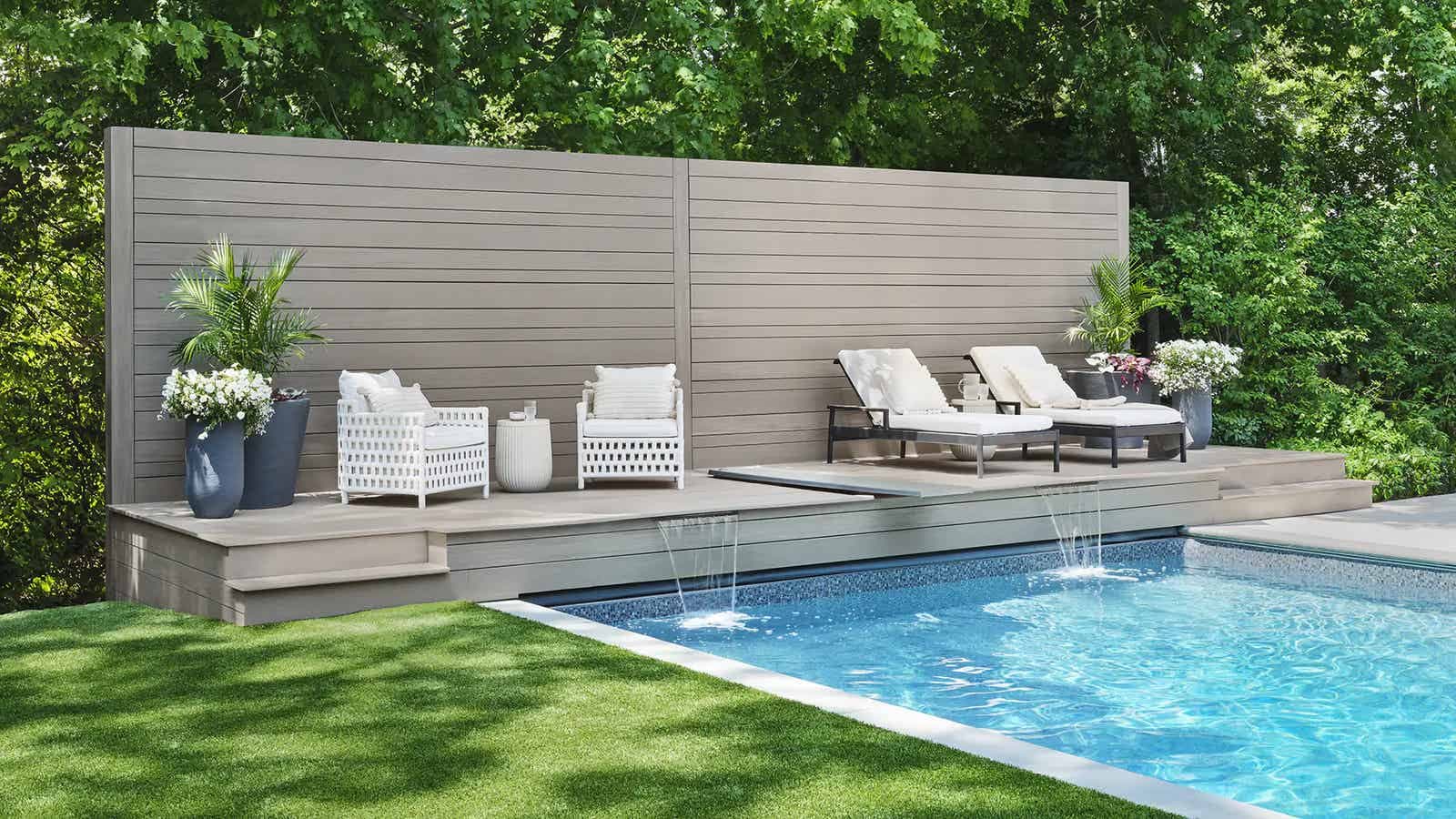
Why Ventilation Matters for PVC Decking Assemblies
These components can be susceptible to moisture-related issues if not properly ventilated. Trapped moisture can lead to wood rot, mildew growth, and even corrosion of metal fasteners over time. Good ventilation helps to dry out any moisture that accumulates under the deck, protecting the structural integrity.
Furthermore, proper airflow helps regulate temperature beneath the deck. In hot climates, trapped heat can potentially affect the stability of the decking material itself, even PVC. By allowing air to circulate, you mitigate extreme temperature fluctuations and maintain a more stable environment for both the deck boards and the substructure. This is especially relevant for decks built close to the ground or those with skirted perimeters.
Assessing Your Project's Ventilation Needs
Every deck project has unique characteristics that influence its ventilation requirements. Consider the following factors:
Deck Height: Decks built close to the ground (e.g., less than 18 inches) are particularly prone to poor airflow and moisture buildup. Taller decks generally benefit from better natural air circulation.
Perimeter Enclosure: If your deck includes skirting or a closed perimeter, this will restrict natural airflow. You'll need to plan for intentional vents or gaps.
Local Climate: Areas with high humidity, frequent rain, or significant snowmelt require more robust ventilation strategies to manage moisture effectively.
Surrounding Landscape: Dense landscaping, retaining walls, or impermeable surfaces near the deck can impede airflow and create moisture traps.
Under-Deck Use: If the space beneath the deck is enclosed for storage or living space, a comprehensive ventilation plan, potentially including mechanical ventilation, becomes even more critical.
Ventilation Strategies for PVC Decking
Several strategies can be employed to ensure adequate ventilation:
Open Perimeters: The simplest approach is to leave the deck perimeter open, allowing air to move freely beneath the structure. This is often suitable for taller decks.
Venting Skirts: For decks with skirting, integrate purpose-built vents into the skirt panels. These can be decorative grates or simple openings. Aim for cross-ventilation, with vents on opposing sides.
Gaps Between Boards: While PVC decking requires specific gapping as per manufacturer instructions for drainage, these gaps also contribute to surface-level ventilation. Always follow the product's installation guide for precise spacing.
Ground Preparation: Ensure the ground beneath the deck slopes away from the foundation and is covered with a vapor barrier (e.g., gravel and plastic sheeting) to minimize moisture rising from the soil.
Raised Joists/Pedestal Systems: For certain applications, particularly rooftop decks or those over concrete slabs, using pedestals or sleepers to create an air gap can provide excellent ventilation and drainage. This lifts the deck boards entirely from the substrate.
Worked Example: Ventilating a Ground-Level PVC Deck
Consider a 16-foot by 10-foot PVC deck built 12 inches off the ground, with a solid perimeter skirt for aesthetic reasons. The deck is located in a humid region.
1. Ground Preparation: The ground beneath the deck is sloped at 1/4 inch per linear foot away from the adjacent house foundation. A heavy-duty landscape fabric is laid, topped with 4 inches of coarse gravel, and then covered with a 6-mil polyethylene vapor barrier, extending slightly beyond the deck's footprint.
2. Skirting Vents: To ensure cross-ventilation, the 16-foot sides will each have three 12-inch by 6-inch louvered vents, spaced evenly. The 10-foot sides will each have two 12-inch by 6-inch louvered vents, also spaced evenly. This provides a total of 10 vents, creating ample pathways for air movement.
3.
4.
This combination of ground treatment, strategically placed perimeter vents, and correct board gapping creates a robust ventilation system for the low-profile deck, mitigating the risks of moisture buildup and promoting the longevity of the entire structure.
Choosing PVC Decking for Moisture-Prone Areas
PVC decking is an excellent choice for areas exposed to frequent moisture, such as pool surrounds, docks, or covered porches that still see splash and weather from multiple directions. This inherent resistance simplifies the deck board choice but underscores the importance of a well-ventilated substructure to support the long-term performance of the entire assembly.
Brands like TimberTech Azek offer full PVC boards with advanced capping designed for these demanding environments. While the boards themselves are resilient, the underlying structure benefits from the same careful ventilation planning as any other deck. Considering the 'deck system' as a whole, rather than just the surface material, is key to a successful project.
Explore options such as TimberTech Azek PVC decking for your project: [/decking/pvc]
Consider related decking materials: [/decking], [/decking/hardwood], [/decking/hardwood/ipe], [/decking/composite]
Before you order
- Is the deck height less than 18 inches off the ground?
- Will the deck have a solid perimeter skirt or enclosure?
- Is the local climate consistently humid or prone to heavy rainfall/snow?
- Are there elements like retaining walls or dense landscaping that will block airflow?
- Will the space beneath the deck be used for storage or enclosed living space?
- Have you planned for ground preparation (slope, vapor barrier, gravel) to manage sub-surface moisture?
- Are you incorporating perimeter vents, and are they sufficient for cross-ventilation?
- Are you following the manufacturer's specific gapping instructions for your PVC deck boards?
- Have you considered using a raised joist or pedestal system for enhanced airflow if applicable?
Confirm installation details, approved uses and warranty terms in the current instructions for the exact product and profile. Your installer should verify the substrate, structure and applicable project requirements.
Questions to help you decide
Does PVC decking require ventilation even though it's waterproof?
Yes, while PVC decking boards themselves are waterproof and resistant to rot, the underlying deck frame (joists, beams, etc.), often made of wood, can be susceptible to moisture damage. Proper ventilation helps dry out any accumulated moisture, protecting the substructure and prolonging the life of the entire deck assembly.
What happens if a deck with PVC boards is not properly ventilated?
Lack of proper ventilation can lead to several issues. For the substructure, it can cause wood rot, mildew, and corrosion of fasteners due to trapped moisture. For the decking itself, poor ventilation can contribute to extreme temperature fluctuations beneath the boards, potentially affecting their long-term stability and performance. It can also create an environment conducive to pests.
What are the best ways to ventilate a low-profile PVC deck?
For low-profile decks, effective ventilation typically involves a combination of strategies. Ensure proper ground preparation with a slope and a vapor barrier. Integrate ample perimeter vents into any skirting to allow for cross-ventilation. Always follow the manufacturer's recommended board spacing to allow for drainage and some surface airflow. In some cases, a raised joist or pedestal system can be beneficial.
Ready to Plan Your Ventilated PVC Deck?
Request a material quote with your project dimensions, exact PVC decking profile, and ZIP code. We can help you confirm current availability and service options for your project.
Request a material quote →