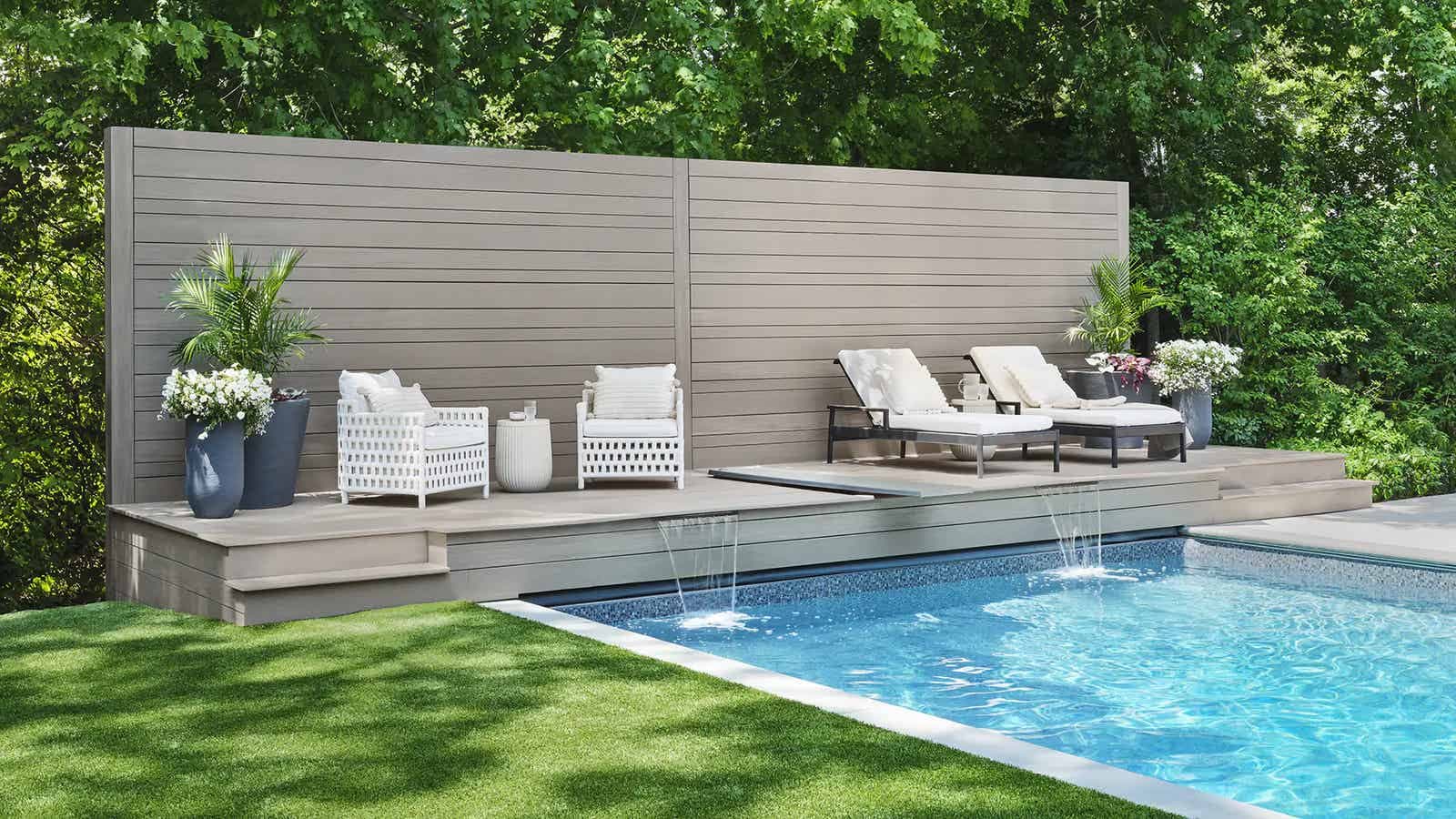
Understanding PVC Decking Materials
PVC decking boards are a primary material cost. These boards are 100% synthetic, made without wood fibers, which contributes to their resistance to moisture, rot, and insects. They are often chosen for areas exposed to water, such as pool surrounds or docks, due to their waterproof core. Manufacturers like TimberTech Azek offer various collections with different aesthetics, from deep wood looks to more contemporary finishes.
When budgeting for PVC boards, consider the specific collection and profile you choose, as these can impact the price. Board lengths also play a role; planning your layout to minimize cuts and waste can optimize material usage. Always factor in a percentage for waste, typically 5-10%, depending on the complexity of your deck design.
Beyond the main decking boards, you'll need complementary materials such as fascia boards for rim joists, and possibly stair treads and risers if your project includes stairs. These elements ensure a cohesive and finished look.
Essential Accessories and Fasteners
Decking projects require more than just boards. Fasteners are a crucial component. Many PVC decking systems are designed for hidden fasteners, which create a smooth, blemish-free surface. These clips are installed in the board grooves and attach to the joists, often sold in buckets or boxes that specify coverage per square foot.
For the perimeter or areas requiring increased stability, face fasteners (screws that go through the top of the board) might be necessary. Specialized screws designed for PVC decking help prevent mushrooming and ensure a secure connection. Additionally, consider any required trim pieces, such as post caps or railing components, if these are part of your deck design. Under-deck ventilation materials might also be necessary depending on your local climate and deck height requirements.
Deck Framing and Substructure
The decking boards themselves sit on a substructure, or frame, which is a significant part of the overall budget. This frame is typically constructed from pressure-treated lumber, steel, or aluminum. The cost will depend on the size and complexity of your deck, including the number of support posts, beams, and joists required.
If you are replacing an existing deck, a structural inspection of the current frame is essential. While PVC decking is lighter than some hardwood options, the existing frame must be in sound condition and meet current building codes. If the frame needs repair or replacement, this will add to your material and labor costs. Lumber Plus also offers other decking materials like hardwood and composite, which might have different framing requirements or weight considerations.
Labor and Installation Costs
Unless you plan to install the deck yourself, labor will be a significant portion of your budget. Installation costs vary based on your location, the complexity of the deck design (e.g., multiple levels, curves, intricate patterns), and the installer's experience. Obtain multiple quotes from qualified contractors, ensuring each quote details the scope of work, timeline, and payment schedule.
Factors that influence labor costs include site preparation, demolition of an old deck, construction of the new frame, installation of decking boards and fasteners, and any finishing touches like railing installation or lighting. While PVC decking can be lighter than some alternatives, potentially leading to faster handling, the precision required for hidden fastener systems can still demand significant time.
Ensure your contractor is familiar with PVC decking installation guidelines, as specific spacing and fastening methods are crucial for the product's performance and warranty.
Worked Example: Calculating Materials for a Simple Deck
Assume boards are available in 12-foot lengths.
First, calculate the main deck area: 12 ft x 10 ft = 120 sq ft.
For the main decking running the 10-foot width: Each 5.5-inch board (0.458 ft) will run the 12-foot length. Number of boards needed across the 10-foot width (excluding border): 10 ft / 0.458 ft per board = 21.83 boards. Round up to 22 boards. Since each board is 12 feet long, we would need 22 x 12-foot boards for the main field.
For the picture frame border: If we use a single 5.5-inch board for the border, the perimeter is (12 ft + 10 ft) x 2 = 44 linear feet. Two 12-foot boards and two 10-foot boards for the border would effectively require four 12-foot boards (two cut to 10 ft). This adds 4 boards. Total boards for this scenario: 22 (field) + 4 (border) = 26 boards.
Round up to 3 buckets. For this example, adding 10% waste to the 26 boards means ordering 29 boards.
This example simplifies joist spacing and specific border construction. Your actual project will require precise measurements and a detailed layout plan.
Permits, Site Preparation, and Contingency
Before any construction begins, check with your local municipality for required building permits. Permit fees are a necessary budget item and can vary widely. Skipping permits can lead to fines and potential demolition of your project.
Site preparation costs can include clearing vegetation, leveling the ground, or ensuring proper drainage. These tasks may require heavy equipment or additional labor. For a ground-level deck, consider whether a gravel base or other foundation work is needed.
Finally, always include a contingency fund in your budget, typically 10-15% of the total project cost. This fund is crucial for unforeseen expenses, such as unexpected structural issues with an existing frame, material price fluctuations, or minor design changes during construction. A contingency ensures your project stays on track without derailing your finances.
Before you order
- Have I accounted for all PVC decking boards, including field, fascia, and stair components?
- Are all necessary fasteners (hidden clips, face screws) and their quantities specified?
- Is the cost of the deck substructure (framing lumber, posts, beams) included?
- Have I obtained multiple quotes for labor and confirmed the scope of work?
- Are permit fees and any site preparation costs factored into the budget?
- Have I included a contingency fund (10-15%) for unexpected expenses?
- Have I considered any additional features like railings, lighting, or built-in seating?
- Is a waste factor (e.g., 5-10% for materials) applied to my material quantities?
- Have I reviewed manufacturer installation guidelines for specific product requirements?
Confirm installation details, approved uses and warranty terms in the current instructions for the exact product and profile. Your installer should verify the substrate, structure and applicable project requirements.
Questions to help you decide
What makes PVC decking a good choice for my budget?
While the initial material cost of PVC decking can be higher than some wood options, its 100% synthetic composition means it's waterproof and highly resistant to rot, insects, and fading. This translates to lower long-term maintenance costs and potential savings on repairs or replacement compared to materials that might degrade more quickly, especially in wet or humid environments. It offers a balance between initial investment and long-term value.
How do I estimate the amount of PVC decking I need?
To estimate, measure the length and width of your deck area to calculate the total square footage. Then, consider the width of the PVC boards you plan to use. Divide the total width of your deck by the board width to determine the number of boards needed for the field, remembering to account for board spacing. Don't forget to add extra linear footage for any border boards, fascia, and stairs. Always add a waste factor of 5-10% to your final quantity to account for cuts and potential errors.
Should I budget for professional installation, or can I install PVC decking myself?
While some experienced DIYers may tackle PVC decking installation, it's generally recommended to budget for professional installation. PVC decking systems, especially those with hidden fasteners, require precision and adherence to manufacturer guidelines for proper performance and warranty validity. A professional installer can ensure the deck is built to code and performs as intended, saving you potential headaches and costs down the line. If you plan to DIY, ensure you thoroughly understand the product's specific installation requirements.
Ready to Plan Your PVC Decking Project?
Request a material quote with your project dimensions, exact PVC profile, and ZIP code to confirm current availability and service options. Our team can help you identify the specific materials needed for your project.
Request a material quote →