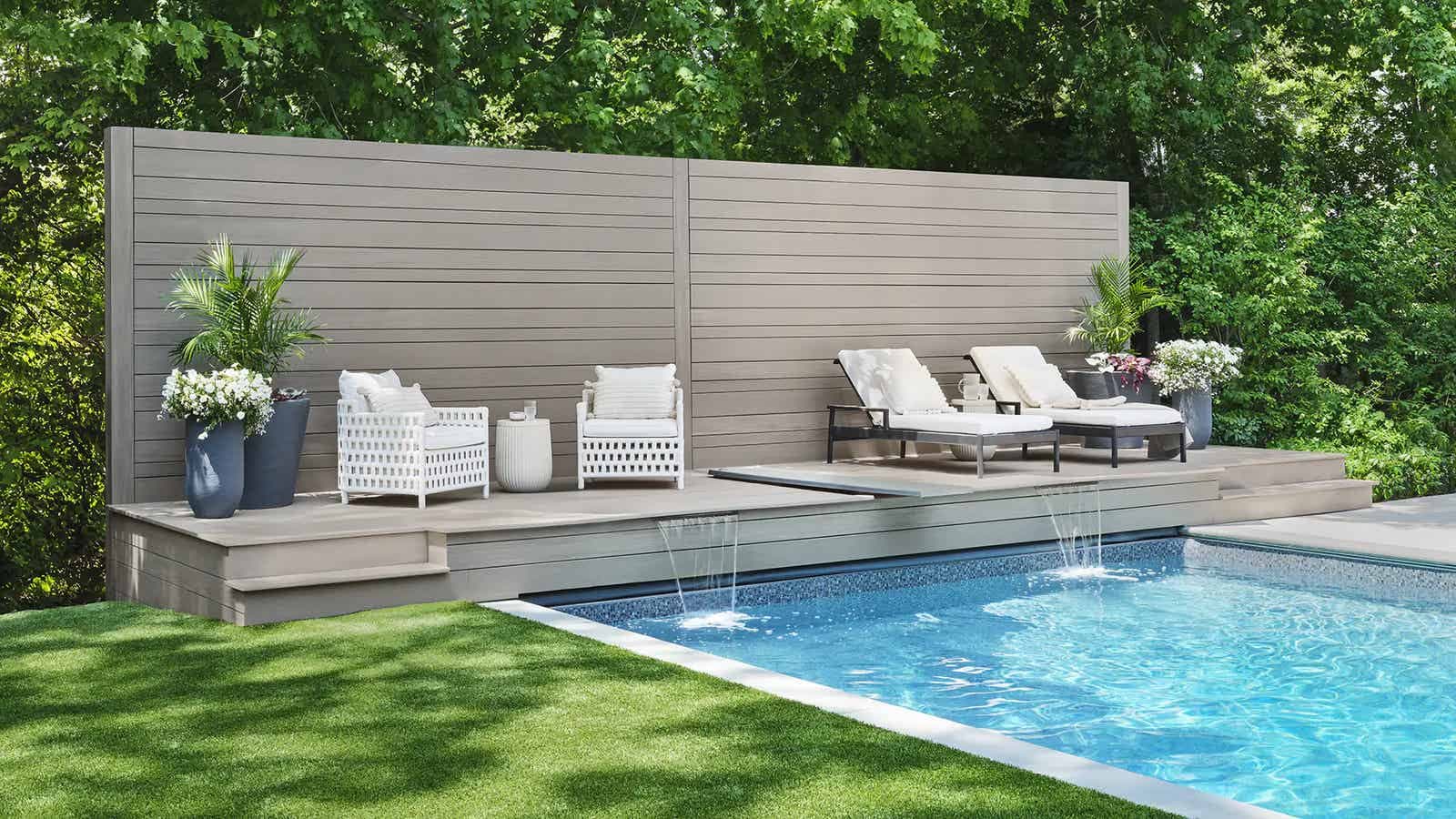
Understanding PVC Decking Material Composition
PVC decking, or polyvinyl chloride decking, is a fully synthetic material. Unlike composite decking, it contains no wood fibers. This composition contributes to its material properties, making it inherently waterproof to the core. This characteristic is particularly relevant for applications where boards are frequently exposed to moisture.
The 100% synthetic nature of PVC decking means it is designed to resist issues associated with moisture, such as swelling, staining, or rot. This makes it a suitable choice for environments like pool surrounds, docks, and covered porches where both sides of the boards might encounter weather.
Board Dimensions and Profiles
PVC decking boards are available in various dimensions, typically including different widths and lengths. Common profiles include standard deck boards and fascia boards. It is important to note the exact width, thickness, and available lengths of the specific PVC decking line you are considering. These dimensions directly impact your project's layout, joist spacing, and overall material quantity.
Manufacturers like TimberTech Azek offer various collections, such as Vintage, Landmark, and Harvest, which feature different aesthetic profiles, including those designed to emulate wood grain. While these collections may offer distinct appearances, verifying the precise dimensional specifications for each board type within these lines is crucial for planning your installation accurately.
Approved Applications and Environmental Suitability
The specifications for PVC decking often highlight its suitability for particular environments. Due to its waterproof core, PVC decking is frequently recommended for areas with consistent moisture exposure. This includes pool surrounds, docks, and other splash zones. Its resistance to salt spray also makes it a consideration for coastal applications.
For covered porches that may experience weather from both sides, PVC's waterproof properties can be beneficial. Understanding these approved uses helps confirm if the product is a match for your intended project. Always refer to the manufacturer's guidelines for specific environmental recommendations and limitations.
Weight and Handling Characteristics
An often-overlooked specification is the weight of the decking material. PVC decking generally weighs less than both hardwood and many composite decking options. This reduced weight can offer practical advantages during installation, potentially leading to faster handling and easier installation, especially for elevated or rooftop projects. Confirming the specific weight per linear foot or square foot can be important for structural considerations, particularly in renovation projects or those with existing substructures.
Care and Maintenance Specifications
While not a direct dimensional specification, understanding the recommended care and maintenance is a crucial part of the product's overall specification. Capped polymer PVC decking is designed to be low-maintenance, resisting stains from grease and wine, and typically cleans with soap and water. Some lines may also offer specific heat-mitigating color options, which can be a relevant consideration for decks exposed to significant sun.
Always review the manufacturer's cleaning and maintenance instructions to ensure you understand the long-term care requirements and compatible cleaning products. This information is usually part of the broader product documentation.
Worked Example: Planning a 10x12 Foot Pool Deck Section
Let's consider a hypothetical pool deck section measuring 10 feet by 12 feet, intended for a splash zone. For this example, we will assume we are using TimberTech Azek's standard PVC deck boards, which are specified as 5.5 inches wide and available in 12-foot lengths.
For the 10-foot width, we need to calculate how many 5.5-inch wide boards are required. Ten feet is 120 inches. Dividing 120 inches by 5.5 inches per board gives approximately 21.82 boards. Since we cannot use partial boards in this scenario for a clean edge, we would round up to 22 full boards.
Therefore, for this 10x12 foot section, you would need 22 boards, each 12 feet long. This calculation assumes a straight run and does not account for waste from cuts, end cuts for a picture frame, or specific fastening system spacing. Always add a percentage for waste, typically 5-10%, depending on the complexity of the layout and cuts required. For this example, ordering 24 boards (22 + 10% waste) would be a more prudent approach.
Before you order
- Confirm exact board width, thickness, and available lengths.
- Verify the specific profile (e.g., grooved for hidden fasteners, solid for face fastening).
- Check recommended joist spacing for the chosen board dimensions.
- Review approved applications (e.g., pool surrounds, docks, covered porches).
- Understand material composition and its implications for moisture exposure.
- Note the weight characteristics for handling and structural considerations.
- Familiarize yourself with recommended cleaning and maintenance procedures.
- Consider the aesthetic collection (e.g., Vintage, Landmark, Harvest) and its visual properties.
- Account for waste factor in quantity calculations (typically 5-10%).
Confirm installation details, approved uses and warranty terms in the current instructions for the exact product and profile. Your installer should verify the substrate, structure and applicable project requirements.
Questions to help you decide
What is the primary difference between PVC and composite decking?
The primary difference lies in their composition. PVC decking is 100% synthetic, made entirely of polyvinyl chloride, with no wood fibers. Composite decking, on the other hand, is a blend of wood fibers and plastic, often with a protective cap. The absence of wood fibers makes PVC decking inherently waterproof to the core, which can be advantageous in high-moisture environments.
Can PVC decking be used in all climates?
PVC decking is designed to perform well in various climates, including those with significant moisture exposure or salt spray, due to its waterproof core. However, specific product lines may have recommendations or limitations regarding extreme temperatures or sun exposure. Some manufacturers offer heat-mitigating color options for very sunny areas. Always consult the manufacturer's specific guidelines for your climate.
Are all PVC decking boards compatible with hidden fastener systems?
Not all PVC decking boards are universally compatible with all hidden fastener systems. Many PVC decking lines offer boards with grooved edges specifically designed to work with hidden fasteners. However, some boards may be solid-edged, intended for face fastening, or require specific fastener systems. Always confirm the compatibility of your chosen board profile with your preferred fastening method in the product specifications.
Ready to Specify Your PVC Decking Project?
For a precise material quote, please provide your project dimensions, desired PVC decking profile, and your ZIP code. This will help us confirm current availability and service options for your specific needs.
Request a material quote →