Why Board Spacing is Not Universal
Many factors influence the recommended spacing for PVC deck boards. The primary reason is thermal expansion and contraction. While PVC is a stable material, it will expand in heat and contract in cold. The gap allows for this movement without boards buckling or creating excessive stress on fasteners.
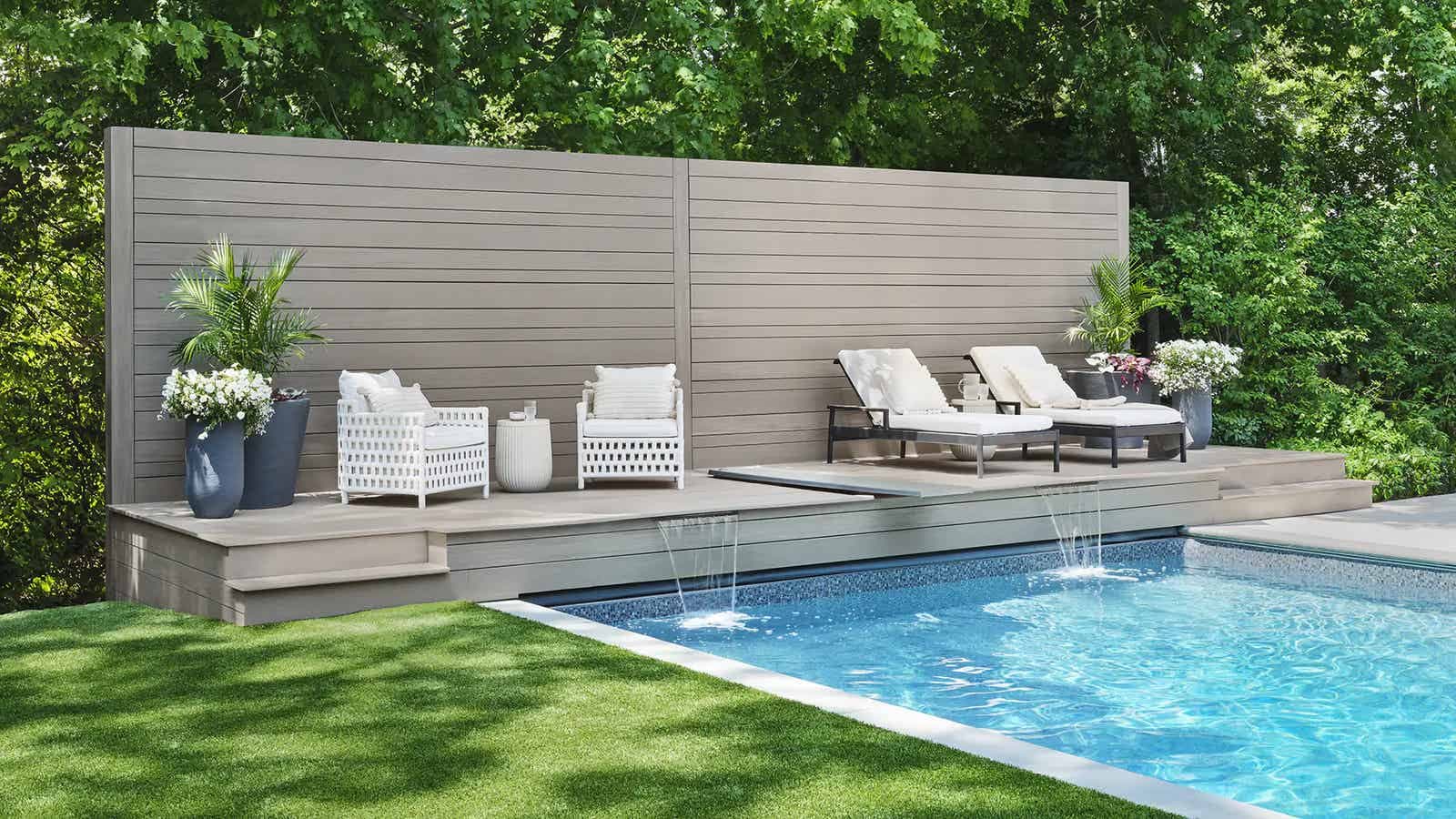
Another crucial function of spacing is drainage. Gaps allow water to pass through the deck surface, preventing standing water and promoting air circulation beneath the deck. This is particularly important for decks in wet environments, such as pool surrounds or docks, where boards may live wet (S1).
Finally, consistent spacing contributes significantly to the deck's aesthetic. Uniform gaps create a clean, professional finish, enhancing the overall visual appeal of your outdoor space.
Consulting Manufacturer Instructions
The most critical step in determining proper board spacing is to consult the specific installation guide provided by the manufacturer of your PVC decking. Generic advice is insufficient because different PVC formulations and board profiles behave differently. Brands like TimberTech Azek provide detailed instructions for their specific product lines (S1).
These guides typically specify spacing based on several factors: the length of the board, the ambient temperature at the time of installation, and whether the boards are face-fastened or installed with hidden fasteners. Always download or refer to the most current installation instructions for your purchased product.
Temperature and Board Length Considerations
The temperature during installation is a key variable. If boards are installed on a cold day, they will be contracted. Installing them with a small gap risks buckling when temperatures rise and the boards expand. Conversely, installing on a hot day with a large gap means the gaps will become even wider in colder temperatures, potentially creating tripping hazards or an undesirable appearance.
Longer boards will exhibit more total expansion and contraction than shorter boards. Therefore, manufacturers often provide charts or formulas that adjust the recommended gap based on both board length and installation temperature. This precision ensures that the gaps remain within an acceptable range across seasonal temperature fluctuations.
Fastener Type and Spacing
The type of fastener used can also influence the recommended spacing. Hidden fastening systems often incorporate spacers that automatically set the correct gap. These systems are designed to accommodate the expected movement of the boards while maintaining a consistent appearance.
When face-fastening, installers must manually ensure the correct spacing using spacers or a measuring tool. It is crucial to use the manufacturer-recommended fasteners, whether hidden or face-fastened, as they are engineered to work in conjunction with the board's material properties and spacing requirements.
Worked Example: Applying a Hypothetical Spacing Rule
Let's consider a hypothetical example for a specific PVC decking product.
If you are installing 12-foot boards on a day where the temperature is 50°F (20°F below 70°F), the adjustment would be 2 x 1/32-inch = 1/16-inch.
This illustrates why consulting the specific product guide is paramount, as these rules are not universal.
Before you order
- Identify the exact PVC decking product and manufacturer.
- Locate and download the most current installation guide for your specific product.
- Determine the average ambient temperature at the time of installation.
- Measure the length of the boards you are installing.
- Consult the manufacturer's table or formula for the appropriate board spacing based on temperature and board length.
- Verify the recommended spacing for your chosen fastener type (hidden or face-fastened).
- Acquire appropriate spacers to ensure consistent gaps during installation.
Confirm installation details, approved uses and warranty terms in the current instructions for the exact product and profile. Your installer should verify the substrate, structure and applicable project requirements.
Questions to help you decide
What happens if I don't follow the recommended spacing?
Incorrect spacing can lead to several problems. Too little gap can cause boards to buckle or crown when they expand in heat, creating an uneven surface and potentially damaging fasteners. Too much gap can lead to boards shifting or becoming too wide in cold weather, creating tripping hazards, and compromising the deck's appearance and structural integrity over time.
Is there a difference in spacing for boards near a pool or in direct sun?
Yes, environments with significant temperature fluctuations or consistent moisture, such as pool surrounds or areas of intense, direct sunlight, may require particular attention to spacing. While the manufacturer's general guidelines account for typical thermal expansion, boards in these conditions might experience more extreme movement. Always refer to your product's specific installation instructions, which may offer additional guidance for these scenarios. PVC decking from brands like TimberTech Azek is well-suited for wet environments (S1).
Should I leave a gap at the ends of the boards against fascia or walls?
Yes, just as with side-to-side spacing, expansion and contraction also occur along the length of the boards. Manufacturers typically recommend an end gap where boards meet a permanent structure like a house wall, a fascia board, or a picture-frame border. This gap allows for longitudinal expansion and contraction. The specific size of this end gap will also be detailed in your product's installation guide.
Request a Material Quote for Your PVC Decking Project
Ready to plan your deck? Provide your project dimensions, desired PVC decking profile, and ZIP code to request a material quote. We can also confirm current availability and service options.
Request a material quote →