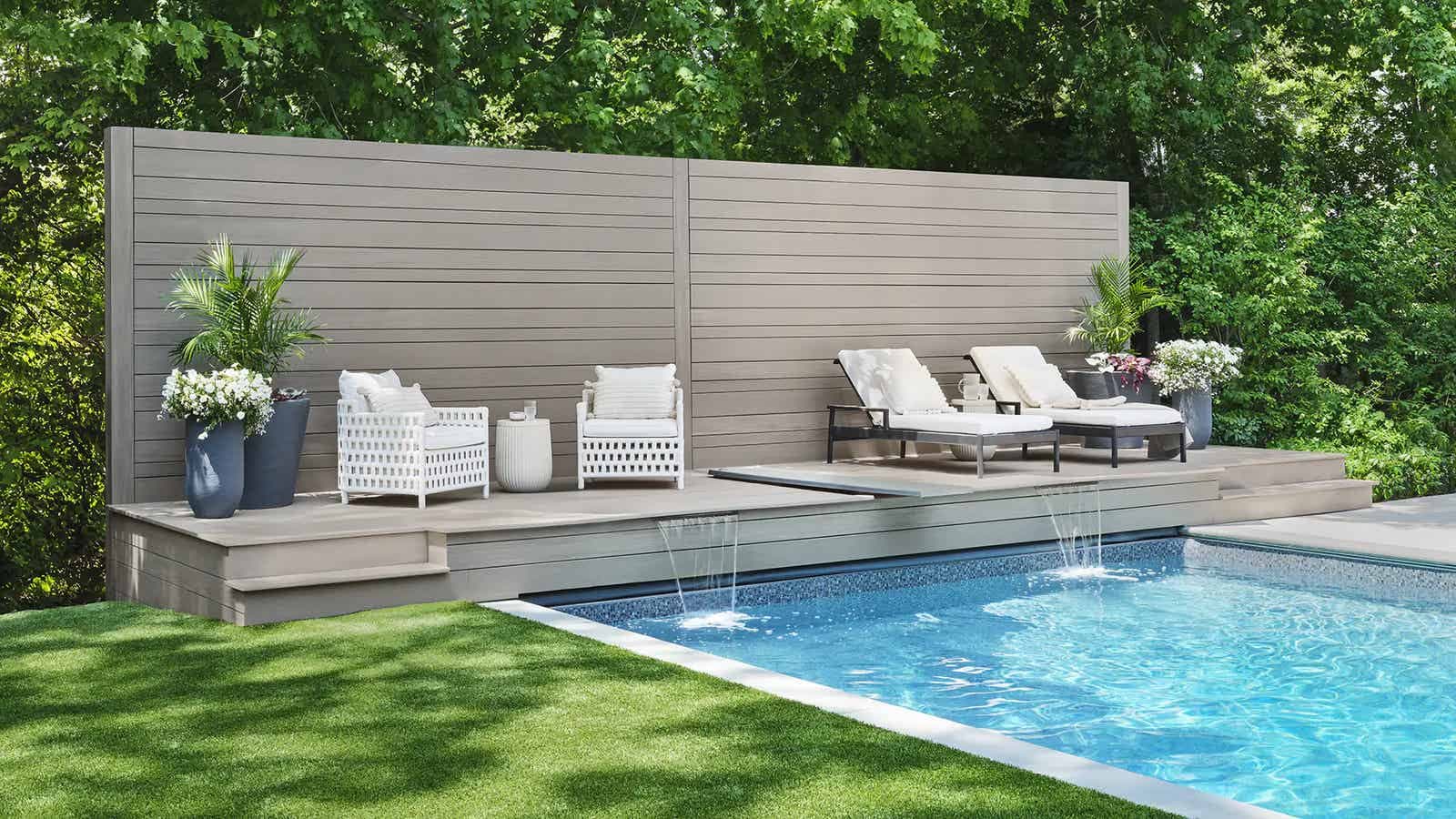
Why PVC Decking for Shaded Conditions?
PVC decking is a synthetic material, entirely free of wood fibers. This composition makes it inherently resistant to moisture absorption, swelling, and rot, which are common concerns for wood-based materials in consistently damp or shaded conditions. Unlike composite decking, which contains wood particles, 100% PVC boards are less susceptible to issues related to prolonged dampness.
Its waterproof core means that standing water, persistent dampness, or splash zones in shaded areas are less likely to compromise the structural integrity of the boards. This makes PVC a suitable choice for areas where drying may be slow, such as under dense foliage or in perpetually damp corners of a property. The material's resistance to staining also contributes to its appeal in areas prone to organic growth.
Another practical advantage in some project scenarios is the lighter weight of PVC compared to hardwood and even some composite options. This can simplify handling and installation, especially for projects with access challenges or where structural load is a consideration, such as rooftop decks that may also experience shaded conditions.
Understanding Moisture and Drying in Shaded Areas
Shaded decks often experience slower evaporation rates, meaning any moisture from rain, dew, or spills can linger longer on the surface and within the deck structure. This prolonged dampness can create an environment conducive to the growth of mold, mildew, and algae, even on materials designed for moisture resistance. While PVC itself does not rot or swell, these growths can still form on its surface, affecting its appearance and potentially making it slippery.
The key is to minimize the duration of surface wetness and ensure adequate airflow both above and below the deck boards. Planning for proper drainage around the deck perimeter and preventing water from pooling on the deck surface are fundamental steps. Consideration should also be given to the deck's orientation and surrounding landscape features that might impede airflow.
Essential Ventilation Strategies for Shaded Decks
Effective ventilation is crucial for a shaded PVC deck to promote drying and deter organic growth. This involves both surface-level airflow and under-deck air circulation.
For surface ventilation, ensure that deck board spacing adheres precisely to the manufacturer's recommendations. Avoid designs that create enclosed pockets or impede airflow directly on the deck surface.
Under-deck ventilation is equally important. If the deck is low to the ground or enclosed by skirting, consider incorporating vents into the skirting or designing open lattice work to allow air to move freely. For elevated decks, ensure that the area beneath is clear of obstructions that could trap moisture. This helps prevent moisture from accumulating on the underside of the boards and within the supporting structure. Consulting local building codes for ventilation requirements is also recommended.
Cleaning and Maintenance for Shaded PVC Decks
Regular cleaning is a primary defense against mold, mildew, and algae on shaded PVC decking. While PVC is resistant to staining, these organic growths can still adhere to the surface. A routine cleaning schedule, perhaps quarterly or bi-annually depending on the level of shade and local climate, is more effective than infrequent, intensive cleaning.
For general cleaning, a mixture of mild soap and water, applied with a soft-bristle brush, is often sufficient. Always rinse thoroughly with water to remove all cleaning solution and debris. For more stubborn areas or visible organic growth, consult the PVC decking manufacturer's guidelines for approved cleaning products. Some manufacturers offer specific recommendations for mold and mildew removers that are safe for their products. Avoid harsh chemicals, abrasive cleaners, or pressure washers set to high pressure, as these can damage the deck surface.
Promptly remove any organic debris like leaves, pine needles, or dirt. These materials can trap moisture and provide a food source for mold and mildew. Keep surrounding trees and shrubs trimmed to improve airflow and reduce the amount of falling debris onto the deck.
Worked Example: Planning a Shaded Deck Extension
Consider a homeowner extending their existing deck by 10 feet into a heavily shaded area under a large oak tree. The new section will be 12 feet wide, resulting in a 10 ft x 12 ft (120 sq ft) addition. The existing deck is 18 inches off the ground, and the new section will match this height. The homeowner plans to use TimberTech Azek Vintage Collection PVC decking, which comes in 12-foot lengths and nominal 5.5-inch widths.
Approximately 12 feet * 12 inches/foot = 144 inches. Each board and space is 5.5 + 0.1875 = 5.6875 inches. 144 / 5.6875 = 25.32. This means 26 boards are needed to cover the 12-foot width. Since boards come in 12-foot lengths, and the extension is 10 feet long, each board will provide one full run across the 10-foot depth, with a 2-foot offcut. These offcuts could potentially be used for a picture frame border or other small sections if planned. For this example, we assume 26 full 12-foot boards. (26 boards * 12 linear feet/board = 312 linear feet).
Ventilation: The existing deck skirting is solid. For the new shaded section, the homeowner will install decorative lattice panels along the 10-foot sides that connect to the ground, ensuring at least 50% open area for cross-ventilation. The space under the deck will be cleared of any vegetation or debris. Cleaning will be scheduled quarterly, especially after leaf fall, using a mild detergent and water, followed by a thorough rinse, per TimberTech's recommendations for surface mold and mildew.
Before you order
- Assess the specific shade level and duration: Is it partial or full shade? How many hours of direct sun does the area receive?
- Evaluate existing drainage: Does water pool on or around the deck area? How can drainage be improved?
- Consider the deck's height: Is it low-to-grade, requiring specific under-deck ventilation solutions?
- Review manufacturer's spacing guidelines: Confirm the exact board spacing required for your chosen PVC decking.
- Plan for under-deck ventilation: If skirting is present or planned, how will air circulate? (e.g., vents, lattice).
- Establish a cleaning schedule: How frequently will the deck be cleaned to prevent organic growth?
- Identify compatible cleaning products: Confirm which cleaners are safe and effective for your specific PVC decking product.
- Trim surrounding vegetation: Can trees or shrubs be pruned to improve airflow and reduce debris?
Confirm installation details, approved uses and warranty terms in the current instructions for the exact product and profile. Your installer should verify the substrate, structure and applicable project requirements.
Questions to help you decide
Can I use any cleaning product on my PVC deck in a shaded area?
No, it is crucial to use cleaning products specifically approved by the PVC decking manufacturer. Harsh chemicals, abrasive cleaners, or high-pressure washing can damage the surface or void warranties. Always start with mild soap and water, and if stronger cleaning is needed, consult the manufacturer's guidelines for recommended products for mold, mildew, or stains.
Is PVC decking slippery when wet in a shaded environment?
While PVC decking itself has a degree of slip resistance, any surface can become slippery when wet, especially if organic growth like mold, mildew, or algae is present. This is why regular cleaning and ensuring good drainage and ventilation are particularly important for shaded decks to minimize the accumulation of such growths and maintain surface traction.
Does PVC decking fade or stain more in shaded areas?
PVC decking from reputable manufacturers often features advanced capping that provides resistance to fading and staining. In shaded areas, UV exposure is reduced, which can actually lessen the risk of UV-induced fading. However, shaded conditions can promote mold and mildew growth, which, if left uncleaned, can appear as stains on the surface. These are typically surface-level issues and can be removed with appropriate cleaning, rather than permanent material staining.
Ready to Plan Your Shaded Deck with PVC Decking?
Provide your project dimensions, desired PVC decking profile, and ZIP code to request a material quote. We can help you confirm current availability and service options for your shaded deck project. Explore our full range of PVC decking options and complementary products like hidden fasteners and fascia boards.
Request a material quote →