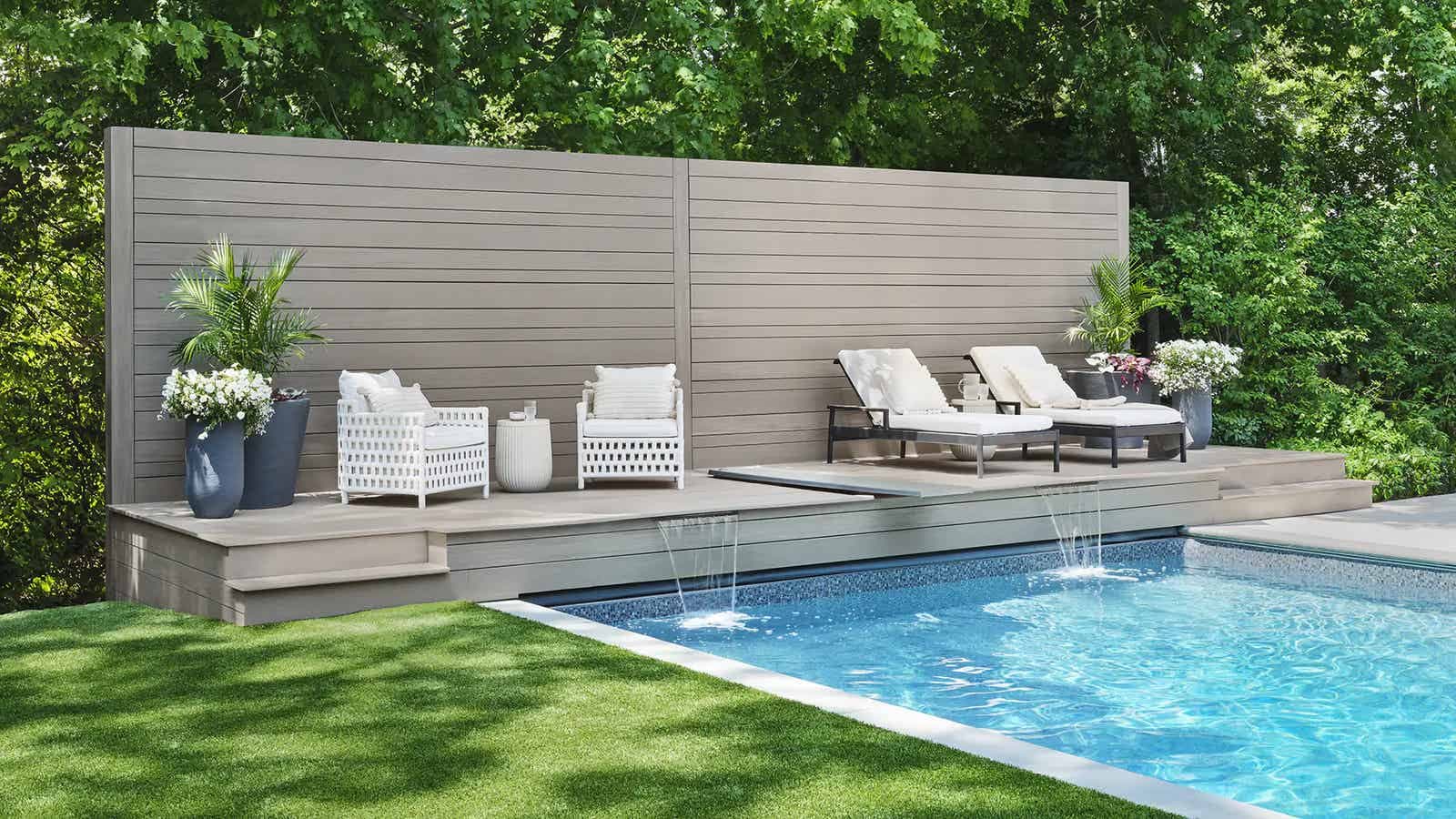
Why PVC Decking for Pool Terraces?
PVC decking is engineered to be waterproof to the core, which is a significant advantage for pool surrounds. Unlike materials that contain wood fibers, PVC boards do not swell, stain, or rot when exposed to standing water, splash zones, or pool chemicals. This makes it a reliable choice where boards will consistently be wet.
The advanced capping on PVC boards helps shed grease and wine, allowing for easy cleaning with soap and water. This feature is particularly useful around a pool where spills from snacks, drinks, or sunscreens are common. Many PVC decking options also offer heat-mitigating color choices, which can be a consideration for bare feet on sunny Indianapolis days.
PVC decking is also lighter than many traditional decking materials, including hardwood and some composites. This can facilitate faster handling and installation, which may be a factor for your project timeline.
Key Characteristics of PVC Decking for Wet Areas
PVC decking is a full PVC board with advanced capping, containing zero wood fiber. This composition is key to its performance in wet environments, making it a default specification for areas like pool surrounds, docks, and even covered porches that may experience weather from multiple directions.
The material is described as 100% synthetic and waterproof to the core. This inherent resistance to moisture means that conditions like constant splash from a pool or occasional standing water will not compromise the integrity of the board in the same way they might affect wood-based products.
Beyond its water resistance, PVC decking is also designed to be resistant to salt spray, which, while not a primary concern for typical freshwater pools in Indianapolis, underscores its durability in demanding outdoor conditions.
Planning Your Pool Terrace Design and Layout
When planning your pool terrace, consider the overall aesthetic. PVC decking is available in various collections, such as Vintage, Landmark, and Harvest, offering a range of deep wood looks. These options allow you to achieve a desired visual style while benefiting from the material's performance.
Think about board width and length. Wider boards can create a sense of expansive space, while narrower boards might offer a more traditional look. Carefully planning your layout can minimize cuts and seams, contributing to a cleaner finish. For a pool terrace, consider how the decking will meet the pool coping and any surrounding landscaping or paving.
Edge finishing is important for both aesthetics and safety. PVC decking systems often include coordinating fascia and trim boards that can provide a polished look around the perimeter of your pool terrace and any steps. Ensure these elements are considered during the design phase.
Maintenance Considerations for Poolside PVC Decking
One of the advantages of PVC decking for a pool terrace is its low-maintenance nature. The capped polymer surface is designed to shed common spills and can be cleaned with simple soap and water. This is particularly beneficial around a pool where cleanliness is important and frequent cleaning may be needed.
While PVC decking is resistant to staining, regular cleaning helps maintain its appearance, especially in high-traffic areas or where pool chemicals might splash. Always consult the manufacturer's cleaning guidelines for specific product recommendations to ensure compatibility and avoid damaging the surface.
Unlike wood, PVC decking does not require sanding, staining, or sealing. This reduces the ongoing maintenance tasks, allowing more time to enjoy your pool area rather than maintaining it.
Hypothetical Project Example: Indianapolis Pool Terrace
Consider a hypothetical pool terrace project for a home in Indianapolis. The homeowner wants a rectangular deck measuring 20 feet by 15 feet around a 12-foot by 24-foot inground pool. They have selected a PVC decking product that comes in 12-foot and 20-foot lengths, with a nominal board width of 6 inches.
For the 20-foot length of the deck, 20-foot boards can be laid parallel to the 15-foot width, minimizing seams. For the 15-foot width, 12-foot boards can be used, with cuts for the remaining 3 feet. However, to minimize waste and provide a more uniform appearance, it might be more efficient to lay boards perpendicular to the 20-foot dimension, using 20-foot boards for the full length.
To cover a 15-foot width with 6-inch boards (0.5 feet), approximately 30 boards (15 feet / 0.5 feet per board) would be needed for each 20-foot run. For a total area of 300 square feet (20 ft x 15 ft), this translates to 15 boards per 20-foot length. If using 20-foot boards, 30 boards x 20 feet = 600 linear feet. If using 12-foot boards for the 15-foot width, you'd need 30 boards, and each 12-foot board would yield two 3-foot pieces with a 6-foot offcut. This suggests careful planning of board direction and length purchases to optimize material use.
Always account for cutting waste, especially around the pool's edge or if a picture-frame border is desired. A 5-10% waste factor is a common planning allowance, but precise measurements and a detailed cut plan can refine this estimate. This example illustrates the need for detailed measurements and product-specific dimensions before ordering.
Before you order
- Is the decking material 100% synthetic and waterproof to the core?
- Does the product offer heat-mitigating color options for comfort around the pool?
- Are coordinating fascia and trim available for a finished edge around the pool and steps?
- What are the manufacturer's specific cleaning recommendations for pool chemicals and spills?
- Have you accounted for board lengths and widths to minimize seams and waste in your design?
- Is the sub-structure compatible with PVC decking and designed for drainage in wet conditions?
Confirm installation details, approved uses and warranty terms in the current instructions for the exact product and profile. Your installer should verify the substrate, structure and applicable project requirements.
This is a planning guide for projects in Indianapolis, IN. Ask our team to confirm availability, delivery to your ZIP code and which branch can support your order.
Questions to help you decide
Is PVC decking slippery when wet?
While PVC decking is designed for wet environments, all surfaces can be slippery when wet. Look for specific product information regarding surface texture and any slip-resistant properties. Maintaining a clean surface free of algae or debris will also help reduce the risk of slips.
How does PVC decking withstand Indianapolis winters?
PVC decking is engineered to be durable in various climates. Its synthetic composition means it won't absorb moisture, which helps prevent issues like freezing and thawing damage that can affect wood-based materials. However, proper installation, including adequate ventilation, is crucial for performance in all seasons.
Can I install PVC decking directly over an existing concrete patio?
Installing decking over an existing surface requires careful planning to ensure proper drainage and ventilation. Generally, a substructure of sleepers or a low-profile framing system is needed to create a gap between the concrete and the decking boards. This allows for air circulation and water runoff, which is essential for the longevity of any deck, especially around a pool. Consult installation guides for specific product requirements.
Start Planning Your PVC Pool Terrace Today
Ready to design a durable and beautiful pool terrace for your Indianapolis home? Request a material quote with your project dimensions and desired PVC decking profile. Confirm current availability and service options for your ZIP code to get started.
Request a material quote →