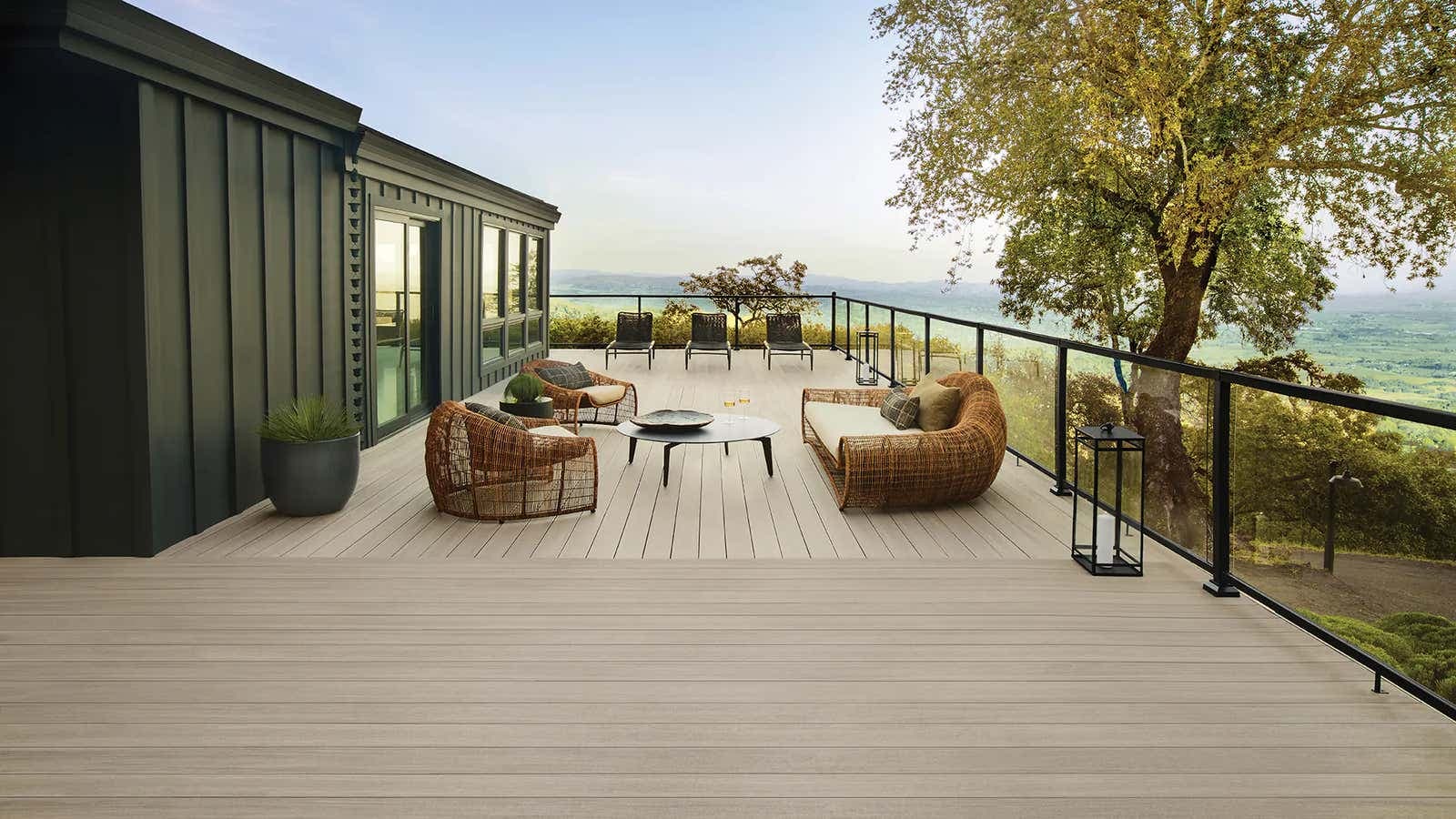
Understanding Your Compact Space: Balconies, Patios, and Courtyards
Before selecting composite decking, it's essential to accurately assess the specific characteristics of your compact outdoor space. Is it a balcony, a ground-level patio, or an enclosed courtyard? Each type presents unique considerations for structural support, drainage, sun exposure, and access for material delivery and installation.
For balconies, structural capacity is paramount. Always consult with a structural engineer or the building's management to understand weight limits before planning any decking installation. Ground-level patios often require attention to sub-base preparation and ensuring proper water runoff. Courtyards, being more enclosed, might have specific ventilation needs and considerations for shading, which can influence surface temperature of the decking.
Choosing the Right Composite Decking Collection
Composite decking is available in various collections, each with distinct features. For compact spaces, factors like board profile, color consistency, and maintenance requirements become particularly relevant. Brands like Trex, TimberTech, and Fiberon offer a range of options.
Trex, for example, is known for its high recycled content and consistent color, which can be beneficial in small spaces where uniformity is desired. TimberTech offers collections with different cap technologies designed for enhanced durability and resistance to fading and staining. Fiberon provides choices that mimic the look of natural wood, allowing for aesthetic flexibility in a confined area. When comparing, consider the visual impact of the grain pattern and color on a smaller scale, as well as the manufacturer's specific recommendations for installation and spacing.
Many composite decking options feature a capped shell, which helps them resist humidity and makes them suitable for areas that might experience varied conditions, as seen in Indianapolis's seasonal climate changes. This capping also contributes to easier cleaning, typically requiring only a soap-and-water wash, eliminating the need for oiling, sanding, or staining.
Maximizing Usable Space with Layout and Design
In compact outdoor areas, thoughtful layout and design can significantly enhance functionality. Consider the orientation of your decking boards. Running boards parallel to the longest dimension of the space can sometimes create an illusion of greater length. Alternatively, a diagonal layout can add visual interest and make a small area feel more expansive, though it may result in more material waste from cuts.
Another strategy is to integrate built-in seating or planters directly into the deck design. This can save space compared to freestanding furniture and create a cohesive look. When planning for planters, ensure the deck structure can support the concentrated weight, especially when filled with soil and watered. For Indianapolis's climate, consider plants that can withstand both summer heat and winter cold.
Installation Considerations for Confined Areas
Installing composite decking in a compact space, such as a narrow alleyway patio or a small balcony, requires careful planning for material handling and construction. Access to the project site is a primary concern. Long decking boards might be challenging to maneuver through tight doorways, stairwells, or elevators. Consider ordering shorter board lengths if available, or plan for cuts on site in an accessible staging area.
Proper ventilation underneath the deck is crucial for composite decking, regardless of size. Even in a small space, ensuring adequate airflow prevents moisture buildup and helps maintain board stability. Follow the manufacturer's specific guidelines for joist spacing and ventilation gaps. Incorrect spacing can affect the performance and appearance of the decking over time. For example, some manufacturers specify a minimum gap between boards to allow for expansion and contraction.
Worked Example: A 6' x 10' Balcony Deck
Let's consider a hypothetical 6-foot by 10-foot balcony in Indianapolis, where the goal is to create a functional seating area. We will use a standard composite decking board that is 12 feet long and 5.5 inches wide, with a nominal coverage of 0.458 square feet per linear foot (12 inches * 5.5 inches / 144 square inches per square foot).
The total area is 6 ft * 10 ft = 60 square feet. If we run the boards along the 10-foot length, each board will be cut to 10 feet. We need to cover 6 feet of width. Since each board is 5.5 inches wide, we divide 6 feet (72 inches) by 5.5 inches/board, which equals approximately 13.09 boards. However, remember to account for manufacturer-specified gapping between boards. Then 72 inches / 5.625 inches/board = 12.8 boards. We would still need to purchase 13 boards of 10-foot length. To minimize waste and simplify cuts, ordering 10-foot boards is ideal.
If 12-foot lengths are the only option, we would need 13 boards, each 12 feet long. Each 12-foot board could yield one 10-foot section and one 2-foot offcut. These 2-foot offcuts might be useful for a picture frame border or other small details, but often represent waste in a compact, linear layout. This example highlights the importance of ordering appropriate lengths to reduce material waste and simplify the project.
Always confirm current availability, board lengths, and profiles when requesting a quote. For this project, consider a lighter color composite decking to help reflect sunlight and keep the surface cooler, especially on a sun-exposed balcony in Indianapolis during summer.
Related Products for a Complete Outdoor Space
To complement your composite decking, consider integrating other outdoor materials. Hardwood decking, such as Ipe, can be used for contrasting accents or for areas requiring exceptional density, though it requires different maintenance than composite. PVC decking offers another low-maintenance alternative, often with different aesthetic profiles. Exploring these options can help you create a cohesive and functional compact outdoor living area.
For design continuity, consider using composite fascia and trim boards that match your chosen decking collection. These are used to finish the edges of the deck, providing a clean and polished look that is especially noticeable in smaller spaces. Proper fastening and edge finishes contribute significantly to the overall aesthetic and longevity of your compact deck.
Before you order
- Verify structural capacity: Is your balcony or elevated space rated for the weight of decking and furniture?
- Measure accurately: Confirm all dimensions, including any irregularities, and sketch a layout plan.
- Assess access: How will decking boards be delivered and moved to the installation site?
- Consider sun exposure: Will the deck be in full sun, partial shade, or full shade? This influences color choice and surface temperature.
- Plan for drainage: Ensure water can properly drain from and under the deck.
- Review local codes: Are there any specific building codes or HOA restrictions for decking in your area?
- Choose board lengths wisely: Opt for lengths that minimize cuts and waste for your specific dimensions.
- Select a collection: Compare Trex, TimberTech, and Fiberon for aesthetics, durability, and maintenance.
- Account for ventilation: Ensure proper airflow beneath the deck, adhering to manufacturer guidelines.
Confirm installation details, approved uses and warranty terms in the current instructions for the exact product and profile. Your installer should verify the substrate, structure and applicable project requirements.
This is a planning guide for projects in Indianapolis, IN. Ask our team to confirm availability, delivery to your ZIP code and which branch can support your order.
Questions to help you decide
What are the best composite decking colors for a compact space in Indianapolis?
Lighter colors can make a compact space feel larger and can also help keep the deck surface cooler under the Indianapolis summer sun by reflecting more heat. However, darker colors can create a more intimate and defined feel. The best choice depends on your personal aesthetic and the amount of sun exposure the deck receives.
How do I ensure proper drainage for a composite deck on a small patio?
For ground-level patios, ensure the sub-base is properly graded to allow water to flow away from the structure. Adequate spacing between deck boards, as specified by the manufacturer, is also essential for surface water runoff. Additionally, maintain clear space beneath the deck for airflow and to prevent water from pooling.
Can I install composite decking myself in a small area?
Self-installation of composite decking in a small area is possible for those with carpentry experience and the right tools. However, understanding manufacturer specifications for joist spacing, fastening, and board gapping is critical. If you are unsure, consulting with a professional installer can ensure the project is completed correctly and safely.
Request a Quote for Your Composite Decking Project
Ready to transform your compact outdoor space in Indianapolis? Request a material quote today. Provide your project dimensions, desired composite decking profile, and project ZIP code to confirm current availability and service options for Trex, TimberTech, and Fiberon composite decking.
Request a material quote →