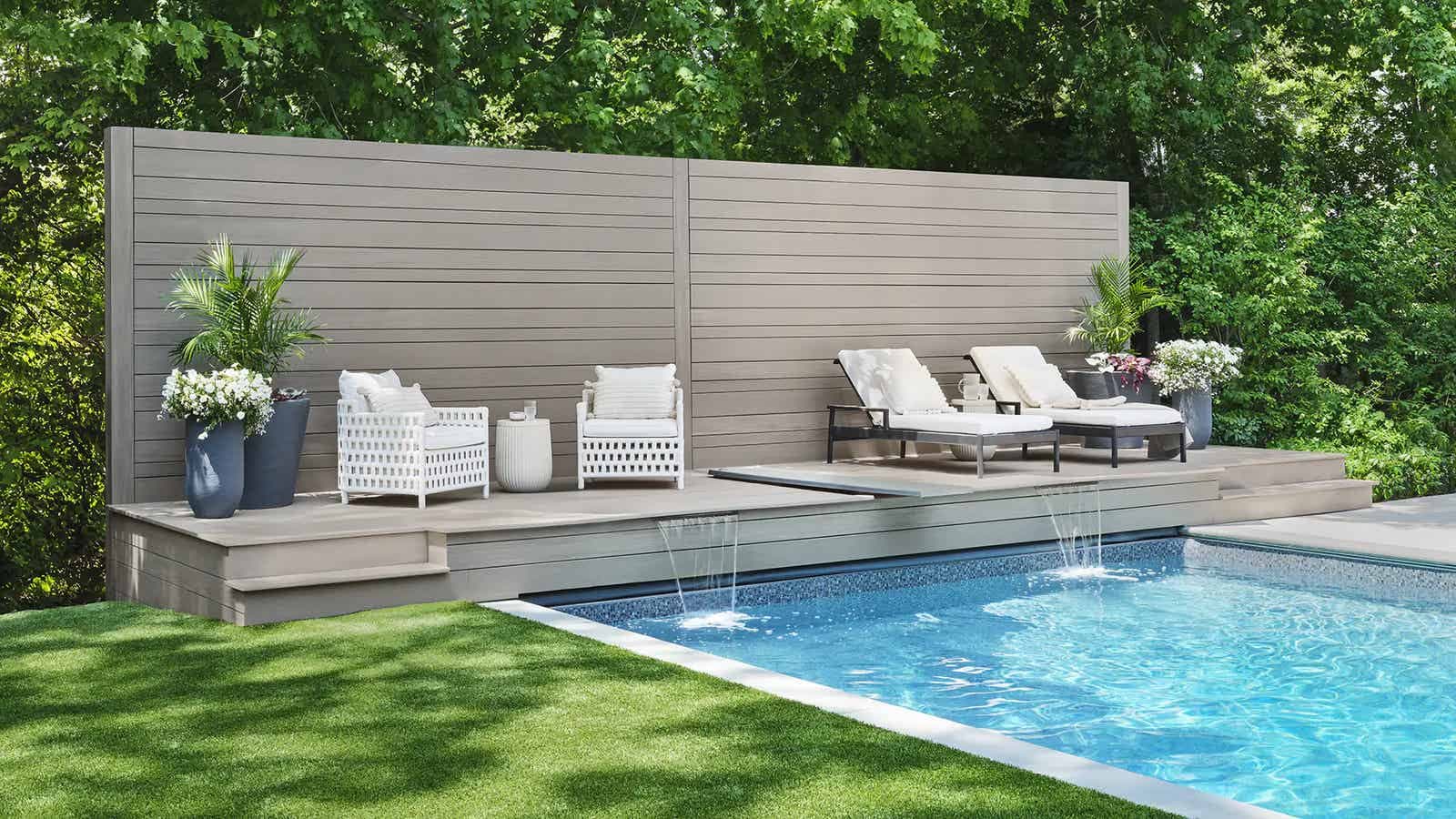
Why PVC Decking for Pool Terraces?
PVC decking is a strong candidate for pool terraces due to its inherent material properties. It is a 100% synthetic, cellular PVC material, meaning it contains no wood fibers. This composition makes it waterproof to its core, a critical feature for any surface routinely exposed to standing water, splashes, and humidity.
This makes it a robust choice for pool surrounds, docks, and other applications where boards frequently get wet. Its resistance to moisture also contributes to its low maintenance profile, as it sheds grease and wine, and can be cleaned with soap and water.
Additionally, PVC decking is generally lighter than hardwood and some composite options, which can simplify handling during installation. Certain collections, such as the TimberTech Azek line, offer advanced capping and a range of aesthetic options, including those designed to mitigate heat absorption, which can be an important factor for bare feet on a sunny Charleston day.
Understanding PVC Decking Profiles and Appearance
PVC decking is available in various collections and profiles, offering different aesthetics and textures. For example, the TimberTech Azek line includes Vintage, Landmark, and Harvest collections. These lines are designed to mimic the appearance of wood with deep grain patterns, providing a natural aesthetic without the maintenance requirements of real wood.
When planning a pool terrace, consider how the decking's color and texture will complement the pool's finish and surrounding landscaping. Lighter colors may absorb less heat, which can be a comfort benefit in direct sunlight. Always review product samples to assess the exact finish and feel, and to understand how the material might appear under different lighting conditions throughout the day.
Fascia and trim boards are also available to create a finished look around the perimeter of your pool terrace, providing a clean edge that integrates with the overall design.
Planning for Water Management and Drainage
While PVC decking is waterproof, proper substructure and drainage are still essential for a successful pool terrace. The decking itself will not absorb water, but water needs to be able to drain away from the surface and off the substructure to prevent pooling and maintain a dry environment underneath.
Ensure that the substructure is designed with adequate slope to direct water away from the house or other structures. Proper ventilation beneath the deck is also important to allow any trapped moisture to dry, even with waterproof decking. Consult manufacturer guidelines for recommended board spacing to facilitate drainage and air circulation.
Consider the placement of pool equipment, landscaping, and any hardscaping elements to ensure they do not impede drainage. A well-planned drainage system will protect your investment and contribute to the longevity of your entire outdoor living space.
Hypothetical Project Example: A Charleston Pool Terrace
Let's consider a hypothetical pool terrace project in Charleston, SC, measuring 20 feet by 15 feet. This area is intended to surround a rectangular pool, with a 5-foot wide border on three sides and a 10-foot wide area on the main side for lounge chairs.
Assuming standard PVC decking boards are available in 12-foot and 16-foot lengths with a nominal width of 5.5 inches (0.458 feet).
For the 20-foot length: You would need at least two 12-foot boards or one 16-foot board and a 4-foot section. To minimize seams, 20-foot boards would be ideal if available. If using 16-foot boards, you would plan for a seam or use a picture frame border.
For the 15-foot width: You would need approximately 15 feet / 0.458 feet per board = 32.75 boards. Rounding up, you would need 33 boards to cover the width. If using 16-foot lengths, you would need 33 boards at 16 feet each, totaling 528 linear feet. If using 12-foot lengths, you would need 33 boards at 12 feet each, totaling 396 linear feet, but this would require more cuts or careful planning for the longer dimension.
Total area: 20 feet * 15 feet = 300 square feet. If using 16-foot boards, and needing 33 boards, this implies buying 33 x 16 = 528 linear feet. If boards are sold by the linear foot or in specific bundles, this calculation helps determine the quantity. It's always advisable to add 5-10% for cuts, waste, and future repairs. For this example, a purchase of approximately 550-580 linear feet would be a reasonable starting point, depending on available lengths and a detailed cut plan.
Maintenance and Care for PVC Pool Decks
One of the key advantages of PVC decking for a pool terrace is its low maintenance. The material is designed to resist staining from common poolside spills like sunscreen, food, and beverages. For general cleaning, a simple wash with soap and water is often sufficient to remove dirt and grime.
For more stubborn stains, consult the manufacturer's specific cleaning recommendations. Avoid abrasive cleaners or harsh chemicals that are not explicitly approved for PVC decking, as these could potentially damage the surface. Regular sweeping or hosing down the deck will help prevent the buildup of debris.
While PVC decking is resistant to many issues, proper care helps maintain its appearance over time. This includes promptly addressing spills and ensuring good drainage. Unlike wood, PVC decking does not require staining, sealing, or sanding, significantly reducing the ongoing maintenance burden.
Before you order
- Confirm the exact dimensions of your pool terrace area, including any curves or irregular shapes.
- Review available PVC decking collections and profiles for desired color, texture, and heat-mitigating properties.
- Consider the substructure requirements for proper drainage and ventilation beneath the deck.
- Plan for fascia, trim, and any other finishing elements.
- Estimate the quantity of decking boards needed, adding extra for cuts and waste.
- Verify compatibility with any existing pool coping or surrounding hardscaping.
- Review manufacturer-specific installation guidelines, including board spacing and fastening methods.
- Research recommended cleaning and maintenance procedures for your chosen PVC decking product.
Confirm installation details, approved uses and warranty terms in the current instructions for the exact product and profile. Your installer should verify the substrate, structure and applicable project requirements.
This is a planning guide for projects in Charleston, SC. Ask our team to confirm availability, delivery to your ZIP code and which branch can support your order.
Questions to help you decide
Is PVC decking slippery when wet around a pool?
While PVC decking is designed for wet environments, all surfaces can be slippery when wet, especially with pool chemicals or algae present. Many PVC decking products offer textured surfaces to enhance traction. Always exercise caution around wet surfaces, and consider regular cleaning to prevent the buildup of slippery films.
Can PVC decking get hot in the Charleston sun?
Like many outdoor materials, PVC decking can absorb and retain heat from direct sunlight. Lighter color options are generally designed to reflect more sunlight and may feel cooler underfoot than darker colors. Some collections also feature heat-mitigating technologies. It's advisable to test samples in direct sunlight to gauge their temperature before making a final selection, especially for areas where bare feet will be common.
How do I clean my PVC pool deck?
For routine cleaning, use a soft-bristle brush or broom with a solution of mild soap and water. Rinse thoroughly with a garden hose. For more stubborn stains, refer to the specific cleaning instructions provided by the decking manufacturer, as recommended products can vary. Avoid using pressure washers at high settings or harsh chemicals unless explicitly approved by the manufacturer, as this could damage the decking surface.
Request a Quote for Your PVC Decking Project
Ready to transform your Charleston, SC pool terrace? Contact us for a material quote. Provide your project dimensions, desired PVC decking profile, and ZIP code to confirm current availability and service options for your area.
Request a material quote →