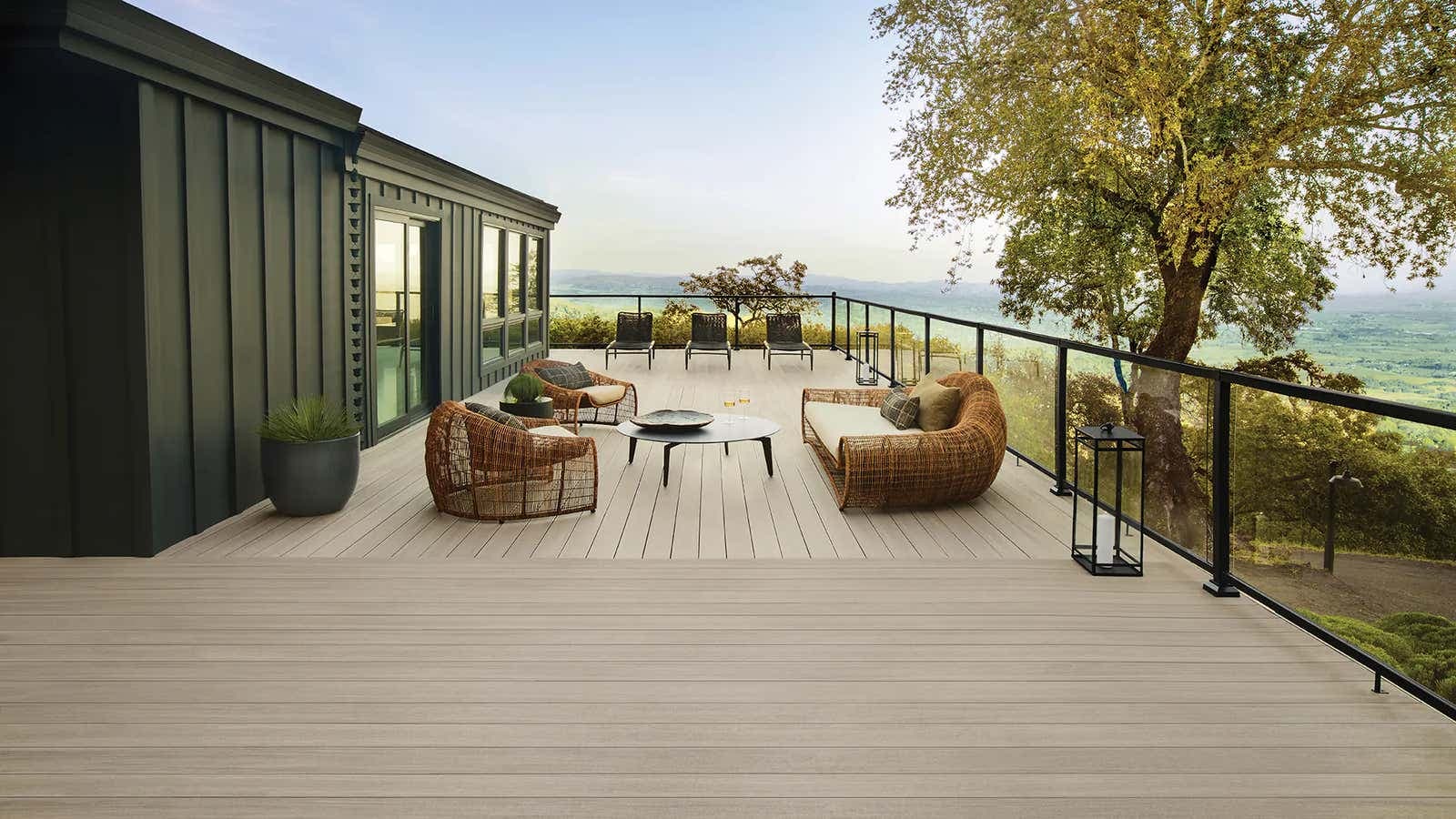
Understanding Composite Decking for Small Spaces
Composite decking combines recycled wood fibers and plastic, offering a material that resists rot, splinters, and insect damage. For compact outdoor spaces, these characteristics translate into a durable surface that requires only an annual soap-and-water wash, eliminating the need for sanding, staining, or oiling. This low-maintenance aspect is particularly valuable in smaller areas where access for extensive upkeep might be challenging.
The consistent color and grain of composite boards, available from brands like Trex, TimberTech, and Fiberon, can help create a unified and expansive feel in a small space. Unlike natural wood, which can have variations, composite decking offers predictable aesthetics board after board. Some collections also offer cooler-underfoot options, which can be a consideration in sunny Charleston climates. Capped shells are designed to resist humidity, a relevant feature for coastal environments.
Maximizing Usable Space Through Layout and Board Choice
In a compact area, the direction of your decking boards can significantly influence the perception of space. Laying boards parallel to the longest dimension of your area can make it appear longer, while a diagonal layout can create a sense of width and visual interest. For an 8-foot by 10-foot courtyard, running boards along the 10-foot length might enhance depth, or a diagonal approach could make the space feel more dynamic.
Consider the width of the decking boards. While standard widths are common, some composite collections offer narrower or wider profiles. Narrower boards can sometimes make a small space feel less cluttered, while wider boards might reduce the number of visible seams, creating a more continuous surface. The choice depends on the overall design aesthetic and how you wish to visually proportion the space.
Picture-frame borders can define the edges of your compact deck, giving it a finished look and subtly containing the space. This detail can be particularly effective in small courtyards or patios, adding a touch of sophistication without overwhelming the area. Ensure that any edge finishes or fascia boards selected are compatible with your chosen decking collection.
Support Systems and Project Access
For ground-level compact decks, a well-prepared sub-base and a robust support system are crucial. Even in small areas, proper ventilation beneath the deck is important to prevent moisture buildup, especially in humid climates. Follow manufacturer guidelines for joist spacing and ground clearance to ensure the longevity of your deck.
Project access for material delivery and construction can be a challenge in compact Charleston properties, particularly in historic districts with narrow alleys or limited street access. Consider the lengths of composite decking boards available and how they will be transported to your project site. Shorter board lengths might be easier to maneuver in tight spaces, potentially reducing waste from cuts if they align well with your project dimensions. Always confirm current lines, colors, and delivery timing with your supplier.
Worked Example: Courtyard Deck in Charleston
Let's revisit our hypothetical 8-foot by 10-foot courtyard. We aim to install composite decking running parallel to the 10-foot length to enhance the visual depth. We'll use standard 12-foot length composite boards, which are often available in collections like Trex or Fiberon.
Therefore, 8 feet / 0.4736 feet per board = approximately 16.89 boards. Rounding up, we would need 17 boards to cover the 8-foot width. Since we need 10-foot lengths, and boards are sold in 12-foot lengths, each 12-foot board can yield one 10-foot section with a 2-foot offcut. If the design includes a picture-frame border, those 2-foot offcuts may be usable for the border, reducing waste.
For a simple 8x10 foot area, assuming 17 boards of 10-foot length are needed, and sourcing 12-foot boards: we would purchase 17 boards at 12 feet each. This provides enough material for the main deck surface. The 2-foot offcuts from each board might be used for a border or saved for future repairs, depending on the project plan. Remember to account for joist material, fasteners, and any fascia or trim boards separately.
This example demonstrates how careful measurement and understanding of available board lengths can help optimize material use, even in a small project.
Complementary Materials and Maintenance
Beyond the decking boards themselves, consider complementary materials. Railings, if needed, should be chosen to match the scale of the space and the aesthetic of the composite decking. Low-profile lighting integrated into the deck or surrounding landscaping can enhance usability and ambiance without taking up valuable floor space. Explore options like <a href="/decking/pvc">PVC decking</a> for specific applications where its properties might be an advantage, or <a href="/decking/hardwood/ipe">Ipe hardwood</a> for a natural alternative.
Composite decking is designed for low maintenance, typically requiring only an annual wash with soap and water to keep it clean. This is a significant advantage in compact spaces where intensive maintenance might be difficult. Always refer to the manufacturer's specific cleaning recommendations for your chosen collection to ensure proper care.
Before you order
- Measure your compact space precisely, noting all obstructions and access points.
- Decide on a board layout (parallel, diagonal) to optimize visual space.
- Consider board width and profile; some collections offer varied options.
- Verify product specifications for support spacing and ventilation requirements.
- Account for material delivery and job site access in confined areas.
- Plan for edge finishes, fascia, and any railings or steps.
- Request a material quote, specifying collection, color, profile, quantity, and project ZIP.
- Confirm current availability and service options for your chosen composite decking.
Confirm installation details, approved uses and warranty terms in the current instructions for the exact product and profile. Your installer should verify the substrate, structure and applicable project requirements.
This is a planning guide for projects in Charleston, SC. Ask our team to confirm availability, delivery to your ZIP code and which branch can support your order.
Questions to help you decide
What are the best composite decking brands for small spaces?
Brands like Trex, TimberTech, and Fiberon all offer a range of composite decking collections suitable for compact outdoor spaces. The 'best' choice often depends on your aesthetic preference, desired color and finish, and specific project requirements, such as cooler-underfoot options or particular board profiles. All these brands provide durable, low-maintenance solutions.
Can composite decking be installed directly over an existing patio?
Installing composite decking directly over an existing patio is possible in some cases, but it requires careful planning to ensure proper drainage, ventilation, and a level, stable sub-structure. The existing patio must be sound and provide adequate support for the new deck frame. It is crucial to follow the specific installation guidelines from your chosen composite decking manufacturer, which typically involve creating a new joist system above the patio surface. This can raise the deck height, which should be considered for door thresholds and transitions.
How do I calculate the amount of composite decking needed for a small project?
To calculate the amount of composite decking, first measure the total square footage of your deck area. Then, determine the square footage covered by a single board (board width multiplied by length). Divide your total area by the board coverage to get an initial board count. Always add an extra 10-15% for cuts, waste, and future repairs, especially for diagonal layouts or intricate designs. For compact spaces, consider how standard board lengths (e.g., 12-foot, 16-foot, 20-foot) will fit your dimensions to minimize waste and ensure efficient cuts. It is always recommended to draw a simple layout plan to visualize board placement and cuts.
Request a Material Quote for Your Charleston Composite Decking Project
Ready to transform your compact outdoor space in Charleston, SC? Request a material quote today. Provide your project dimensions, desired composite decking profile and color, and your project ZIP code. We'll help you confirm current availability and service options.
Request a material quote →