Evaluating Your Existing Deck Frame
Before selecting any new decking material, a thorough inspection of your existing deck frame is crucial. This frame, typically made of pressure-treated lumber, is the foundational support for your entire deck. Hardwood decking, known for its density and durability, is heavier than many common decking materials. Ensuring your frame can adequately bear this increased load is paramount for safety and longevity.
Key areas to inspect include the ledger board (where the deck attaches to your house), joists, beams, and support posts. Look for any signs of rot, insect damage, splitting, or excessive deflection. Pay close attention to connections and fasteners; corroded or loose hardware can compromise structural integrity. If the frame shows significant wear, consult a structural engineer or a qualified contractor. They can assess the frame's condition and advise on necessary repairs, reinforcements, or a complete replacement. A sound sub-structure is non-negotiable for a successful hardwood deck renovation.
Understanding Hardwood Decking Species for Charleston, SC
For Charleston's climate, which includes coastal exposure and varying humidity, selecting a hardwood species known for its resilience is key. Two popular choices for their density and natural resistance are Ipe and Cumaru.
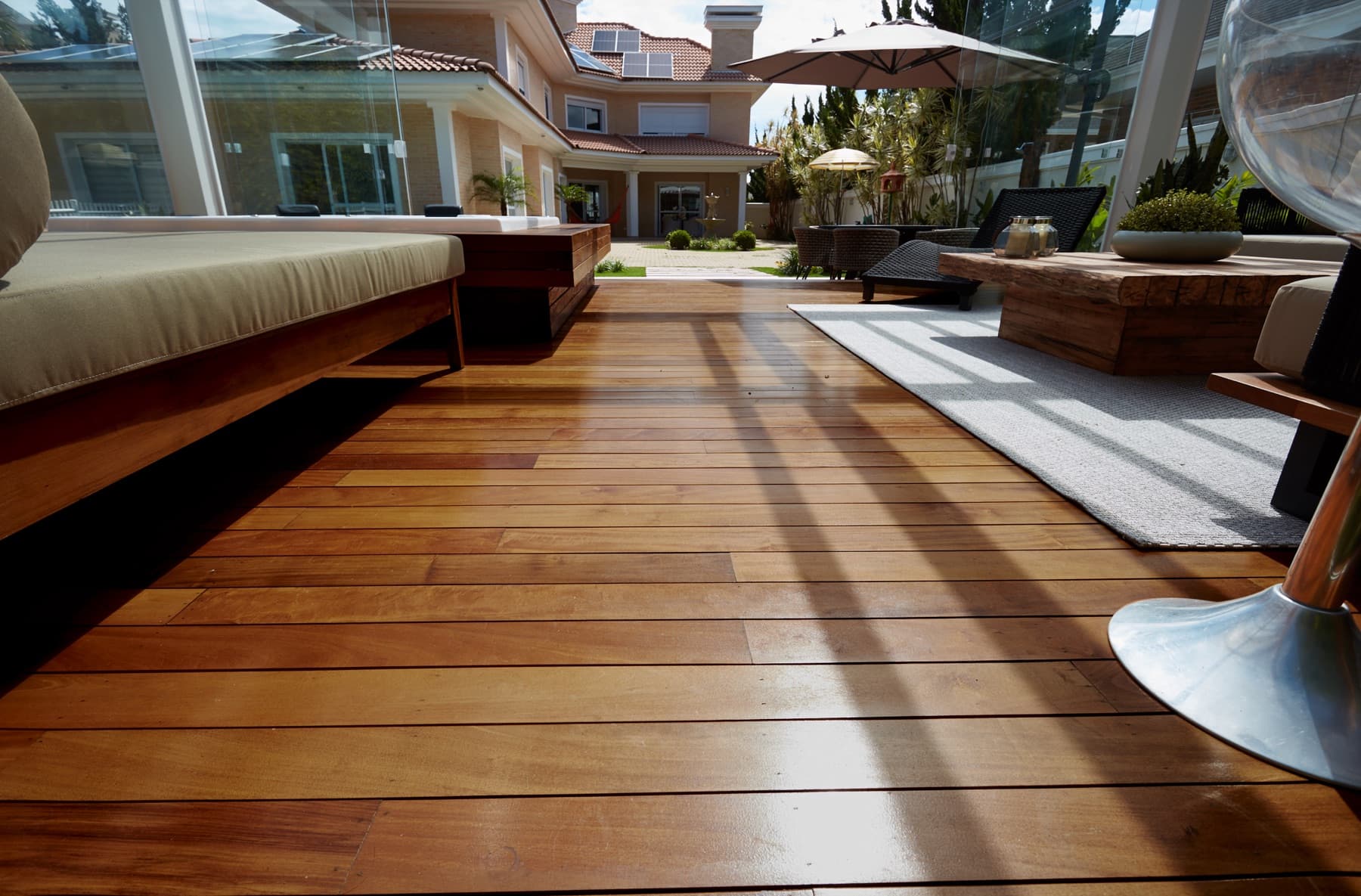
Ipe, also known as Brazilian Walnut, is a dense hardwood recognized for its reddish-brown to olive-brown tones and exceptional durability. This species is often selected for its minimal movement post-installation and its ability to resist warping even after moisture exposure. Ipe is a marine-grade standard and is often specified for docks and boardwalks due to its performance in salt air and spray. With proper care, Ipe decking can last for many decades. (S1, S2)
Cumaru is another very durable tropical hardwood. It is resistant to termites and weather changes, making it a suitable choice for demanding outdoor applications. It typically ranges in color and can have a scent of cinnamon and vanilla when worked. Cumaru is also highly valued for its natural resistance to insects, rot, and fungi. (S1)
Project Planning: Measurements and Material Quantity
Accurate measurements are vital for ordering the correct quantity of hardwood decking. Begin by measuring the total area of your deck. For a rectangular deck, this is straightforward: length multiplied by width. However, account for any angles, curves, or cut-outs for posts or other features.
Hardwood decking is typically available in specific board profiles and lengths. For instance, Ipe and Cumaru are available in various dimensions, such as 1"x2" through 6"x6" in lengths from 3 to 24 feet. (S1) When calculating material, consider the board width you intend to use and factor in waste for cuts and any specific pattern you plan (e.g., diagonal layouts or picture-frame borders). It's generally recommended to add 10-15% extra material to account for cuts, potential defects, and future repairs. Do not assume that the area divided by a single board area will be the exact quantity; specific lengths and widths will impact the number of boards needed to minimize waste and seams. Confirm exact profile and length availability before finalizing your calculations.
Installation Considerations for Hardwood Decking
Hardwood decking, particularly dense species like Ipe and Cumaru, requires specialized installation techniques and tools due to its hardness. Professional installation is often recommended to ensure proper fastening and board spacing. These hardwoods are not typically installed with generic hidden fasteners; always confirm compatibility of any fastening system with the specific hardwood product. Proper ventilation beneath the deck is also crucial to prevent moisture buildup and ensure the long-term stability of the wood.
The sub-structure must be level and sound, as hardwood boards will follow the contours of the framing. Adequate spacing between boards is necessary to allow for natural expansion and contraction, which can occur with changes in humidity. Always refer to the manufacturer's specific installation guidelines for board spacing and fastening methods for the best results and to maintain any product considerations.
Maintenance for Hardwood Decking in Coastal Environments
One of the advantages of dense hardwoods like Ipe and Cumaru is their relatively low maintenance. For decks in coastal areas like Charleston, a simple annual wash is often sufficient. Salt air and spray do not typically affect these marine-grade woods. (S2)
If you prefer to maintain the original rich brown tones of Ipe or Cumaru, an annual application of a UV-blocking oil or sealer is recommended. If left untreated, both species will naturally weather to a silvery-gray patina, which is a common and aesthetically pleasing choice for many homeowners, and does not impact the structural integrity of the wood. This weathering process is particularly common in sun-exposed areas. Regular cleaning helps remove dirt, pollen, and mildew, which can accumulate in humid environments.
Before you order
- Assess existing deck frame for rot, damage, and structural integrity.
- Confirm if the existing frame can support the weight of hardwood decking.
- Measure total deck area accurately, accounting for irregular shapes.
- Choose a hardwood species (e.g., Ipe, Cumaru) suitable for Charleston's climate.
- Determine desired board profile and length availability.
- Calculate material quantity, adding 10-15% for waste and cuts.
- Plan for professional installation due to hardwood density and specialized tools.
- Consider under-deck ventilation to prevent moisture issues.
- Decide on desired finish: natural silvering or oiled to maintain original color.
- Budget for annual cleaning and optional sealing.
Confirm installation details, approved uses and warranty terms in the current instructions for the exact product and profile. Your installer should verify the substrate, structure and applicable project requirements.
This is a planning guide for projects in Charleston, SC. Ask our team to confirm availability, delivery to your ZIP code and which branch can support your order.
Questions to help you decide
How do I know if my existing deck frame can support hardwood decking?
Hardwood decking is denser and heavier than many other materials. It's essential to have a qualified contractor or structural engineer inspect your existing frame for structural integrity, rot, insect damage, and proper load-bearing capacity. They can advise if reinforcement or replacement is necessary before installing hardwood.
What is the typical lifespan of hardwood decking in Charleston's climate?
With proper installation and minimal maintenance, hardwoods like Ipe can last up to 75 years, and Cumaru over 25 years. (S1, S2) Their natural density and resistance to rot, insects, and weathering contribute to their longevity, even in coastal environments with salt air and humidity.
Can I install hardwood decking myself?
While it is possible for experienced DIYers, installing dense hardwoods like Ipe and Cumaru typically requires specialized tools and techniques. Due to their hardness, pre-drilling and specific fastening methods are often necessary. Professional installation is generally recommended to ensure a proper, long-lasting result. (S1)
Ready to Plan Your Hardwood Deck Renovation?
Request a material quote with your project dimensions, desired hardwood profile, and ZIP code to confirm current availability and service options. Our team can assist with material selection for your Charleston, SC project.
Request a material quote →