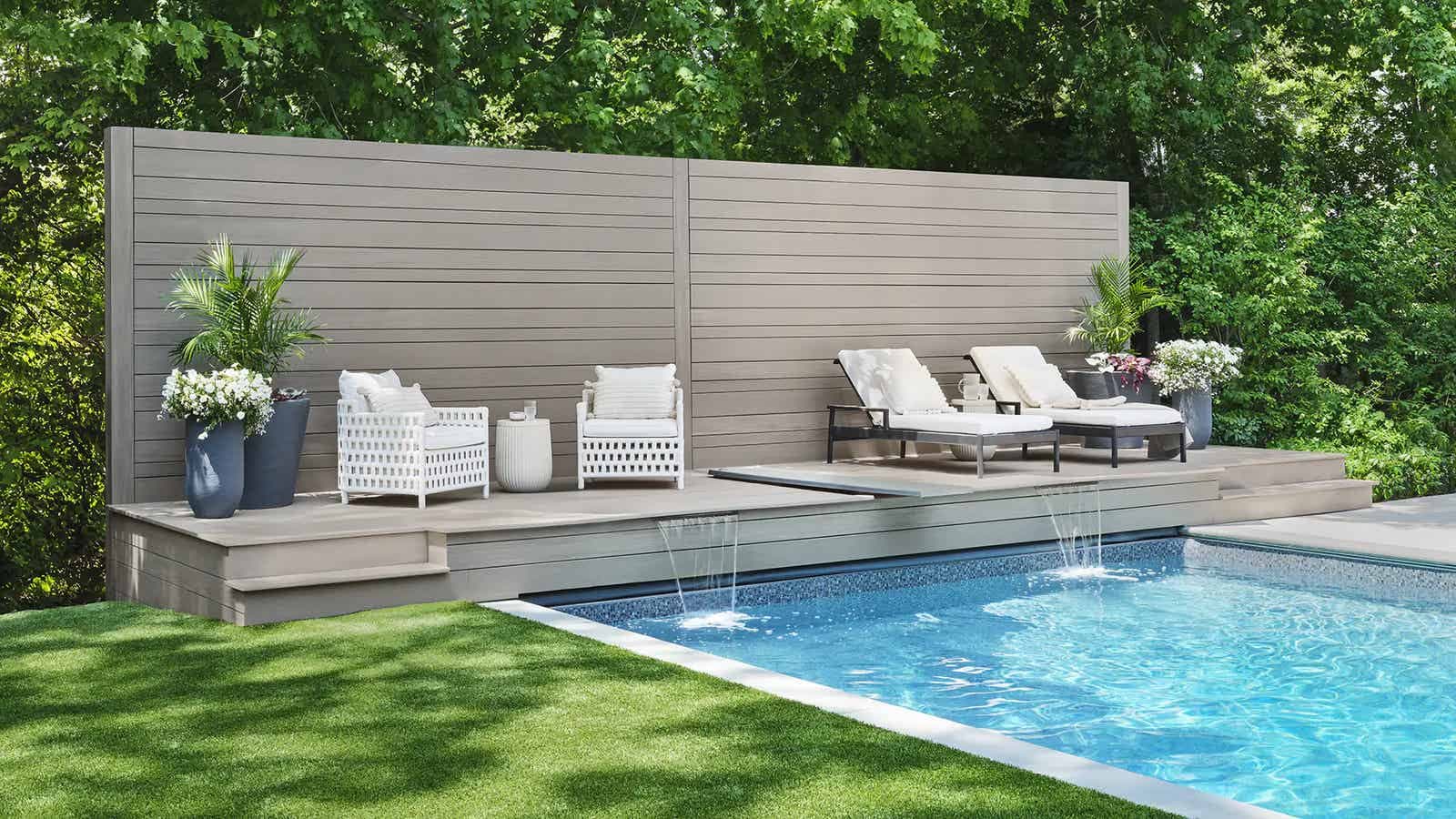
Understanding PVC Decking for Outdoor Kitchen Environments
PVC decking, such as the TimberTech Azek line, is a capped polymer material that contains no wood fiber. This composition offers several advantages in an outdoor kitchen setting. It is waterproof to the core, which means it resists swelling, staining, or rotting from spills, rain, or even standing water. This makes it a practical choice for areas where food preparation and cooking might lead to drips and splashes.
The advanced capping on PVC boards helps them shed grease and wine, allowing for cleaning with soap and water. This low-maintenance aspect is particularly beneficial in a high-traffic, spill-prone area like an outdoor kitchen. Additionally, PVC decking is lighter than hardwood and some composite options, which can simplify handling and installation, especially for elevated decks.
While PVC decking offers resistance to moisture and stains, it is crucial to understand its limitations, particularly concerning direct heat and heavy point loads, which are common elements in outdoor kitchens. Always refer to manufacturer guidelines for specific product performance and installation requirements.
For more information on the properties of PVC decking, visit our main product page: [PVC Decking](/decking/pvc)
Clearances for Cooking Appliances and Heat Sources
Grills, side burners, and pizza ovens can reach high temperatures, and direct exposure to intense heat can potentially damage or distort PVC decking.
Always consult the appliance manufacturer's installation manual for required clearances to combustible materials. Even though PVC decking is synthetic, it is generally considered a combustible material in this context. A common recommendation is to maintain a minimum distance, often 18 to 24 inches, between the heat source and the decking surface. However, specific appliance requirements may vary.
Consider using non-combustible grill pads or mats designed for high heat resistance directly under and around cooking appliances. These pads create a protective barrier, shielding the PVC deck from radiant heat and stray embers. Ensure these mats are rated for outdoor use and can withstand the temperatures produced by your specific appliances.
For appliances that are built-in or integrated into cabinetry, verify that the cabinetry itself provides the necessary insulation and ventilation to prevent heat transfer to the surrounding deck structure or surface.
Structural Support for Heavy Outdoor Kitchen Components
Outdoor kitchens often involve heavy elements such as refrigerators, sinks, stone countertops, and built-in grills. These components can exert significant weight on the deck structure, requiring robust framing and adequate support.
Before finalizing your outdoor kitchen layout, calculate the approximate total weight of all appliances, cabinetry, and countertops. This weight must be distributed over the deck's joists and beams. Standard deck framing may not be sufficient to support concentrated heavy loads.
It is often necessary to reinforce the deck substructure in areas where heavy appliances will be placed. This might involve adding extra joists, doubling up existing joists, or incorporating additional blocking and support posts. For very heavy items, consider pouring a dedicated concrete pad that is flush with the deck surface or extending support directly to the ground.
Consulting with a structural engineer or an experienced deck builder is highly recommended to ensure the deck's framing can safely accommodate the planned loads. Overlooking structural support can lead to sagging, instability, or even structural failure over time.
Ventilation and Drainage for Outdoor Kitchens
Proper ventilation and drainage are crucial for the longevity of both your outdoor kitchen components and the PVC deck itself. Enclosed cabinetry in outdoor kitchens can trap moisture, leading to mildew or damage to appliances.
Ensure that any built-in cabinets have adequate ventilation to allow air circulation and prevent moisture buildup. Louvered doors or strategically placed vents can facilitate airflow. For gas appliances, proper ventilation is also a safety requirement, allowing for the dissipation of any gas leaks.
Drainage around sinks and appliances is equally important. Design the deck surface with a slight slope away from the house and any enclosed structures to prevent standing water. For sinks, ensure that plumbing is correctly installed to drain wastewater away from the deck structure and into an appropriate drainage system, preventing water from pooling under or on the deck.
PVC decking's resistance to moisture makes it forgiving with spills, but preventing water accumulation beneath the deck structure is always good practice to protect the overall integrity of the substructure.
Worked Example: Planning a Grill Area on a PVC Deck
Let's consider a hypothetical 8-foot by 10-foot area of a PVC deck designated for an outdoor grill station. We plan to place a freestanding gas grill, measuring 30 inches wide by 24 inches deep, and a small prep cart, 24 inches wide by 18 inches deep.
This means the grill should be placed at least 24 inches from any deck railing or adjacent structures. To protect the PVC decking from heat, we select a high-heat-rated grill mat, 36 inches by 30 inches, to place directly under the grill. The mat will extend 3 inches beyond the grill's footprint on all sides.
For structural support, we estimate the grill weighs 150 lbs and the prep cart 50 lbs. We will also add blocking between these reinforced joists for lateral stability and load distribution. The prep cart, being lighter and mobile, does not require specific structural reinforcement beyond the standard deck framing.
This example highlights the need for precise measurements, adherence to manufacturer guidelines for both decking and appliances, and a focus on structural integrity and heat protection.
Before you order
- Have you checked the appliance manufacturer's required clearances for heat sources?
- Is there a non-combustible grill pad or mat specified for under cooking appliances?
- Have you calculated the total weight of all outdoor kitchen components?
- Is the deck substructure adequately reinforced for heavy loads?
- Are there provisions for proper ventilation within outdoor kitchen cabinetry?
- Is the deck designed for effective water drainage around the kitchen area?
- Have you considered the placement of electrical outlets and gas lines, and are they protected?
- Is there sufficient space for comfortable movement and traffic flow around the outdoor kitchen?
- Have you selected PVC decking colors that are heat-mitigating if the area is sun-exposed?
- Is there an access plan for maintenance or repairs to plumbing and electrical components under the deck?
Confirm installation details, approved uses and warranty terms in the current instructions for the exact product and profile. Your installer should verify the substrate, structure and applicable project requirements.
Questions to help you decide
Can PVC decking withstand the heat from a grill?
While PVC decking is durable, direct and prolonged exposure to high heat from grills or other cooking appliances can potentially cause damage or discoloration. It is crucial to maintain the minimum clearances specified by the appliance manufacturer and to use a non-combustible grill mat or pad specifically designed for high heat resistance under all cooking equipment. This provides a necessary barrier to protect the decking surface.
What kind of maintenance does PVC decking require around an outdoor kitchen?
PVC decking is known for its low maintenance, which is a significant advantage for an outdoor kitchen. Spills from food or drinks can typically be wiped clean with soap and water. The advanced capping on TimberTech Azek PVC boards helps resist stains. Regular cleaning to remove debris and occasional washing will keep the deck looking its best. Always avoid abrasive cleaners or harsh chemicals that could damage the decking surface.
Do I need special fasteners for PVC decking in an outdoor kitchen area?
The type of fasteners needed for PVC decking is generally determined by the specific decking product and installation method, not necessarily by the presence of an outdoor kitchen. Many PVC decking systems use hidden fasteners for a clean aesthetic. Always follow the manufacturer's recommendations for compatible fasteners and installation spacing to ensure proper board performance and stability, especially in areas that might experience more foot traffic or localized weight.
Request a Material Quote for Your Outdoor Kitchen Deck Project
Ready to plan your PVC deck with an integrated outdoor kitchen? Provide your project dimensions, desired PVC decking profile, and ZIP code to request a material quote. Our team can help confirm current availability and service options for your project.
Request a material quote →