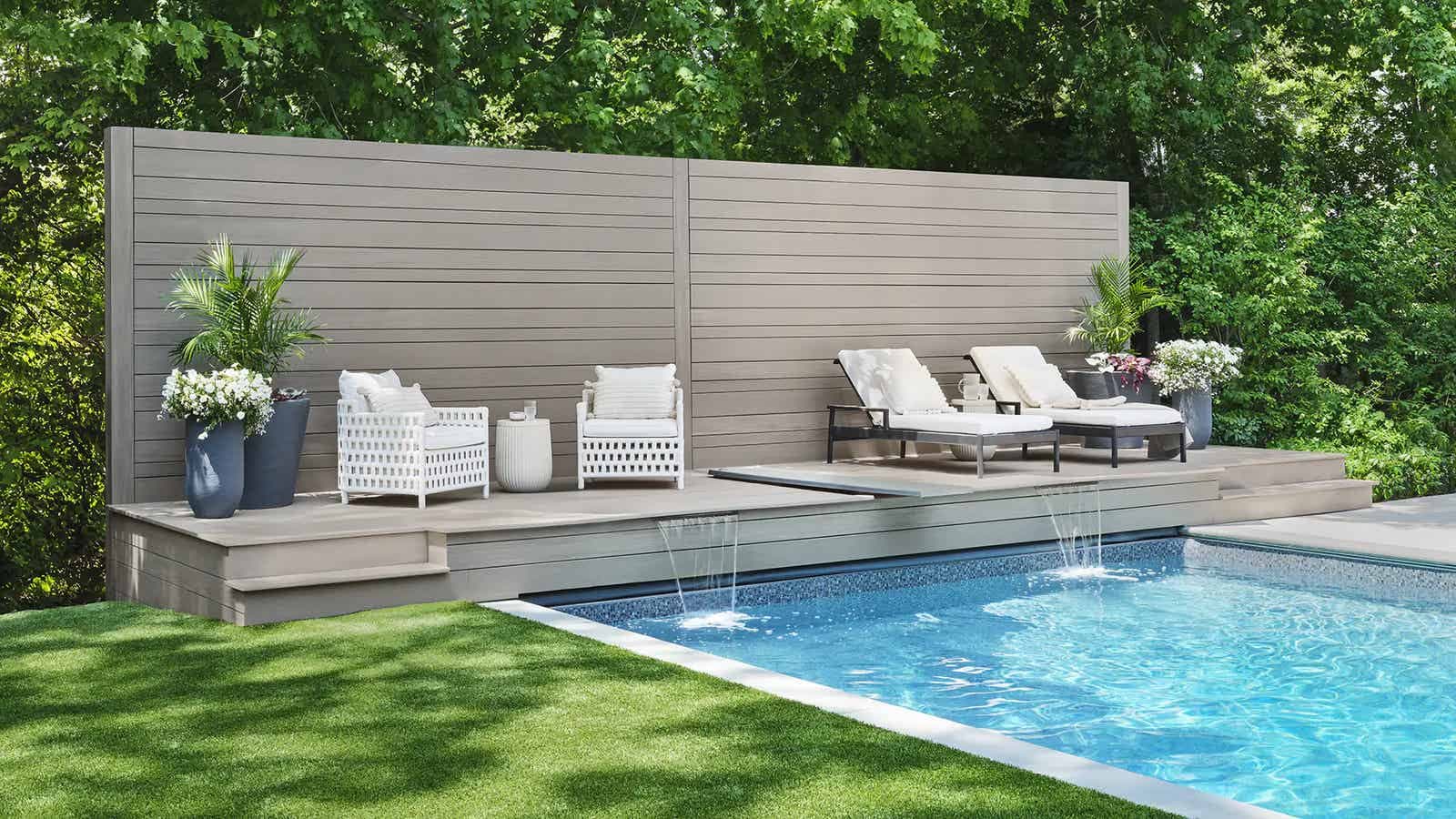
Understanding PVC Decking for Commercial Use
PVC (Polyvinyl Chloride) decking is a 100% synthetic material. This means it is engineered without any wood content, distinguishing it from wood-plastic composites. This fundamental difference is critical for hospitality settings where material performance in diverse conditions is paramount.
The fully synthetic nature of PVC decking is designed to resist moisture absorption, which can be a significant advantage in areas like poolside surrounds, waterfront dining areas, or uncovered patios. Its construction aims to prevent issues such as swelling, staining, or rot that can affect wood-based materials when exposed to consistent moisture or spills. This characteristic also contributes to its potential for use in areas that experience salt spray, such as coastal resorts.
PVC decking is also known for being comparatively lighter than some hardwood or composite options. This can simplify handling during installation, potentially reducing labor time, especially for elevated or rooftop deck projects common in urban hospitality developments.
The material is designed for ease of cleaning, often requiring only soap and water to address spills and general grime. This is an important factor for hospitality operators who need to maintain high standards of cleanliness with efficient processes.
Designing for High Traffic and Aesthetic Consistency
Hospitality spaces experience continuous and often heavy foot traffic. PVC decking is engineered to withstand this usage, with a surface designed for durability. The selection of specific PVC collections, such as those with advanced capping, can offer enhanced resistance to scuffs and scratches, helping to maintain the deck's appearance over time.
Aesthetic consistency across a property is vital for brand identity. PVC decking is available in various collections that mimic the look of natural wood, offering different grain patterns and color options. For instance, collections like Vintage, Landmark, and Harvest aim to provide deep wood-like aesthetics. This allows designers to achieve a particular visual theme that complements the overall architecture and interior design of the hospitality establishment. Coordinating board widths and lengths can further enhance the design coherence.
Consider how the chosen color interacts with direct sunlight. Some PVC decking options include heat-mitigating color technology, which can be a factor for guest comfort on sun-exposed decks and patios.
Suitability for Moisture-Prone Areas: Pool Decks and Waterfronts
One of the primary advantages of PVC decking in hospitality is its inherent resistance to moisture. Its 100% synthetic composition means there is no wood fiber to swell, stain, or rot when exposed to standing water, splash zones, or even salt spray. This makes it a strong candidate for environments where surfaces are frequently wet.
For hotel pool surrounds, PVC decking can be a practical choice. It is designed to be waterproof to the core, which helps prevent the material degradation often associated with continuous exposure to chlorinated water or splashes. Similarly, for docks, marinas, or restaurant patios located near bodies of water, this moisture resistance can contribute to the longevity of the deck surface.
Even covered porches within a hospitality complex can benefit, especially if they are exposed to weather from multiple directions, leading to boards that frequently get wet. The material's ability to live wet without significant impact on its integrity makes it a default specification for such applications.
Maintenance and Operational Efficiency
In a hospitality environment, minimizing downtime for maintenance and ensuring efficient cleaning protocols are crucial for operational success. PVC decking is designed as a low-maintenance material. Its capped polymer surface is intended to shed common hospitality spills like grease and wine, allowing them to be wiped clean with soap and water. This characteristic can significantly reduce the time and resources needed for daily upkeep compared to materials that require more intensive cleaning or periodic sealing.
The resistance to staining and fading, often backed by manufacturer coverage, contributes to the deck's long-term appearance with less effort. This means less frequent need for deep cleaning or refinishing, allowing staff to focus on guest services.
While maintenance is simpler, establishing a regular cleaning schedule is still important to remove debris and prevent the buildup of grime, especially in high-traffic areas. Consult the specific manufacturer's guidelines for recommended cleaning products and methods to ensure compatibility and preserve the deck's integrity.
Worked Example: A Hotel Pool Deck Renovation
Consider a hypothetical renovation of a hotel pool deck measuring 60 feet long by 30 feet wide, with an additional 10-foot by 20-foot lounge area adjacent to the main pool. The project requires a durable, slip-resistant, and low-maintenance surface that can withstand constant moisture and heavy guest traffic. The hotel aims for a sophisticated, light gray wood-grain aesthetic to complement its modern architecture.
The total deck area is (60 ft * 30 ft) + (10 ft * 20 ft) = 1800 sq ft + 200 sq ft = 2000 sq ft. Assuming a standard PVC decking board is 12 feet long and 5.5 inches wide (0.458 feet), each board covers approximately 12 * 0.458 = 5.496 square feet. To cover 2000 square feet, approximately 2000 / 5.496 = 363.9 boards would be needed, rounded up to 364 boards. This calculation is for coverage only; actual purchase quantity would account for waste, cuts, and specific layout requirements.
For the border around the pool and the edges of the lounge area, a picture-frame design with matching fascia boards would be specified. This ensures a clean, finished look and helps define the different zones of the deck. The use of hidden fasteners would be prioritized to create a smooth, uninterrupted surface for guest comfort and safety.
Given the pool environment, selecting a PVC decking product known for its heat-mitigating color options in a light gray would be important to keep the surface cooler for bare feet. The material's inherent resistance to water and chlorine would minimize long-term damage and simplify daily cleaning routines, which is crucial for a busy hotel. Furthermore, the material's lighter weight could simplify installation logistics, especially if the renovation involves working around existing pool infrastructure.
Before you order
- Assess specific moisture exposure (poolside, waterfront, uncovered patio).
- Evaluate expected foot traffic volume and type (shoes, bare feet).
- Determine desired aesthetic (wood grain, color, board width).
- Consider heat mitigation for sun-exposed areas and guest comfort.
- Review manufacturer's cleaning and maintenance guidelines.
- Plan for fascia, trim, and fastening systems for a finished look.
- Confirm compatibility with any existing sub-structure or framing.
- Account for installation logistics, especially for elevated or rooftop decks.
Confirm installation details, approved uses and warranty terms in the current instructions for the exact product and profile. Your installer should verify the substrate, structure and applicable project requirements.
Questions to help you decide
How does PVC decking handle spills common in hospitality settings?
PVC decking, particularly capped polymer options, is designed to shed common spills like grease, food, and beverages such as wine. Its non-porous surface makes it relatively easy to clean with soap and water, which is a significant advantage for maintaining hygiene and appearance in high-traffic hospitality environments. Always refer to the specific manufacturer's cleaning recommendations for best results.
Is PVC decking suitable for pool surrounds and areas with constant water exposure?
Yes, PVC decking is often specified for pool surrounds and other areas with consistent water exposure. Its 100% synthetic composition means it contains no wood fibers that can swell, rot, or stain when wet. This characteristic makes it a durable option for splash zones, docks, and other environments where the deck boards are frequently in contact with water, including chlorinated or salt water.
What are the aesthetic options for PVC decking in a commercial project?
PVC decking offers a range of aesthetic choices designed to mimic natural wood. Collections often feature various wood grain patterns, colors, and finishes, from deep, rich tones to lighter, more contemporary shades. This allows designers to select a look that complements the specific architectural style and brand identity of the hospitality establishment. Board widths and lengths can also be chosen to create a desired visual flow and layout.
Request a Quote for Your Hospitality Decking Project
Ready to specify PVC decking for your hotel, resort, or restaurant? Provide your project dimensions, desired profile, and ZIP code to request a material quote. We can also confirm current availability and service options for your commercial project.
Request a material quote →