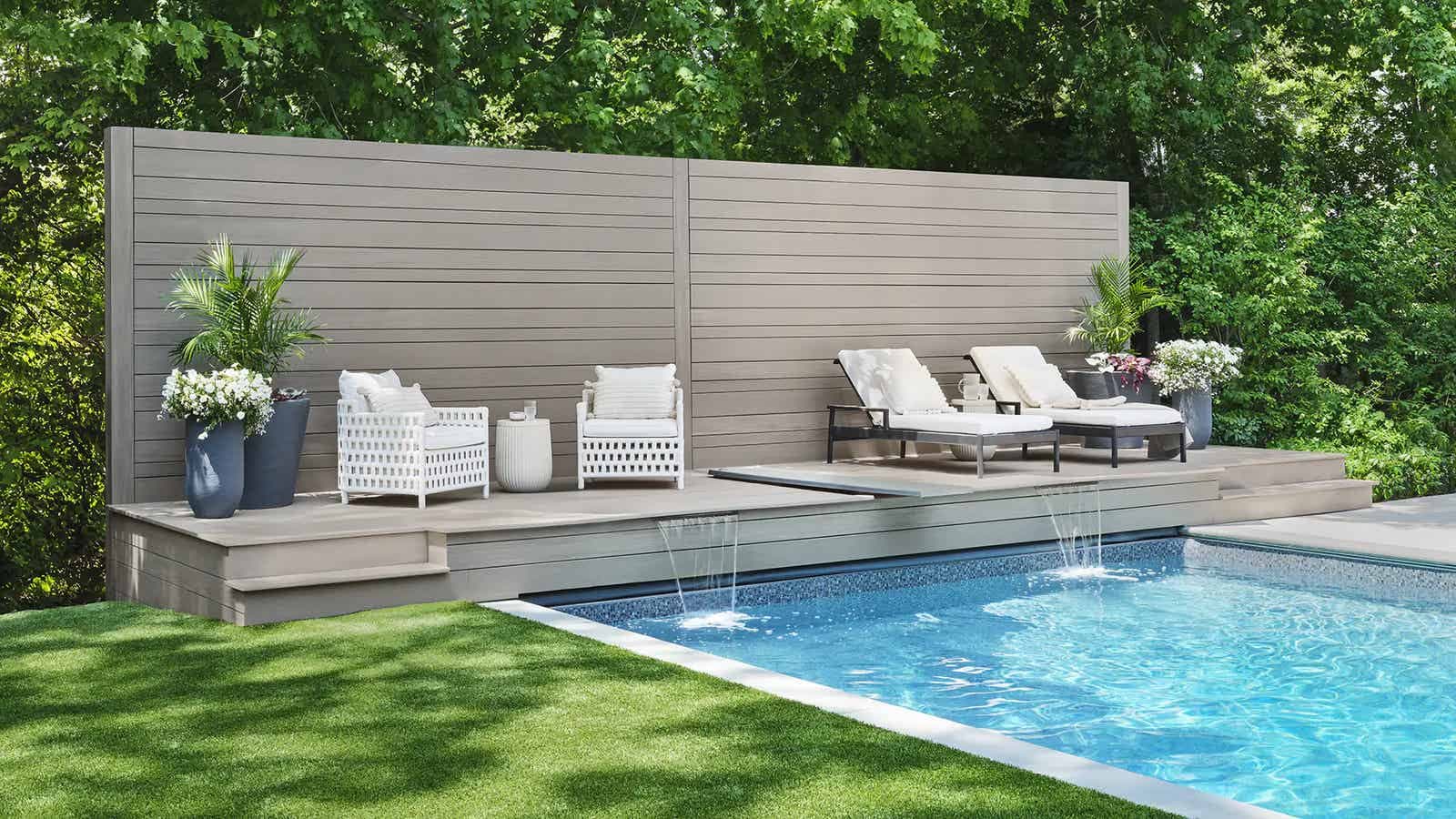
Why Choose a Diagonal Layout?
A diagonal decking pattern can be a deliberate design choice to add visual interest. It can break up the monotony of a large, simple deck or create a more inviting flow in an irregularly shaped space. The angled lines can draw the eye towards specific features, such as a garden view or an outdoor kitchen. For some homeowners, it's a way to differentiate their outdoor living area from neighboring properties.
Beyond aesthetics, a diagonal layout can sometimes make a narrow deck appear wider, or a small deck feel larger, by visually expanding the space. It can also be used to integrate the deck more seamlessly with adjacent landscape features that might not align with a strictly orthogonal grid. The unique appearance often creates a sophisticated, custom look for your outdoor area.
Increased Material Waste and Calculation
One of the primary considerations for a diagonal PVC decking layout is the increased material waste. When cutting boards at a 45-degree angle to fit the perimeter of your deck, you'll inevitably have triangular offcuts that may not be reusable. This typically means ordering 15-20% more material than you would for a straight layout.
To estimate material, first calculate the total square footage of your deck. Then, add the waste factor. For example, a 100 square foot deck might require 115-120 square feet of decking material. It's advisable to create a detailed cut plan or consult with a professional to minimize waste and ensure you purchase enough boards. Always factor in extra for potential miscuts or future repairs.
PVC decking, such as products from Azek and TimberTech Azek, is 100% synthetic and does not contain wood fiber, making it resistant to swelling, staining, or rot, even in splash zones. This durability means that while waste factor is a cost consideration, the material itself is robust for the application.
Consider a hypothetical 10-foot by 12-foot rectangular deck. This is 120 square feet. For a diagonal layout, you might plan for a 15% waste factor, meaning you would aim to purchase approximately 138 square feet of PVC decking. If boards are typically sold in specific lengths and widths, you would then convert this square footage into the number of full boards required, accounting for the most efficient use of available lengths.
Joist Spacing and Blocking Requirements
A diagonal decking pattern changes how the load is distributed across your deck's substructure. While straight decking runs perpendicular to the joists, diagonal decking runs at an angle, meaning each board crosses multiple joists at an oblique angle. This often necessitates closer joist spacing or the addition of blocking to provide adequate support and fastening points.
Most PVC decking manufacturers specify a maximum joist spacing for straight installations. For diagonal layouts, this spacing often needs to be reduced, or additional blocking may be required between joists to ensure every decking board has sufficient support and can be properly fastened. Always consult the specific manufacturer's installation guide for the PVC decking product you choose, as requirements can vary significantly.
This ensures the boards are adequately supported and prevents excessive deflection or movement, which could compromise the deck's longevity and appearance.
PVC decking is lighter than hardwood or composite, which can make handling and installation faster. However, its flexibility still requires proper support to prevent sagging between joists, especially when laid diagonally. Adequate blocking also provides crucial attachment points for fasteners, maintaining the integrity of the deck surface.
Manufacturer-Specific Spacing and Fastening
Adhering to the manufacturer's installation instructions for board spacing and fastening is critical for any decking project, but especially so for diagonal layouts. PVC decking expands and contracts with temperature changes, and proper gapping allows for this movement without causing buckling or other issues. Diagonal cuts can sometimes make it more challenging to maintain consistent gaps.
Manufacturers typically provide specific recommendations for the gap between boards, often based on board width and anticipated temperature fluctuations. For diagonal installations, these gaps remain important. Hidden fastening systems are a common choice for PVC decking, providing a clean, screw-free surface. Ensure your chosen fasteners are compatible with a diagonal layout and can maintain the recommended spacing.
When using a hidden fastener system, verify that the clips or fasteners are designed to accommodate diagonal installations and provide the necessary board spacing. Some systems may require specific starter clips or methods for the perimeter boards and angled cuts. Face-fastening may also be an option, but careful pre-drilling and consistent screw placement are essential for a neat appearance and to prevent splitting.
Products like TimberTech Azek's advanced PVC boards are designed for low maintenance and durability. Following their specific fastening and spacing guidelines helps ensure the warranty remains valid and the deck performs as intended over time, resisting issues like warping or cupping.
Worked Example: Diagonal Decking for a Patio Extension
Consider a homeowner extending their patio with a new 8-foot by 10-foot PVC deck. The existing patio is a simple rectangle, and they want to add visual interest with a diagonal decking pattern. The total area is 80 square feet. Assuming a 15% waste factor for diagonal cuts, they would need approximately 92 square feet of decking material.
They choose a PVC decking product that comes in 12-foot lengths and measures 5.5 inches wide. Each 12-foot board provides (12 feet * 12 inches/foot) * 5.5 inches = 792 square inches, or 5.5 square feet. To cover 92 square feet, they would need 92 / 5.5 = 16.7 boards. Rounding up, they would purchase 17 full 12-foot boards.
This requires careful planning of the blocking material and installation.
Before you order
- Calculate deck area and add 15-20% for diagonal cut waste.
- Verify manufacturer's recommended joist spacing for diagonal layouts.
- Plan for additional blocking if current joist spacing is too wide.
- Confirm compatibility of chosen fasteners with diagonal installation and required board gaps.
- Sketch a detailed cut plan to optimize material use and visualize the layout.
- Consider the direction of the diagonal — does it lead the eye towards a focal point?
- Confirm the availability of necessary tools for precise angled cuts.
- Review manufacturer's specific instructions for perimeter board installation.
- Account for any special trimming or finishing details around posts or railings.
Confirm installation details, approved uses and warranty terms in the current instructions for the exact product and profile. Your installer should verify the substrate, structure and applicable project requirements.
Questions to help you decide
Does a diagonal layout affect the structural integrity of the deck?
A diagonal layout itself does not inherently weaken the deck, but it changes how the decking boards distribute weight to the substructure. Therefore, it's crucial to follow manufacturer guidelines for joist spacing and add blocking as recommended to ensure adequate support and fastening for the diagonal boards. Neglecting these adjustments could lead to excessive board deflection or movement.
Is it harder to install hidden fasteners with a diagonal layout?
Installing hidden fasteners with a diagonal layout can be slightly more complex than with a straight layout, especially for perimeter boards and angled cuts. You need to ensure consistent board spacing at the angles and that the clips engage properly. Always verify that your chosen hidden fastener system is suitable for diagonal installations and follow the manufacturer's specific instructions for angled applications.
How do I calculate the amount of PVC decking needed for a diagonal layout?
Start by calculating the total square footage of your deck. Then, add a waste factor of 15% to 20% to account for the angled cuts and offcuts that cannot be reused. Divide this adjusted square footage by the square footage of a single board to determine the number of boards to purchase. It's always wise to round up and consider ordering a few extra boards for contingencies.
Ready to Plan Your Diagonal PVC Decking Project?
Request a material quote with your project dimensions, exact PVC decking profile preference, and ZIP code. We can help you confirm current availability and service options for your unique diagonal layout.
Request a material quote →