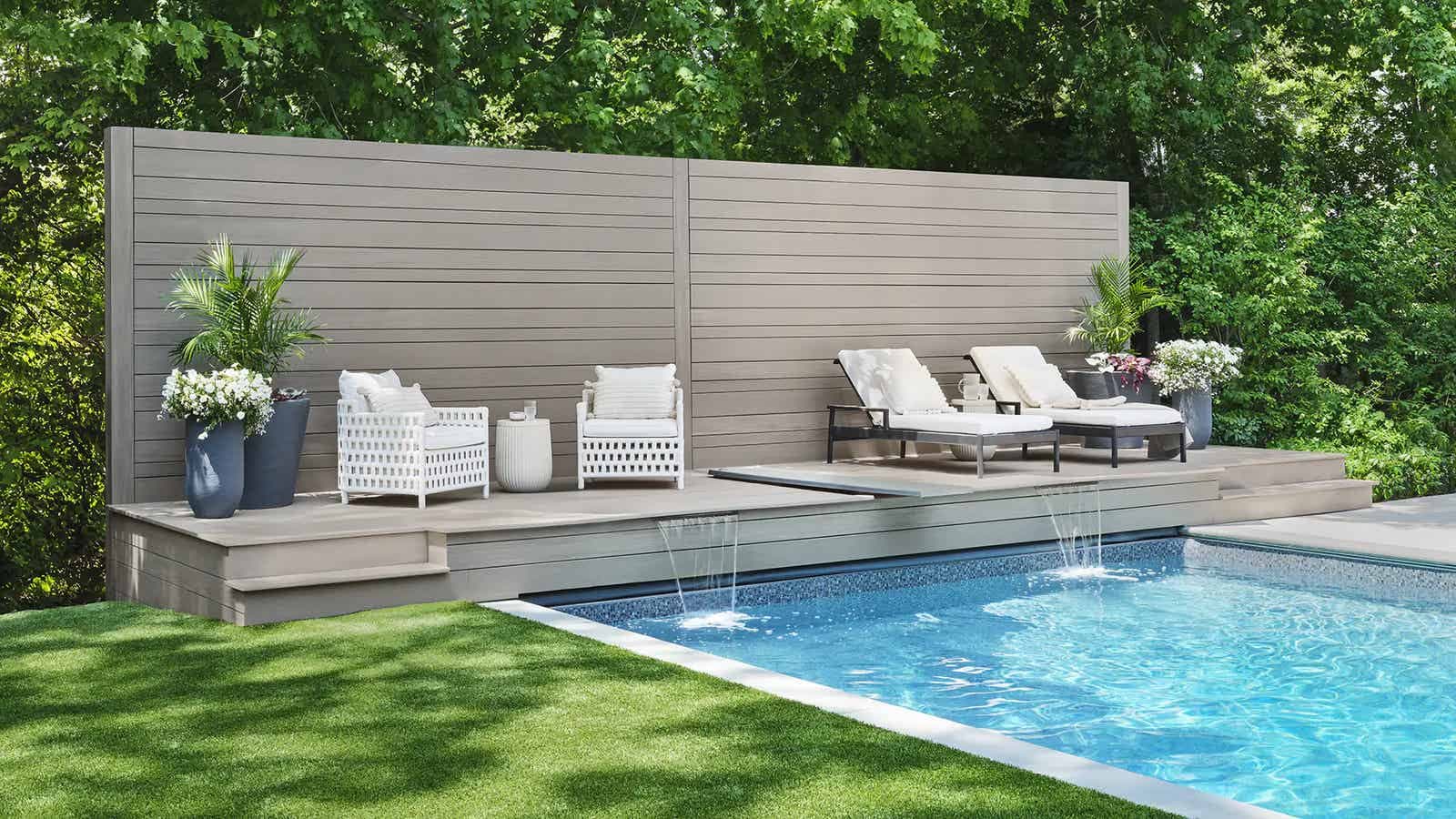
Confirming the PVC Decking Product Line
Before any order is placed, confirm the exact PVC decking product line with your contractor. PVC decking, such as the TimberTech Azek line, is a 100% synthetic material, known for its waterproof core and resistance to swelling, staining, or rot. These characteristics make it suitable for areas exposed to standing water, splash zones, or salt spray. Different collections, like Vintage, Landmark, and Harvest, offer various aesthetics, including deeper wood looks.
Your contractor should verify the specific collection, color, and finish you've chosen. This confirmation helps prevent ordering errors and ensures the aesthetic you've planned is the one delivered. Check if the chosen product has specific installation requirements or compatible accessory lines that need to be factored into the order.
Knowing the precise product also allows for a final review of any manufacturer-specific guidelines for installation, spacing, or fastening, which can influence the total quantity of boards and fasteners needed.
Verifying Project Dimensions and Layout
Accurate project dimensions are fundamental to material planning. Work with your contractor to re-verify all measurements for your deck area, including any stairs, landings, or picture-frame borders. A common pitfall is relying solely on preliminary drawings; on-site measurements are essential for a precise order.
Discuss the planned board layout in detail. Will the boards run parallel, perpendicular, or diagonally to the house? Are there any specific patterns, such as herringbone or a staggered seam layout? Consider how board lengths will be utilized to minimize waste. PVC decking boards are available in various lengths, and optimizing these can impact the final quantity purchased.
For complex layouts, such as diagonal installations or multi-level decks, a detailed cut plan can be beneficial. This plan should account for cuts, offcuts, and how they might be reused. Remember that area divided by module area is only area-equivalent coverage, not necessarily the purchase quantity. A dimension that does not align with the module needs a cut plan to explicitly count purchased full modules and credit reusable offcuts where supported.
Calculating Board Quantities: A Worked Example
Let's consider a hypothetical deck project: a rectangular deck measuring 12 feet by 10 feet. You've selected PVC decking boards that are 5.5 inches wide and available in 12-foot and 16-foot lengths. The plan is for the boards to run the 10-foot width of the deck.
First, calculate the number of boards needed to cover the 12-foot length. Convert 12 feet to inches: 12 feet * 12 inches/foot = 144 inches. Divide this by the board width: 144 inches / 5.5 inches/board = 26.18 boards. Since you can't buy a fraction of a board, you'll need 27 boards to cover the width. Each of these boards will be 10 feet long.
If you purchase 12-foot lengths: You would need 27 boards, each 12 feet long. This means 27 * 12 = 324 linear feet. Each 12-foot board would be cut down to 10 feet, leaving a 2-foot offcut. If these offcuts are not reusable for other parts of the deck (e.g., stairs or a small landing), they represent waste.
If you purchase 16-foot lengths: You would still need 27 boards. Each 16-foot board could yield one 10-foot piece, leaving a 6-foot offcut. While this offers more length for potential reuse, it also means more initial material. The decision between 12-foot and 16-foot lengths depends on the overall project dimensions and the potential for offcut utilization.
Always add an allowance for cuts, errors, and future repairs. A common recommendation is to add 5-10% to the calculated quantity. For this example, if you need 27 boards, adding 10% would mean ordering 30 boards (27 * 1.10 = 29.7, rounded up to 30).
Fasteners, Trim, and Accessories
PVC decking projects involve more than just the deck boards. Hidden fasteners are a popular choice for a clean, screw-free surface appearance. Ensure your contractor specifies the correct type and quantity of fasteners compatible with your chosen PVC decking product. Some systems require specific clips, screws, or starter clips.
Fascia boards and trim pieces are essential for finishing the deck's edges and creating a polished look. These are often made from the same PVC material or a complementary product. Discuss the desired edge profile and how these trim pieces will be installed. Consider stair risers and treads if your project includes stairs.
Other accessories might include specialized screws for face-fastening, deck lighting components, or ventilation materials for under-deck airflow. A comprehensive material list from your contractor should include all these items, ensuring everything arrives together for a smoother installation.
Understanding the Installation Assembly
Review the proposed installation assembly with your contractor. This includes the framing material, joist spacing, and any specific requirements for the PVC decking. PVC decking is lighter than hardwood or composite, which can offer faster handling and installation, and may be easier for rooftop work. However, proper support and ventilation are still critical.
Discuss board spacing requirements. Manufacturers typically specify a small gap between boards to allow for expansion and contraction. Confirm that your contractor is aware of and plans to adhere to the manufacturer's specific guidelines for your chosen product. Incorrect spacing can lead to issues later.
If your deck is a pool surround, dock, or covered porch, the waterproof nature of PVC decking is a key benefit. In these applications, where boards may experience weather from both sides or live wet, PVC's 100% synthetic composition prevents swelling, staining, or rot. Confirm how the installation will address drainage and ensure the deck structure is appropriate for these conditions.
Planning for Delivery and Storage
Coordinate with your contractor on the logistics of material delivery. Discuss where the PVC decking will be stored on-site to protect it from weather and potential damage before installation. PVC decking should typically be stored flat and supported to prevent warping.
Confirm who will be responsible for receiving and inspecting the delivery. It's important to check the quantity and condition of the materials upon arrival against the order. Any discrepancies or damaged items should be noted immediately.
Discuss the project timeline and how it aligns with material availability. Ensuring all materials are on-site when needed helps maintain project momentum and avoids costly delays.
Before you order
- Have we confirmed the exact PVC decking product (collection, color, finish)?
- Are all project dimensions (deck area, stairs, borders) re-verified on-site?
- Is the board layout (direction, seam pattern) clearly defined?
- Has a detailed material list been created, including boards, fasteners, trim, and accessories?
- Have board quantities been calculated with an appropriate waste factor (e.g., 5-10%)?
- Is the chosen fastening system compatible with the PVC decking product?
- Are all fascia, trim, and stair components specified and accounted for?
- Have we reviewed the installation assembly, including joist spacing and board spacing guidelines?
- Are plans in place for material delivery, on-site storage, and inspection?
- Is the project timeline aligned with material availability and contractor schedule?
Confirm installation details, approved uses and warranty terms in the current instructions for the exact product and profile. Your installer should verify the substrate, structure and applicable project requirements.
Questions to help you decide
Why is PVC decking recommended for wet areas?
PVC decking is a 100% synthetic material with a waterproof core. This means it does not contain wood fibers that can swell, stain, or rot when exposed to moisture. It is particularly suitable for pool surrounds, docks, and covered porches that may experience standing water, splash zones, or salt spray, offering enhanced durability in these conditions.
What is the benefit of a hidden fastening system?
Hidden fastening systems create a clean, smooth deck surface free of visible screws. This not only enhances the aesthetic appeal of your PVC deck but also provides a more comfortable walking surface. It's important to use fasteners specifically designed and approved for your chosen PVC decking product to ensure proper installation and performance.
How much extra material should I order for cuts and waste?
It is generally recommended to order an additional 5-10% beyond your calculated material needs. This accounts for necessary cuts, potential errors during installation, and provides a small reserve for future repairs. The exact percentage may vary based on the complexity of your deck design and the experience of your installer.
Ready to Plan Your PVC Decking Order?
Request a material quote with your project dimensions, exact PVC decking profile, and ZIP code. Confirm current availability and service options to get started on your project.
Request a material quote →