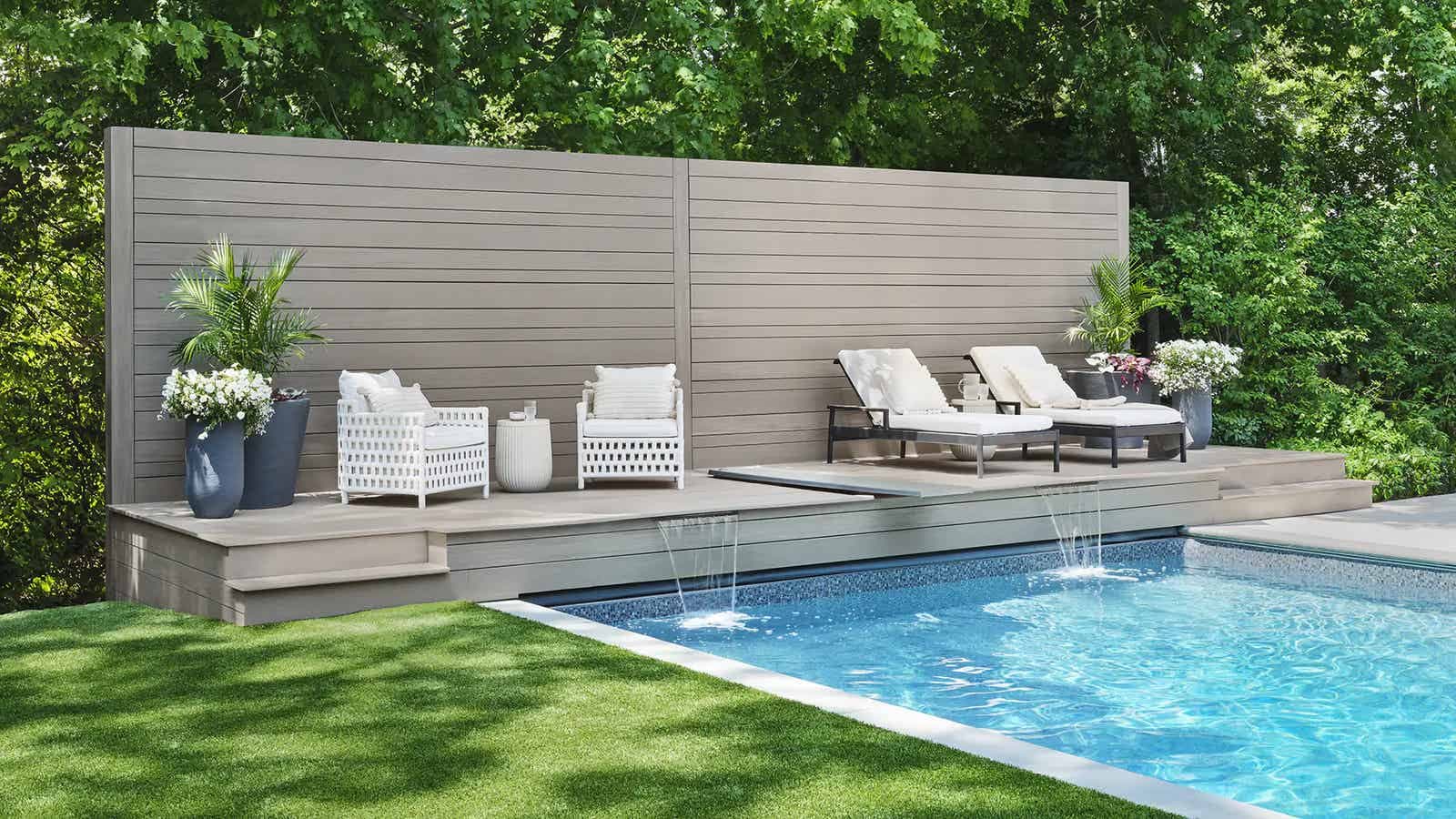
Understanding Coastal Exposure for Decking Materials
Coastal environments are defined by several factors that impact building materials: consistent salt spray, high humidity, frequent rain, and direct sunlight. Salt is corrosive to many metals and can leave residue on surfaces, while constant moisture can lead to mold, mildew, and material degradation in wood-based products.
Traditional wood decking requires diligent maintenance in these conditions, often involving frequent cleaning, sealing, or staining. Composite decking, which contains wood fibers, can also be susceptible to moisture absorption, though less so than untreated wood. PVC decking, being entirely synthetic, avoids the issues associated with wood fiber degradation from salt and moisture.
Why PVC Decking Suits Saltwater Environments
The primary advantage of PVC decking in coastal settings is its composition. It is 100% synthetic, meaning there is no wood fiber present to swell, stain, or rot when exposed to standing water, splash zones, or salt spray. This inherent resistance makes it a robust choice for areas where boards are frequently wet.
PVC decking is often specified for applications like pool surrounds and docks precisely because it performs well where moisture is constant. This same property translates effectively to coastal homes, where decks are regularly misted by ocean spray or experience high humidity. The material's non-porous surface also contributes to its resistance against staining from various environmental factors.
Additionally, PVC decking typically weighs less than many hardwood options and even some composite materials. This lighter weight can simplify handling during installation, particularly for larger coastal projects or those on elevated structures, which might be common in some coastal building designs.
Considering Hardware and Fasteners for Coastal PVC Decks
While PVC decking itself is resistant to salt and moisture, the hardware used for installation requires careful consideration in coastal environments. Standard galvanized or uncoated fasteners can corrode quickly when exposed to salt spray, leading to rust stains on the decking and potential structural compromise.
This includes screws for face fastening, clips for hidden fastener systems, and any framing connectors or ledger board attachments.
Always verify the manufacturer's recommendations for compatible fasteners with your chosen PVC decking profile. Using incorrect hardware can void product warranties and lead to premature failure of the deck structure or surface blemishes.
Maintenance and Cleaning in Coastal Conditions
PVC decking is generally considered low-maintenance, a significant benefit in coastal areas where cleaning and upkeep can be more demanding. Its capped polymer surface is designed to shed grease and wine, and typically wipes clean with soap and water.
In a coastal setting, however, regular cleaning is still advisable to remove salt residue, sand, and any organic growth (like mildew) that might develop due to high humidity. While PVC decking resists mildew better than wood-fiber products, surface accumulation can still occur. A soft brush and a mild cleaning solution are usually sufficient.
Always follow the specific cleaning guidelines provided by the decking manufacturer to ensure product compatibility and avoid damaging the surface finish. Some manufacturers offer specific cleaning products or recommendations for different types of stains or environmental buildup.
Warranty Considerations for Coastal PVC Decking
When selecting PVC decking for a coastal home, it is essential to review the manufacturer's warranty carefully. Many PVC decking products come with substantial warranties, sometimes including coverage for fade and stain.
Pay close attention to any exclusions or specific conditions related to coastal or saltwater exposure. While PVC decking is designed for these environments, some warranties may have clauses regarding proper installation, maintenance, or the use of approved fasteners in corrosive conditions. Ensure that your planned installation and maintenance practices align with warranty requirements.
Understanding these details upfront can provide peace of mind regarding your investment in a coastal property.
Project Example: Decking a Coastal Balcony
Consider a hypothetical coastal home with a second-story balcony measuring 12 feet by 6 feet, directly overlooking the ocean. The homeowner wants a durable, low-maintenance surface that can withstand daily salt spray and strong sun.
Using a PVC decking board, such as a 5.5-inch wide by 12-foot long profile, we can plan the material needed. For a 12-foot length, one board covers the entire dimension. For the 6-foot width, approximately 13 boards would be needed (6 feet / 5.5 inches per board = 13.09 boards). Since boards are sold in full lengths, you would purchase 13 boards of the 12-foot length.
The total area is 72 square feet. The purchased quantity (13 boards x 12 feet/board x 5.5 inches/12 inches per foot) is 71.5 square feet of material, which accounts for minimal waste from edge cuts. For fastening, all deck screws and any clips for hidden fasteners would be marine-grade stainless steel to resist corrosion. This approach ensures the decking material and its installation hardware are suited for the harsh coastal environment.
Before you order
- Verify PVC decking product is explicitly rated for saltwater exposure.
- Review manufacturer's warranty for specific coastal environment clauses or exclusions.
- Plan for consistent ventilation beneath the deck, especially if it's a low-to-grade or covered structure.
- Consider heat-mitigating color options if the deck receives intense, direct sunlight.
- Establish a regular cleaning schedule to remove salt residue and prevent buildup.
- Account for potential wind uplift in structural design, common in exposed coastal areas.
Confirm installation details, approved uses and warranty terms in the current instructions for the exact product and profile. Your installer should verify the substrate, structure and applicable project requirements.
Questions to help you decide
Does salt water damage PVC decking?
No, PVC decking is 100% synthetic and contains no wood fibers, making it highly resistant to damage from salt water, including swelling, staining, and rot. It is often chosen for docks and pool decks due to its excellent performance in wet and saline conditions.
What kind of fasteners should I use for PVC decking in a coastal area?
Standard galvanized or coated fasteners can corrode quickly in salt spray, leading to rust stains and structural issues.
How do I clean salt residue off my PVC deck?
Regular cleaning with a soft brush and a mild soap-and-water solution is usually sufficient to remove salt residue, sand, and other environmental buildup from PVC decking. Always refer to the decking manufacturer's specific cleaning guidelines to ensure compatibility with your product's finish.
Ready to Plan Your Coastal PVC Deck?
Request a material quote today with your project dimensions, desired PVC decking profile, and ZIP code. We can help you confirm current availability and service options for your coastal home.
Request a material quote →