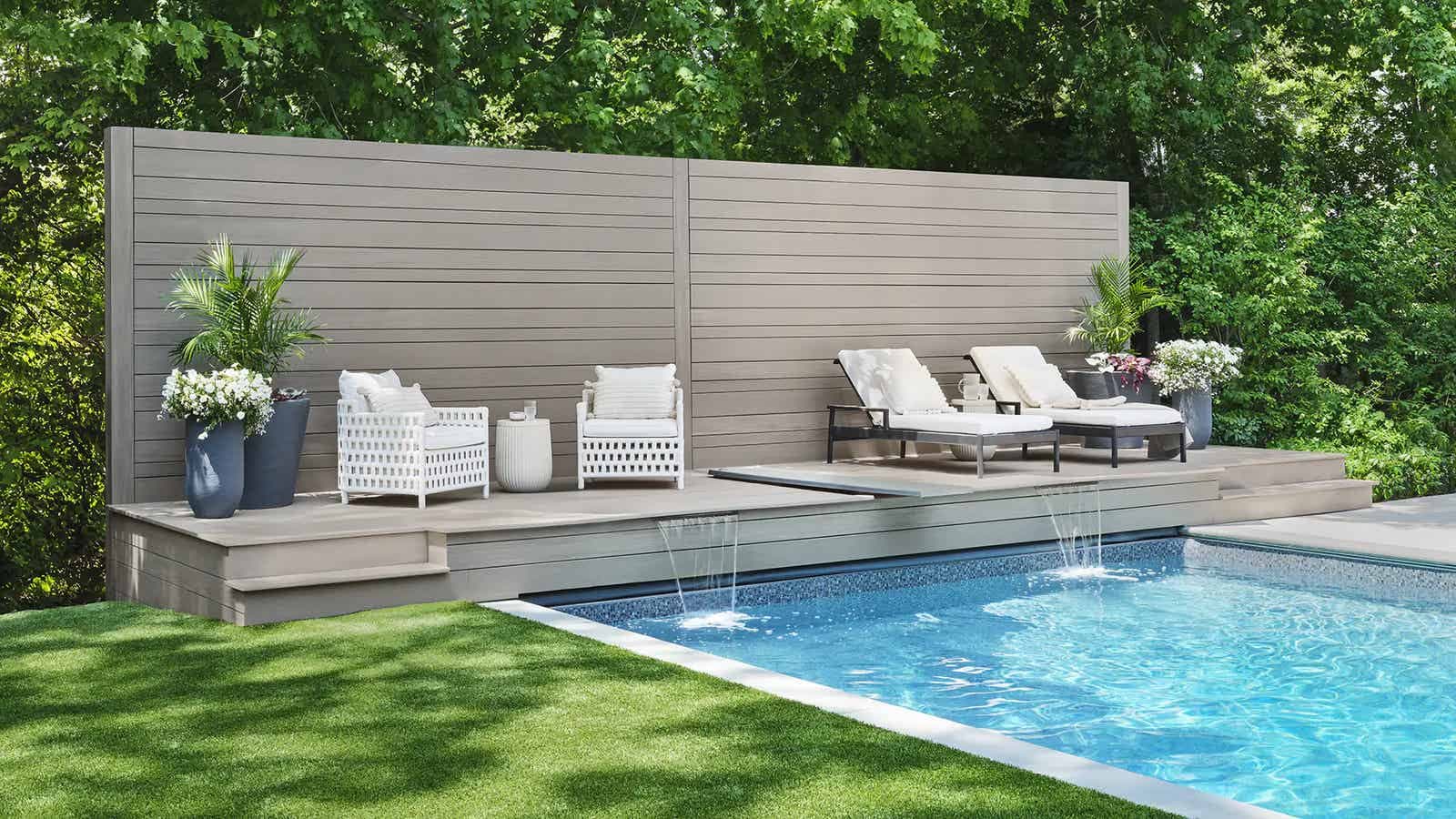
Understanding PVC Decking Material Properties
PVC (polyvinyl chloride) decking is a fully synthetic material, meaning it contains no wood fiber. This composition makes it inherently resistant to moisture damage, rot, and insect infestation, making it suitable for wet environments such as pool surrounds and docks. The surface of PVC decking is typically capped with a durable polymer layer designed to resist stains, fading, and scratching. This cap is the primary surface you interact with during cleaning.
The advanced capping on full PVC boards is what allows them to shed grease and wine and wipe clean with soap and water. However, this same capping can be vulnerable to harsh chemicals, abrasive cleaners, or solvents not explicitly approved by the manufacturer. Products designed for wood or composite decking may contain ingredients that are detrimental to PVC, even if they appear similar on the surface.
Consulting Manufacturer Care Guides
The most authoritative source for PVC decking cleaning product compatibility is always the manufacturer's official care guide. These guides are developed based on extensive testing of their specific product lines and provide precise instructions on recommended cleaners, cleaning methods, and, crucially, a list of prohibited substances.
Before purchasing or applying any cleaning product to your PVC deck, locate the specific care instructions for your decking brand and collection. For example, TimberTech Azek provides detailed guidelines for their Vintage, Landmark, and Harvest collections. These documents often include brand-specific product recommendations, dilution ratios, and application techniques. Adhering to these guidelines is essential for maintaining any warranty coverage and ensuring the longevity of your deck's finish.
Commonly Recommended Cleaning Products
For general cleaning and light dirt, many PVC decking manufacturers recommend simple solutions. Often, a mixture of mild soap and water is sufficient. Dish soap, such as Dawn, diluted in warm water, can effectively clean most surface grime. For tougher stains, some manufacturers may suggest specific deck cleaning products formulated for synthetic decking materials.
In cases of mildew or mold, a solution of oxygen bleach (sodium percarbonate) mixed with water is often recommended. This type of bleach is generally less aggressive than chlorine bleach and is typically safer for PVC surfaces, provided it is used according to manufacturer instructions. Always rinse the deck thoroughly with water after cleaning to remove any residue.
Cleaning Products to Avoid: A Critical List
Understanding which products to avoid is as important as knowing what to use. Certain chemicals and cleaning agents can cause irreparable damage to PVC decking. Always check the manufacturer's exclusions list before use.
**Solvent-Based Cleaners:** Products containing acetone, lacquer thinner, paint remover, or petroleum-based solvents can dissolve or damage the polymer cap, leading to permanent etching, discoloration, or softening of the surface.
**Abrasive Cleaners:** Scouring powders, steel wool, or stiff-bristled brushes can scratch the surface of the decking, dulling its finish and making it more susceptible to future staining.
**Chlorine Bleach (Concentrated):** While diluted chlorine bleach might be mentioned for specific circumstances, concentrated chlorine bleach can cause discoloration, especially on darker boards, and may degrade the polymer over time. Always use with caution and only if explicitly approved and diluted according to manufacturer guidelines.
**Pressure Washers (High Pressure):** While some manufacturers permit low-pressure washing, high-pressure washers can damage the deck surface, especially at close range. If using a pressure washer, maintain a low PSI setting (typically below 1500 PSI) and keep the nozzle a safe distance from the deck surface, using a fan tip rather than a concentrated stream.
**Acidic Cleaners:** Products with strong acids (e.g., muriatic acid) can etch and dull the surface of PVC decking, permanently altering its appearance.
Worked Example: Cleaning a PVC Deck After a Spill
Imagine you have a 12-foot by 15-foot PVC deck (180 square feet) and a grill grease spill has left a stubborn mark. Here's a step-by-step approach to cleaning it, prioritizing product compatibility:
1. **Identify the Decking:** Confirm the specific brand and collection of your PVC decking. Let's assume it's TimberTech Azek Vintage collection.
2. **Consult the Care Guide:** Access the official TimberTech Azek cleaning instructions. The guide specifies that for grease stains, a mild household cleaner or a deck cleaner formulated for PVC/capped polymer is recommended.
3. **Initial Cleaning (Mild Soap and Water):** First, try a solution of warm water and a few drops of dish soap (e.g., Dawn). Apply it to the stained area with a soft-bristled brush or sponge. Let it sit for a few minutes, then gently scrub. Rinse thoroughly with a garden hose.
4. **If Stain Persists (Approved Deck Cleaner):** If the grease stain remains, consult the guide for approved deck cleaners. Many manufacturers recommend specific brands. Let's assume the guide suggests a product like "Capped Polymer Deck Cleaner." Follow the product's instructions for dilution and application. Typically, this involves spraying the cleaner, letting it dwell for a specified time (e.g., 5-10 minutes), and then scrubbing gently before a thorough rinse.
5. **Avoid Prohibited Products:** Throughout this process, avoid using any abrasive pads, steel wool, or strong solvents like paint thinner, as these are explicitly listed as damaging to PVC decking surfaces.
By following this method, you address the stain effectively while protecting the integrity and warranty of your PVC deck. Always test any new cleaning product on an inconspicuous area first, even if it's listed as compatible, to observe any adverse reactions.
Before you order
- Identify your specific PVC decking brand and collection.
- Locate and review the manufacturer's official cleaning and care guide.
- Check the guide for a list of recommended cleaning products and methods.
- Note any explicitly prohibited cleaning agents, solvents, or abrasive tools.
- For general cleaning, consider mild soap and water as a first step.
- For tougher stains, use only products specifically formulated and approved for PVC/capped polymer decking.
- If using a pressure washer, ensure it's at a low PSI (under 1500 PSI) and used with a fan tip, maintaining distance.
- Always rinse thoroughly after cleaning to remove all cleaning product residue.
- Test any new cleaning product on an inconspicuous area first.
Confirm installation details, approved uses and warranty terms in the current instructions for the exact product and profile. Your installer should verify the substrate, structure and applicable project requirements.
Questions to help you decide
Can I use a general household cleaner on my PVC deck?
Many general household cleaners are too harsh or contain ingredients that can damage PVC decking. It is best to stick to mild dish soap and water, or a deck cleaner specifically formulated for PVC or capped polymer decking, as recommended by your decking manufacturer. Always check your specific deck's care guide.
What should I do if I accidentally use a prohibited cleaner on my PVC deck?
Immediately rinse the affected area thoroughly with a large volume of water. Depending on the product and the duration of contact, some damage may be irreversible. Consult your decking manufacturer's customer service for guidance, providing details about the product used and the extent of the exposure. Document any changes to the deck's appearance.
How often should I clean my PVC deck?
The frequency of cleaning depends on factors like local climate, environmental exposure (e.g., trees, pollen, foot traffic), and personal preference. Generally, a thorough cleaning twice a year (e.g., in spring and fall) is recommended to remove accumulated dirt, pollen, and debris. Spot cleaning for spills or stains should be done as needed, ideally as soon as they occur.
Plan Your PVC Decking Project with Lumber Plus
Ready to explore durable and low-maintenance PVC decking for your outdoor space? Request a material quote today. Provide your project dimensions, desired profile, and ZIP code to confirm current availability and service options for PVC decking. We also offer a range of related products, including hardwood decking, composite decking, and general decking materials.
Request a material quote →