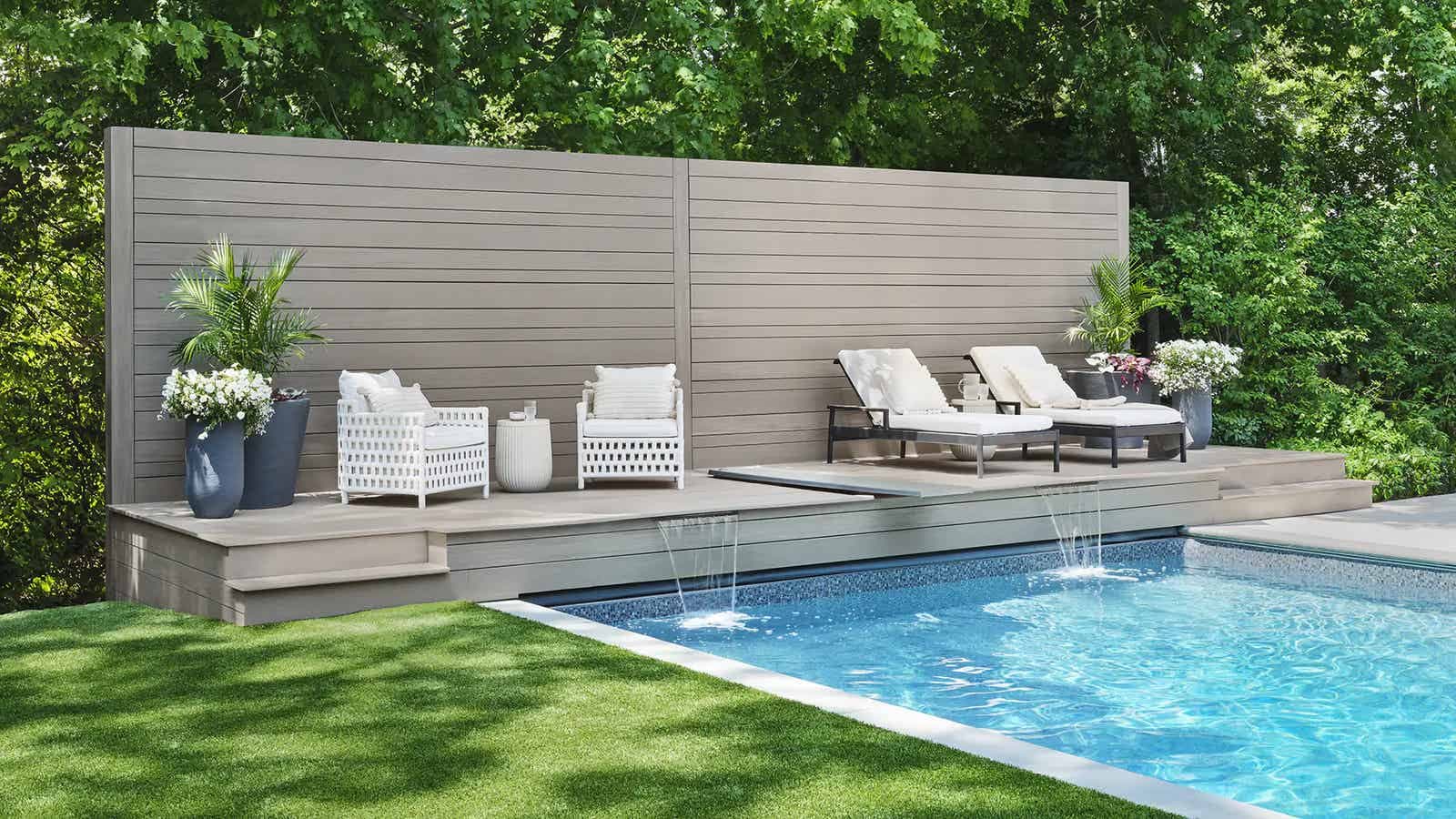
Understanding PVC Decking Board Profiles
PVC decking boards are engineered for consistency, providing uniform dimensions that are crucial for a professional finish. These boards are typically available in a limited range of standard widths, such as 5.5 inches and 7.25 inches. Each width offers distinct advantages in design and installation.
The standard 5.5-inch board is a common choice, often selected for its versatility and ability to fit various design styles. It creates a classic plank appearance. The wider 7.25-inch board offers a more contemporary look, reducing the number of visible seams across the deck surface, which can contribute to a sleeker, more expansive feel. Some manufacturers may also offer narrower boards, but 5.5 and 7.25 inches are widely available options.
Visual Impact: How Width Affects Deck Aesthetics
The width of your PVC decking boards significantly influences the perceived size and style of your deck. Narrower boards (e.g., 5.5 inches) tend to create a busier, more traditional look with a higher frequency of lines. This can be desirable for smaller decks, making them feel more intricate, or for projects aiming for a classic wood-plank aesthetic.
Wider boards (e.g., 7.25 inches), conversely, generate fewer lines across the deck surface. This creates a sense of spaciousness and modernity, often preferred for larger decks or contemporary architectural styles. The reduced number of seams can also make the deck appear less cluttered and more streamlined. Consider the scale of your deck and the architectural style of your home when making this choice.
Planning Your Layout and Seams
Board width directly impacts the number of boards required and the placement of seams. A wider board will cover more area per piece, leading to fewer boards and potentially fewer seams across the deck. This is particularly relevant for long decks where minimizing butt joints can enhance the overall appearance.
When planning, sketch out your deck dimensions and experiment with different board widths. Consider how the boards will terminate against house walls, railings, or other features. For decks with irregular shapes or multiple angles, wider boards might simplify the layout by reducing the number of cuts needed, though this depends on the specific geometry. For a picture-frame border, ensure the chosen width integrates well with the interior field boards.
Worked Example: Calculating Board Quantities
Let's consider a hypothetical rectangular deck measuring 16 feet by 10 feet (192 inches by 120 inches). We need to cover this area with PVC decking boards.
Scenario 1: Using 5.5-inch wide boards. To cover the 120-inch width of the deck, we would need 120 inches / 5.625 inches/board = 21.33 boards. Since you cannot purchase fractions of a board, you would need 22 full boards. Each board is 16 feet long. Therefore, you would purchase 22 boards at 16 feet each.
Scenario 2: Using 7.25-inch wide boards. To cover the 120-inch width, we would need 120 inches / 7.375 inches/board = 16.27 boards. This rounds up to 17 full boards. You would purchase 17 boards at 16 feet each.
This example illustrates that wider boards reduce the total number of individual boards needed, which can impact installation time and the visual frequency of board lines. Always factor in waste for cuts and account for any specific layout patterns like diagonal installations or picture frames, which will require more material.
Complementary Products and Considerations
Beyond the field boards, consider how your chosen width will integrate with other deck components. Fascia and riser boards, often used for trim and stair risers, are typically available in wider profiles to cover structural elements. Ensure the color and finish of these complementary products match your main decking boards. Explore options like
When selecting fasteners, ensure they are compatible with the specific PVC decking product and its recommended installation method, whether hidden fasteners or face-fastening. Proper ventilation beneath the deck is also important for PVC decking, as outlined in manufacturer guidelines. Consider the overall system, not just the individual boards.
Remember that PVC decking is a 100% synthetic material, making it suitable for areas exposed to moisture, such as pool surrounds or docks. It is a material that resists swelling, staining, or rotting from water exposure. Its lightweight nature can also simplify installation, particularly for elevated or rooftop projects.
Before you order
- What is the overall size and shape of your deck? (Larger decks may benefit from wider boards for a more expansive feel.)
- What architectural style is your home? (Modern homes often pair well with wider boards; traditional homes may suit narrower planks.)
- Do you prefer a busy, intricate visual pattern or a streamlined, spacious look?
- How many visible seams are acceptable across the deck surface?
- Are you planning a picture-frame border? If so, how will the field board width integrate?
- Have you accounted for board spacing in your calculations?
- What are the available board lengths, and how do they align with your deck dimensions to minimize waste?
- Have you considered fascia, riser boards, and other trim pieces for aesthetic consistency?
- Is the chosen board width compatible with your preferred fastening system (hidden or face-fastened)?
Confirm installation details, approved uses and warranty terms in the current instructions for the exact product and profile. Your installer should verify the substrate, structure and applicable project requirements.
Questions to help you decide
Can I mix different PVC decking board widths on one deck?
Mixing board widths is possible, but it requires careful planning to achieve a cohesive look. This approach is often used to create custom patterns or to define different zones on a large deck. Consult with a designer or experienced installer to ensure the layout is visually balanced and structurally sound, as it may complicate installation and material calculations.
Does board width affect installation difficulty or time?
Wider boards can sometimes lead to a faster installation because fewer individual boards need to be placed and fastened to cover the same area. However, wider boards can also be heavier or more cumbersome to handle in tight spaces. The overall impact on installation time is often less significant than factors like deck complexity, framing condition, and installer experience. Always refer to manufacturer installation guidelines for specific product recommendations.
How do I account for waste when ordering PVC decking based on width?
Always factor in a waste percentage, typically 5-10%, when ordering decking materials, regardless of board width. This accounts for cuts, mistakes, and potential future repairs. For complex layouts, such as diagonal patterns or multiple angles, a higher waste factor may be necessary. It's better to have a few extra boards than to run short during the project.
Ready to Plan Your PVC Decking Project?
Request a material quote with your project dimensions, desired PVC decking profile, and ZIP code to confirm current availability and service options for your area. We can help you identify the right board widths for your vision.
Request a material quote →