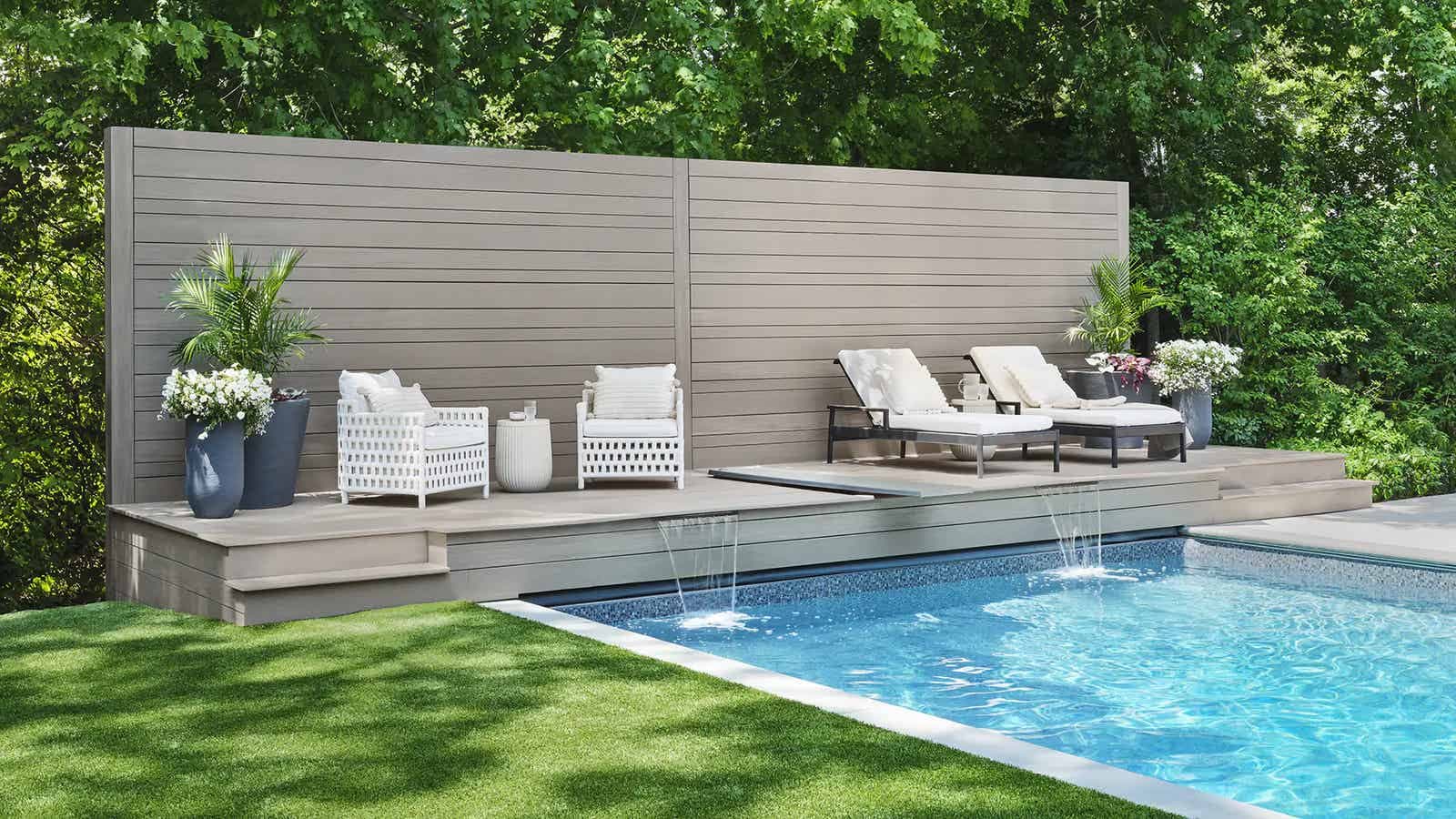
Understanding PVC Decking for Active Backyards
PVC decking is a 100% synthetic material, meaning it contains no wood fibers. This composition makes it inherently waterproof and resistant to swelling, staining, or rot, even in splash zones or areas prone to standing water. For a backyard built around gathering, this characteristic is particularly valuable where spills, splashes from a nearby pool, or even heavy dew are common occurrences.
The advanced capping on many PVC boards provides a surface that sheds grease and wine, making cleanup straightforward with just soap and water. This is a significant advantage for areas where food and drinks are frequently served. Additionally, PVC decking is often lighter than hardwood or composite options, which can simplify handling and installation for certain projects.
While PVC decking is known for its durability, it's important to consider color options that can help mitigate heat absorption, especially in areas exposed to direct sunlight for extended periods during gatherings. Manufacturers often offer specific heat-mitigating color choices within their collections.
Mapping Your Gathering Zones and Deck Layout
Before selecting specific PVC boards, visualize the different activity zones within your backyard gathering space. Common zones include a cooking area (grill, prep station), a dining area, and a lounging or conversation area. Consider the typical flow of traffic between these zones.
For example, a direct path from the kitchen door to the grill, then to the dining table, will minimize congestion. Sketching these zones onto a plan helps determine the overall deck shape and size, as well as where to place stairs or railings. This initial layout informs board direction and potential seam placement.
For a seamless appearance, consider how board lengths will align across these zones. Longer boards can reduce the number of visible seams, contributing to a more expansive feel. If your design includes multiple levels or distinct sections, plan for consistent board direction or intentional changes to define spaces.
Choosing PVC Decking Collections and Finishes
PVC decking is available in various collections, often distinguished by their aesthetic and texture. For a backyard gathering space, the visual appeal and tactile experience are important. Collections like Vintage, Landmark, and Harvest offer deep wood looks, providing the aesthetic of natural timber without the associated maintenance.
When selecting a finish, consider both color and texture. Lighter colors can make a space feel larger and may be cooler underfoot in direct sun, while darker tones can create a more intimate atmosphere. Textures can range from smooth to deeply embossed wood grains. A more pronounced texture might offer better grip, which is a consideration for areas where people might be moving frequently or where spills could occur.
Coordinate your chosen PVC decking finish with other backyard elements, such as fencing, landscaping, or outdoor furniture, to create a harmonious environment. The goal is to select a finish that complements your home's style and enhances the welcoming feel of your gathering space.
Worked Example: A 20-foot by 15-foot Gathering Deck
Let's consider a hypothetical 20-foot by 15-foot rectangular deck designed for backyard gatherings. The goal is to create distinct areas for grilling, dining, and lounging.
Assume a standard PVC decking board width of 5.5 inches (0.458 feet) and available lengths of 12, 16, and 20 feet. For this example, we'll run the boards parallel to the 15-foot dimension, minimizing cuts along the longer 20-foot run and providing a visual flow towards the yard.
For the 15-foot dimension: 15 feet / 0.458 feet/board = approximately 32.75 boards. This means you would need 33 full boards to cover the 15-foot width. Total boards needed: 33 boards * 1 (for length) = 33 boards.
To create zones, you could use a 'picture frame' border around the perimeter. For a 5.5-inch border, you'd add two border boards along the 20-foot sides and two along the 15-foot sides. The interior field would then be approximately 19 feet 1 inch by 14 feet 1 inch. This border would require 2 x 20-foot boards and 2 x (15 feet - 2 * 5.5 inches) = 2 x 14.08 feet boards. You would purchase 2 x 20-foot boards and 2 x 16-foot boards for the border. The interior field would then be calculated similarly, reducing the total field width and length.
This example simplifies for clarity; actual layout may involve specific fastening systems, joist spacing, and considerations for waste factor. Always consult the manufacturer's installation guidelines for exact requirements.
Integrating Decking with Outdoor Kitchens and Landscaping
A successful gathering space often integrates seamlessly with other backyard features. If your plan includes an outdoor kitchen or built-in grill, ensure the PVC decking is chosen for its ease of cleaning and resistance to grease and spills. The non-porous nature of PVC makes it a practical choice for these high-use areas.
Consider how the deck transitions to surrounding landscaping, such as planting beds, pathways, or lawn areas. Planning these connections early can prevent awkward steps or gaps. Using matching PVC fascia or trim can create a clean edge where the deck meets other elements.
For areas around planters or water features, PVC's waterproof characteristics are beneficial. However, ensure that any heavy planters are placed over adequate structural support beneath the deck, as the decking itself is not designed to bear concentrated heavy loads without proper framing.
Planning for Durability and Maintenance
Choosing PVC decking is a step towards minimizing long-term maintenance, allowing more time for enjoyment. Its synthetic composition means it won't rot, splinter, or be susceptible to insect damage. This durability is particularly beneficial for high-traffic gathering areas.
While PVC decking is low maintenance, a routine cleaning schedule will help preserve its appearance. Most spills can be wiped clean with mild soap and water. For specific cleaning product compatibility, always refer to the manufacturer's guidelines to avoid damaging the surface or voiding any coverage.
Understanding the specific characteristics of your chosen PVC product, such as fade and stain coverage, is also important. This information helps set expectations for long-term performance and appearance in a busy backyard environment.
Before you order
- Have I mapped out all activity zones (cooking, dining, lounging) for my gathering space?
- Does my chosen PVC decking color and finish complement my home and other backyard elements?
- Are the board lengths and layout planned to minimize seams and optimize visual flow?
- Have I considered the transition points between the deck and surrounding landscaping or hardscaping?
- Is the deck structure adequate to support all planned elements, including heavy furniture or planters?
- Have I reviewed the manufacturer's recommendations for cleaning and maintenance for my chosen PVC product?
- Do I have a plan for ensuring proper ventilation under the deck to maintain its longevity?
Confirm installation details, approved uses and warranty terms in the current instructions for the exact product and profile. Your installer should verify the substrate, structure and applicable project requirements.
Questions to help you decide
Can PVC decking withstand heavy use from frequent gatherings?
Yes, PVC decking is designed for durability and can withstand heavy foot traffic, spills, and general wear typical of frequent gatherings. Its synthetic, waterproof nature makes it resistant to stains and moisture, which are common concerns in active outdoor spaces. Routine cleaning with soap and water is generally sufficient to maintain its appearance.
How do I choose a PVC decking color that won't get too hot in the sun?
Many PVC decking manufacturers offer specific 'heat-mitigating' or 'cooler-to-the-touch' color options, particularly in lighter shades. While no surface in direct sun will remain completely cool, these options are designed to absorb less solar radiation. Review the product specifications and color samples, and consider how much direct sun your deck receives throughout the day.
Is PVC decking suitable for areas around a grill or outdoor kitchen?
PVC decking is well-suited for areas around grills and outdoor kitchens due to its non-porous surface, which resists grease and food stains. Spills can typically be wiped clean with mild soap and water. Always ensure proper clearances are maintained around heat sources according to grill manufacturer instructions and local fire codes.
Ready to Plan Your PVC Decking Project?
Request a material quote with your project dimensions, desired PVC decking profile, and ZIP code to confirm current availability and service options. Our team can help you select the right products for your backyard gathering space.
Request a material quote →