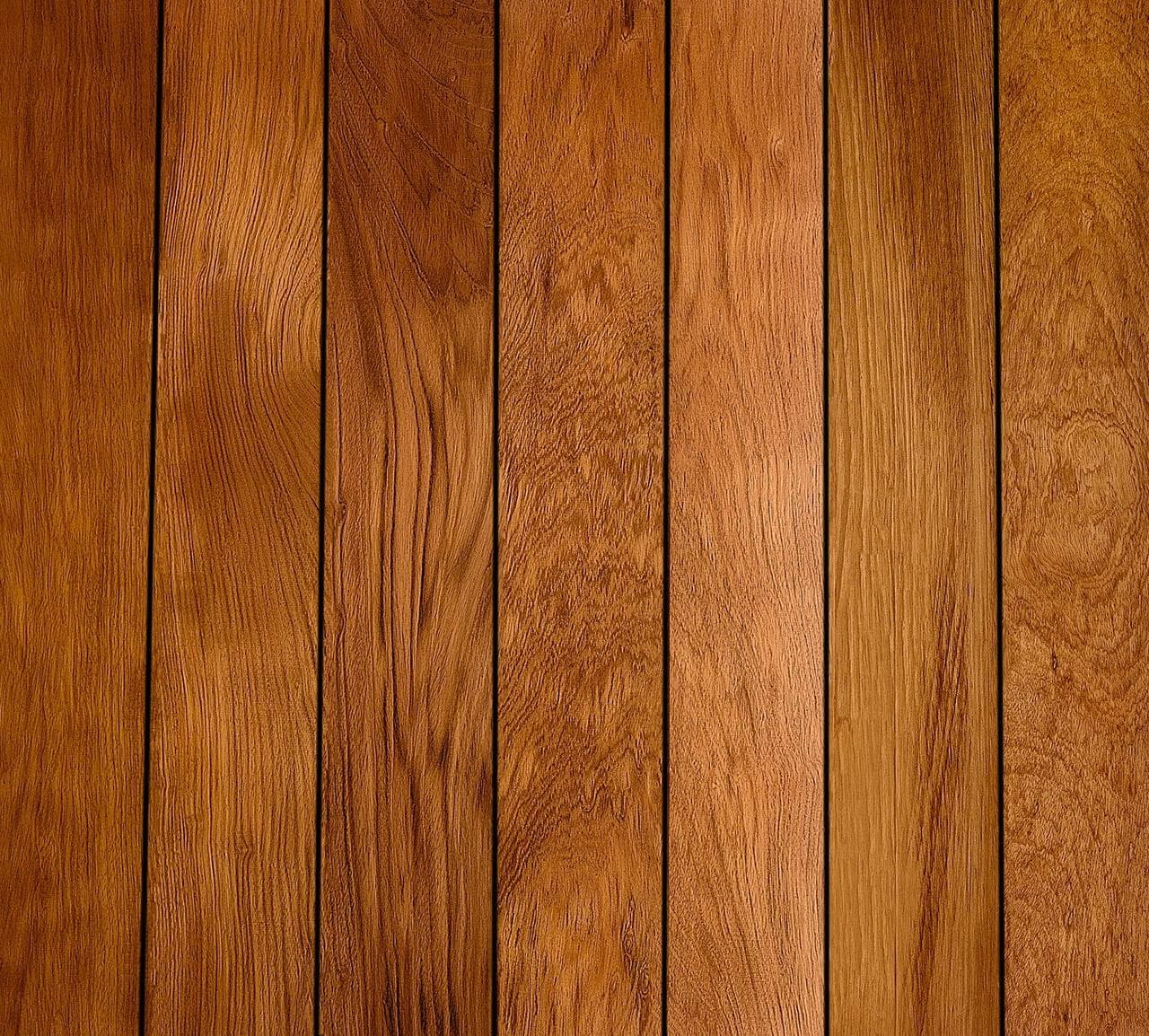
Why Jatoba Decking for a Small Urban Space?
Jatoba, also known as Brazilian Cherry, is a high-strength, very durable hardwood. Its natural resistance to termites and weather changes makes it a robust choice for outdoor applications, including decking. In a compact urban backyard, where every square foot is valuable and exposed to the elements, the longevity and resilience of Jatoba can be a significant advantage.
The wood's characteristic deep red color, which develops further with age, can add a sophisticated and warm aesthetic to a smaller space. This rich hue can create a focal point and a sense of depth, preventing the area from feeling stark or utilitarian. Jatoba is also naturally resistant to mold and fungi, which is beneficial in potentially humid or shaded urban environments.
While its density recommends pre-drilling for installation, Jatoba is known for being easy to polish to a beautiful shine, allowing for various finish options to suit your desired aesthetic. This combination of durability, natural resistance, and aesthetic appeal makes Jatoba a strong contender for urban decking projects where both performance and appearance are key. For more details on its properties, refer to the product page: /decking/hardwood/jatoba.
Another suitable option is Ipe, a hardwood known for its exceptional density and durability: /decking/hardwood/ipe. For alternatives to natural wood, consider composite decking: /decking/composite or PVC decking: /decking/pvc.
Maximizing Usable Space Through Deck Layout
In a compact urban backyard, the deck's layout is crucial for maximizing usable space. Instead of a sprawling, multi-level design, a single-level deck that integrates seamlessly with existing ground surfaces or transitions smoothly from a back door can make the area feel larger and more cohesive. Consider a rectangular or L-shaped design that hugs the perimeter, leaving a central open area for circulation or a small garden feature.
The direction of your Jatoba decking boards can also influence the perception of space. Laying boards parallel to the longest dimension of the yard can visually elongate the space. Conversely, running them perpendicular to the house can create a sense of width. For very narrow spaces, a diagonal layout might add visual interest and break up the linearity, but this often results in more material waste due to angled cuts.
Avoid overly complex shapes or multiple elevation changes unless absolutely necessary, as these can visually chop up a small area and reduce functional space. A clean, simple footprint allows for greater flexibility in furniture arrangement and promotes a more open feel.
Ensuring Efficient Circulation
Even in a small backyard, good circulation is vital. The deck should not impede pathways from the house to other parts of the yard, such as a gate, a storage shed, or a small planting bed. Plan for clear walkways around any furniture you intend to place on the deck.
A common guideline is to allow at least 3 feet of clear space for primary pathways and 2 feet for secondary access. For instance, if your deck is intended for dining, ensure there's enough room to pull chairs out comfortably without hitting a wall or falling off an edge. If the deck connects to other areas, ensure the transition is smooth and unhindered. This often means designing the deck to be flush with the interior floor level, or with a minimal step down, to create a continuous flow from inside to out.
Furniture Placement and Flexibility
The type and arrangement of furniture will significantly impact how a small Jatoba deck functions. Opt for multi-functional or compact furniture pieces. For example, benches with built-in storage can serve as seating while hiding clutter. Folding chairs and tables offer flexibility, allowing you to reconfigure the space for different activities.
Before finalizing your deck dimensions, measure your intended furniture. Draw out a scaled plan of your backyard and deck, placing furniture cut-outs to visualize how everything will fit. This helps ensure that your deck is large enough to accommodate your chosen pieces while still allowing for comfortable movement. Consider built-in benches along one or more edges of the deck to maximize seating without consuming valuable floor space.
Jatoba's robust nature means it can support various furniture types. Its deep color can also complement a range of outdoor fabrics and materials, from modern metal to classic wicker. You can find more general decking options at /decking.
Worked Example: A 10'x12' Jatoba Deck in a 15'x20' Backyard
Let's consider a hypothetical urban backyard measuring 15 feet wide by 20 feet long. The goal is to create a functional deck area for dining, accommodating a table for four, while preserving a small strip for planting and access.
We propose a 10-foot by 12-foot rectangular Jatoba deck, positioned against the back wall of the house. This leaves a 5-foot wide strip along one side of the yard and an 8-foot strip at the end for landscaping and a pathway to a gate. The 10'x12' deck provides 120 square feet of usable space.
For a dining area, a typical 4-person patio table might be 3 feet by 5 feet. With chairs pulled out, this footprint expands to approximately 7 feet by 9 feet. This allows for comfortable movement around the table without feeling cramped.
If using 1" x 5.5" (nominal 5/4"x6") Jatoba decking boards, running them parallel to the 12-foot dimension of the deck would mean needing roughly 26 boards (120 inches / 5.5 inches per board = 21.8, plus a few for cuts and waste, so approximately 22 boards for length, multiplied by 10 feet / 5.5 inches per board for width, so 22 boards across the 10-foot width, each 12 feet long). For the 10-foot width, you'd need about 22 boards (120 inches / 5.5 inches per board = 21.8). If these boards are 12 feet long, that's 22 boards x 12 linear feet = 264 linear feet. Accounting for cuts and waste, purchasing 280-300 linear feet in various lengths (3-24 ft as per S1) would be a reasonable estimate for a 120 sq ft deck.
This layout preserves a 5-foot wide green space, ideal for a narrow planting bed or a small raised garden, and maintains an unobstructed 8-foot path to the rear of the property. The rich, deep red of the Jatoba would provide a striking contrast to the surrounding greenery and urban hardscaping.
Before you order
- Measure your exact backyard dimensions and sketch out existing features (house, gates, utilities).
- Determine the primary function of your deck (dining, lounging, mixed-use).
- Measure the footprint of any intended furniture, including clearance for use.
- Consider a single-level, simple deck shape to maximize perceived space.
- Decide on the board orientation: parallel to the longest side for elongation, perpendicular for width, or diagonal for visual interest (accounting for waste).
- Plan for minimum 3-foot pathways for primary circulation.
- Explore built-in seating or multi-functional furniture to save space.
- Confirm local building codes and setback requirements for structures in compact spaces.
- Factor in ventilation requirements for a durable decking installation, especially in confined areas.
- Obtain a material quote with exact dimensions and desired Jatoba profile, confirming current availability.
Confirm installation details, approved uses and warranty terms in the current instructions for the exact product and profile. Your installer should verify the substrate, structure and applicable project requirements.
Questions to help you decide
Is Jatoba suitable for a small deck that gets a lot of sun exposure?
Yes, Jatoba is a high-strength wood resistant to weather changes, making it suitable for sun-exposed decks. Its deep red color may deepen further with prolonged sun exposure, a characteristic often appreciated as it ages. Like all natural wood, it will benefit from regular maintenance and UV protection to preserve its appearance.
How does Jatoba compare to other hardwoods for small urban decks?
Jatoba (Brazilian Cherry) offers excellent durability, natural resistance to mold, fungi, and termites, and a beautiful deep red color that ages gracefully. Other hardwoods like Ipe (Brazilian Walnut) are even harder and offer different color profiles, typically darker browns. Your choice may depend on desired aesthetics, specific durability needs, and budget. Jatoba is a very durable option for the urban environment.
What maintenance does Jatoba decking require in a compact urban setting?
Jatoba decking, like most hardwoods, benefits from regular cleaning to remove dirt and debris, which can accumulate more quickly in urban environments. To maintain its rich color, apply a UV-inhibiting oil finish periodically. If left untreated, Jatoba will naturally weather to a silver-gray patina. Inspect your deck annually for any loose fasteners or signs of wear. Proper ventilation beneath the deck is also important to prevent moisture buildup, especially in confined spaces.
Ready to Plan Your Jatoba Deck?
Request a material quote with your project dimensions, exact profile, and ZIP code. We can help confirm current availability and service options for your urban backyard project.
Request a material quote →