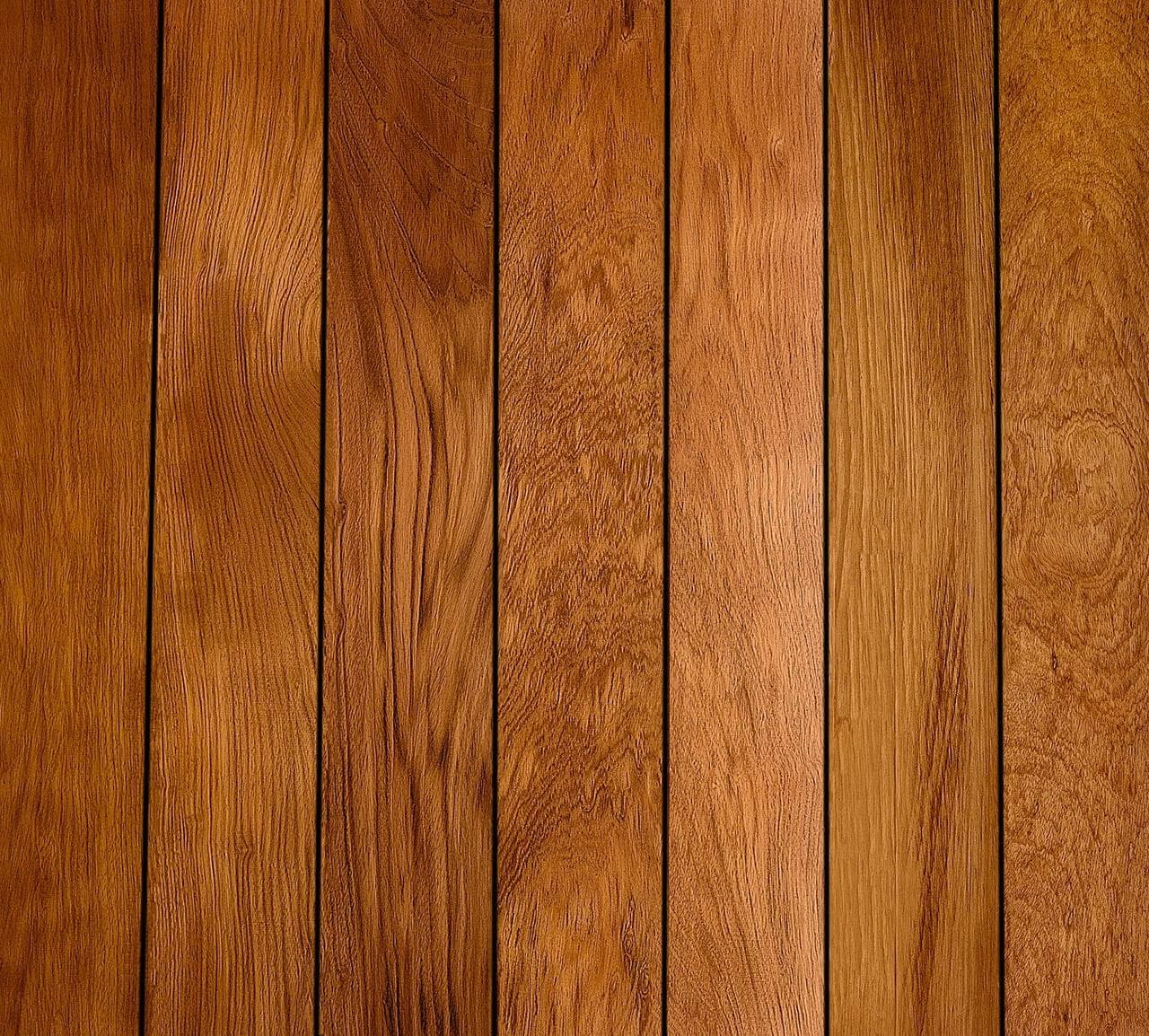
Why Jatoba for a Courtyard Deck?
Jatoba (Brazilian Cherry) is a very durable, high-strength hardwood known for its resistance to termites and weather changes. These characteristics make it a suitable choice for outdoor applications, including courtyard decks. Its natural resistance to mold and fungi is another advantage in potentially shaded or damp courtyard environments.
The wood's rich, deep red color develops further with age, offering a distinctive aesthetic that can complement various architectural styles. For a courtyard, where the deck often becomes a focal point, the visual appeal of Jatoba can be a significant draw. It can also be polished to a beautiful shine, allowing for a refined finish that enhances the overall courtyard ambiance.
This durability is especially beneficial in a courtyard setting where replacement might be more challenging due to access limitations or surrounding landscaping.
Jatoba is available in a 5/4"x6" (1" x 5.5") profile, in lengths ranging from 3 to 24 feet, and is kiln-dried (KD). This standardized profile simplifies planning and installation for many common deck designs.
Maximizing Usable Space in a Compact Courtyard
Courtyards are often defined by their limited footprint. When designing a deck, the primary goal is to create functional zones without overcrowding the space. Consider the main purpose of your courtyard deck: is it for dining, lounging, or a combination? This will dictate the required dimensions for furniture and circulation paths.
For smaller courtyards, a simple, rectangular deck might be the most efficient layout. Avoid complex shapes or multiple levels that can fragment the space and make it feel smaller. Integrated seating, such as built-in benches, can save floor space compared to freestanding furniture and provide a cohesive look. These can be constructed with the same Jatoba decking for a unified design.
Managing Shade and Sun Exposure
Courtyards often have varied sun exposure due to surrounding structures. Some areas may be perpetually shaded, while others receive intense sun. Jatoba's natural color change, deepening to a rich red over time, is part of its character. However, uneven sun exposure can lead to variations in this aging process.
For heavily shaded areas, Jatoba's resistance to mold and fungi is an asset. Regular cleaning will still be important to prevent organic growth in consistently damp conditions. For sunny areas, Jatoba's weather resistance helps it withstand exposure.
Consider incorporating shade structures like pergolas, retractable awnings, or strategically placed trees to create comfortable zones. These can also help to homogenize the sun exposure across the deck, potentially leading to more even color development over time. When planning shade, ensure it doesn't impede necessary airflow around the deck.
Ensuring Proper Drainage and Ventilation
Effective drainage is critical for any deck, but especially in a courtyard where water can accumulate. Proper deck construction should include a slight slope away from any adjacent structures to direct water runoff. The spacing between Jatoba deck boards is also vital for water to drain through the deck surface. Always follow the manufacturer's specific recommendations for board spacing, as this allows for both drainage and air circulation.
Beneath the deck, ensure adequate ventilation to prevent moisture buildup, which can lead to issues like warping or decay over time. In enclosed courtyards, airflow can be restricted. Consider incorporating vents or leaving open gaps along the perimeter of the deck structure, where feasible, to encourage air movement. If the courtyard has poor natural drainage, a French drain or similar system around the deck perimeter might be necessary to manage groundwater.
For decks built close to the ground, ensure there's sufficient clearance between the decking and the soil. This prevents moisture wicking and promotes air circulation. A gravel base can also help improve drainage beneath the deck.
Worked Example: A 10x12 Foot Courtyard Deck with Jatoba
Let's consider a hypothetical courtyard measuring 12 feet wide by 15 feet long. We want to build a 10-foot by 12-foot Jatoba deck, leaving a 3-foot border along one 12-foot side for a planting bed and a 2-foot border along the 10-foot side for access. The deck will be constructed using 5/4"x6" (actual 1" x 5.5") Jatoba boards.
To cover a 10-foot (120-inch) width with 5.5-inch wide boards, we would need 120 / 5.5 = 21.8 boards. Since boards must be full width, we round up to 22 boards. Each board is 12 feet long.
Therefore, for this 10x12 foot deck, you would need 22 boards, each 12 feet long. The total linear footage would be 22 boards * 12 feet/board = 264 linear feet. For a practical order, it's always advisable to add 10-15% for cuts, waste, and future repairs. So, 264 linear feet * 1.15 = approximately 304 linear feet. You would look to purchase boards in suitable lengths from the 3-24 foot range, minimizing waste while considering transport and handling.
The deck's elevation should be planned to allow for a gentle slope (e.g., 1/8 inch per foot) away from any adjacent building walls to ensure water sheds off the surface. The area beneath the deck will require a gravel base for drainage and a weed barrier. If the courtyard walls are solid, consider adding discreet vents at ground level to promote airflow under the deck.
Before you order
- Determine the primary function of your courtyard deck (dining, lounging, aesthetics).
- Measure the exact dimensions of your courtyard and the proposed deck footprint.
- Assess sun exposure patterns throughout the day and year.
- Evaluate existing drainage conditions in the courtyard.
- Plan for deck elevation and slope to ensure water runoff.
- Consider ventilation solutions for the under-deck area.
- Decide on integrated features like built-in seating or planters.
- Account for board spacing to allow for drainage and wood movement.
- Calculate linear footage of Jatoba decking, adding 10-15% for waste.
- Review local building codes for deck construction and setback requirements.
Confirm installation details, approved uses and warranty terms in the current instructions for the exact product and profile. Your installer should verify the substrate, structure and applicable project requirements.
Questions to help you decide
Is Jatoba a good choice for a shaded courtyard?
Jatoba is naturally resistant to mold and fungi, which is a benefit in shaded or damp conditions often found in courtyards. However, consistent moisture still requires good drainage and ventilation to prevent issues. Regular cleaning helps maintain its appearance.
How long does Jatoba decking last in an outdoor setting?
Its resistance to weather changes and termites contributes to its longevity in outdoor applications like courtyard decks.
What kind of maintenance does Jatoba decking require?
Jatoba decking requires standard hardwood deck care. This typically involves regular cleaning to remove dirt, leaves, and other debris. Applying a UV-inhibiting finish can help preserve its deep red color and protect the wood. Without a finish, Jatoba will naturally weather to a silver-gray patina over time. Pre-drilling is recommended during installation.
Request a Quote for Your Jatoba Courtyard Decking Project
Ready to transform your courtyard? Request a material quote today by providing your project dimensions, desired Jatoba profile, and ZIP code. We can confirm current availability and service options for your area. Explore our full range of decking options, including other hardwood choices like Ipe, or consider composite and PVC decking for alternative solutions. Visit our main decking page to learn more.
Request a material quote →