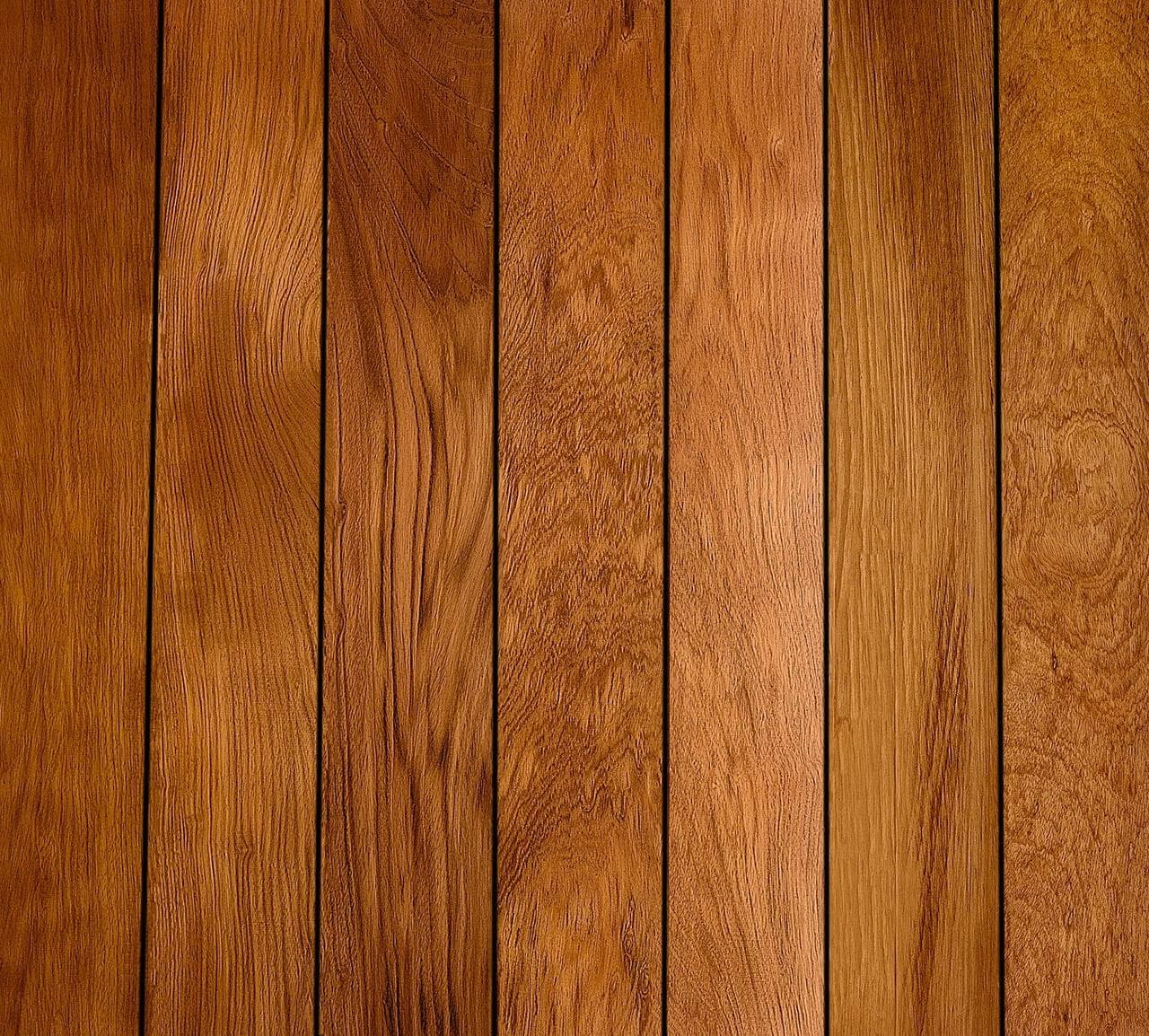
Understanding Jatoba Decking Profiles
Jatoba, also known as Brazilian Cherry, is a high-strength, very durable hardwood. While Jatoba is available in various dimensions for different applications, for decking, a common profile is a 5/4-inch nominal thickness by 6-inch nominal width board, which translates to an actual dimension of 1 inch by 5.5 inches.
This specific profile offers a balanced proportion suitable for many deck designs, providing both structural integrity and a classic visual appeal. The consistent dimension helps in planning and installation, contributing to a uniform deck surface. Always confirm the exact finished dimensions when specifying your order.
Visual Impact of Board Widths
The width of your decking boards plays a crucial role in the perceived scale and style of your deck. Narrower boards tend to create a busier, more intricate pattern, often favored for smaller, more detailed spaces or to add a sense of movement. Wider boards, like the 5.5-inch face of Jatoba, can make a deck appear more expansive and modern, with fewer visible seams and a calmer, more uniform surface.
For a large deck, wider boards can help reduce the visual clutter, allowing the rich, deep red color and grain of the Jatoba to become the focal point. In contrast, for a more compact area, the consistent lines of a 5.5-inch board can still provide a sense of order without overwhelming the space. Consider the surrounding landscape and architectural style of your home when visualizing the final look.
Worked Example: Estimating Jatoba Board Quantities for a Deck
Let's consider a hypothetical deck project: a rectangular deck measuring 12 feet by 10 feet.
For a 12-foot length, this is 144 inches. To cover the 10-foot width (120 inches), divide the total width by the effective width per board: 120 inches / 5.625 inches/board = 21.33 boards. Since you cannot purchase a fraction of a board, you would need 22 boards to cover the width. Each board is 12 feet long.
Therefore, for a 12-foot by 10-foot deck, you would need 22 boards, each 12 feet in length. This calculation provides the linear footage requirement for boards laid perpendicular to the 10-foot dimension. Remember to account for waste due to cuts, end-matching, and any specific design elements like picture-frame borders, which would require additional material.
Planning for Different Layouts
While a straight, perpendicular layout is common, Jatoba boards can also be arranged in diagonal patterns or with picture-frame borders. A diagonal layout, for example, can add visual interest and often makes a smaller deck feel larger. However, diagonal installations typically result in more material waste due to the increased number of angled cuts.
For picture-frame borders, which involve boards laid around the perimeter of the deck, you will need to calculate the linear footage for both the border and the interior field separately. This can sometimes involve changing the direction of the main decking boards. The consistent 5.5-inch width of Jatoba boards works well for both standard and more intricate designs, offering flexibility in your layout choices.
Considerations for Installation and Maintenance
Jatoba is a dense hardwood, and pre-drilling is recommended for fasteners to prevent splitting. Its natural durability and resistance to weather changes mean it holds up well in outdoor environments. To maintain its deep red color, regular cleaning and the application of a UV-protective finish are often recommended. Without a finish, Jatoba will naturally silver over time, a characteristic many homeowners appreciate.
The consistent dimensions of the 1-inch by 5.5-inch board profile simplify installation, as fewer adjustments are needed during the laying process. Proper board spacing, as used in our example, is essential for drainage and to accommodate natural expansion and contraction of the wood. Always refer to the manufacturer's specific installation guidelines for optimal results.
Before you order
- Confirm the actual finished dimensions of Jatoba decking boards available.
- Visualize how different board widths will impact the perceived size and style of your deck.
- Calculate the linear footage needed for your chosen layout, accounting for board width, spacing, and waste.
- Consider if a diagonal pattern or picture-frame border will be used, as this affects material quantity.
- Plan for pre-drilling and appropriate fastening methods for dense Jatoba hardwood.
- Determine your desired finish (natural silvering or maintained color) and plan for regular maintenance.
Confirm installation details, approved uses and warranty terms in the current instructions for the exact product and profile. Your installer should verify the substrate, structure and applicable project requirements.
Questions to help you decide
What are the common dimensions for Jatoba decking boards?
A common dimension for Jatoba decking boards is a nominal 5/4-inch by 6-inch, which typically has an actual finished dimension of 1 inch thick by 5.5 inches wide. Always verify specific product dimensions with your supplier.
Does board width affect the durability of Jatoba decking?
The board width itself does not inherently change the durability of Jatoba, as its durability comes from the wood's inherent properties (high-strength, resistance to termites and weather changes). However, proper installation, including correct spacing for expansion and contraction, is crucial for the longevity of any board width.
How do I calculate how many Jatoba boards I need for my deck?
To calculate the number of boards, determine the total width of the area to be covered. Divide this by the effective width of a single board (board face width plus the recommended spacing). This will give you the number of boards required for that dimension. Multiply by the board length needed for your project, adding extra for cuts and waste.
Ready to Plan Your Jatoba Deck?
Request a material quote today with your project dimensions, desired Jatoba profile, and ZIP code to confirm current availability and service options. Our team can help you finalize your material list.
Request a material quote →