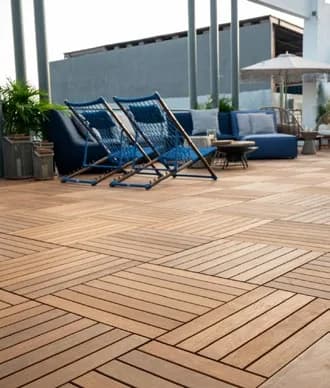
Understanding Ipe as a Deck Tile Material
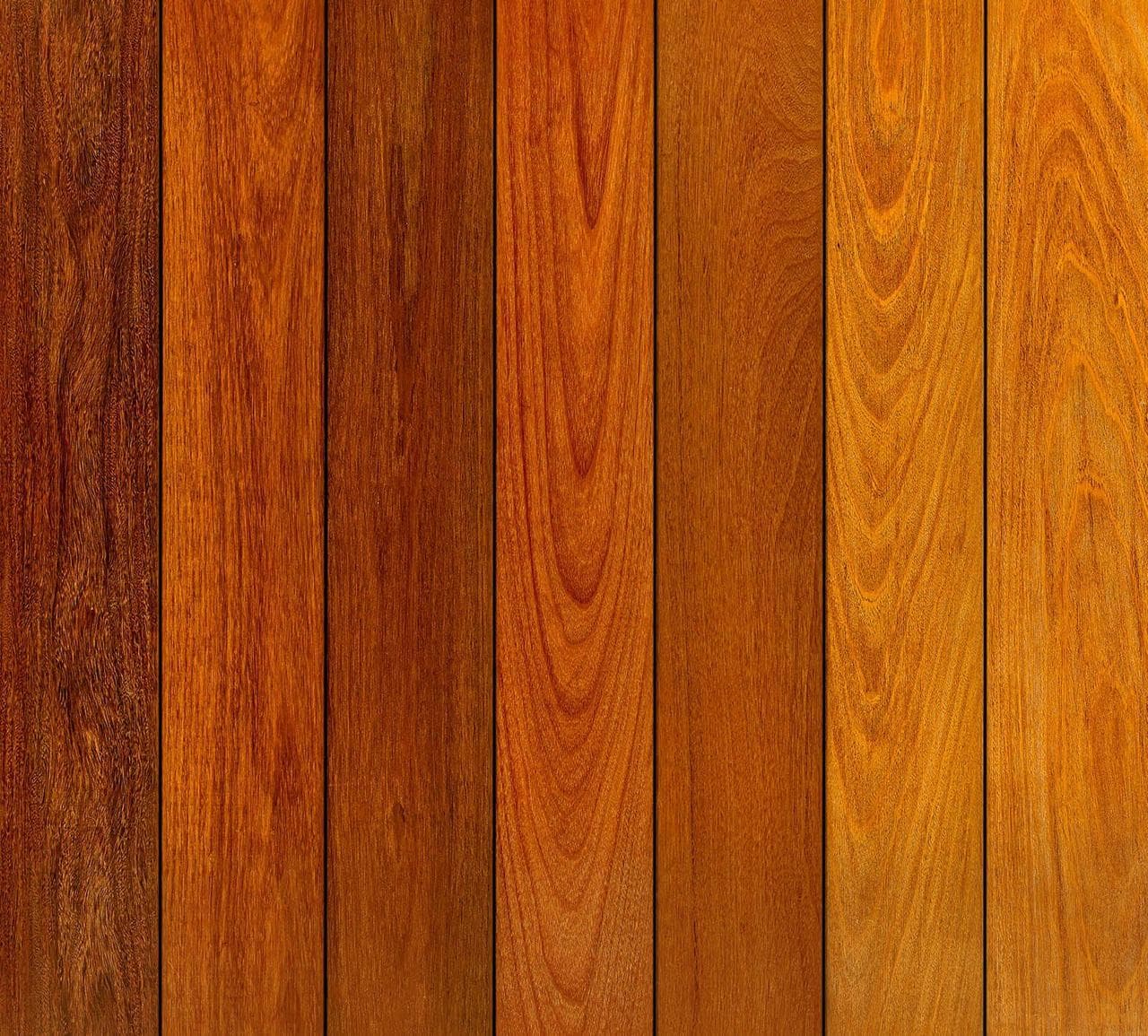
Ipe, a tropical hardwood, is a popular choice for outdoor decking due to its natural characteristics. When considering Ipe deck tiles, it's important to recognize that the material itself contributes to the tile's performance and appearance. Ipe is known for its deep chocolate tones, offering a classic hardwood look that can enhance various outdoor settings.
The inherent density of Ipe is a key specification. This density contributes to the material's resistance to common outdoor challenges, making it a durable option for terraces, balconies, and other exterior applications. The natural color variation within Ipe can also be a specification to consider, as it creates a rich, varied surface that matures gracefully over time.
Standard Deck Tile Dimensions and Formats
Ipe deck tiles are typically available in specific, standardized dimensions. These dimensions are critical for planning your layout and calculating the quantity needed. The most common formats are square, designed for straightforward installation across various surfaces.
Two primary sizes are commonly offered: 12" x 12" and 24" x 24". The 12" x 12" format covers 1 square foot per tile and is often chosen for smaller areas, intricate layouts, or spaces with numerous edges and transitions. The 24" x 24" format covers 4 square feet per tile and is generally preferred for larger terraces and open surfaces, where its larger size can result in fewer tile seams, contributing to a more expansive visual effect.
Choosing between these sizes depends on the scale of your project, the desired aesthetic, and the complexity of the area you are covering. Larger tiles can simplify installation over broad areas, while smaller tiles offer more flexibility for custom cuts and irregular shapes.
Plank Profile and Surface Finish
Beyond the overall tile dimensions, the profile of the individual Ipe planks that make up the tile is an important specification. These planks are typically secured to a backing, forming a modular unit. The profile refers to the shape and spacing of these planks on the tile's surface.
While specific profiles can vary, most Ipe deck tiles feature a slatted design, allowing for water drainage between the planks. The surface finish is also a key consideration. Most Ipe deck tiles are supplied unfinished, allowing the natural color of the wood to be showcased or for a specific finish to be applied after installation, depending on the desired aesthetic and maintenance plan.
Approved Uses and Limitations
Understanding the approved uses and any inherent limitations of Ipe deck tiles is vital for project success. These tiles are generally designed for exterior applications where a durable, level walking surface is desired. Common applications include rooftop terraces, balconies, patios over concrete slabs, and other elevated or ground-level outdoor spaces.
It's important to note that deck tiles are typically not structural components themselves. They are a surface covering that requires a stable, level, and adequately supported substrate beneath. For example, when installed over a concrete patio, the existing patio must be sound and have proper drainage. For rooftop terraces, the building's structural capacity to bear the weight of the tiles, and any additional load like furniture or planters, must be verified by a qualified professional. The method of installation, whether directly on a surface or using a pedestal system, also dictates suitability and should align with manufacturer guidelines.
Always review the specific installation instructions for the Ipe deck tiles you select to ensure they align with your project's conditions and local building practices. Issues like uneven surfaces, inadequate drainage, or insufficient structural support beneath the tiles are common limitations that must be addressed prior to installation.
Worked Example: Planning for a 10' x 12' Terrace
Let's consider our hypothetical rooftop terrace, measuring 10 feet by 12 feet. The homeowner wants to cover this 120-square-foot area with Ipe deck tiles. They are weighing the choice between 12" x 12" and 24" x 24" tiles. For simplicity, we'll assume a straight, edge-to-edge installation without complex cuts around obstructions for the initial material estimate.
If using 12" x 12" tiles (1 square foot per tile): To cover 120 square feet, 120 tiles would be needed. The dimensions of the space are perfectly divisible by 12 inches (10 feet = 120 inches, 12 feet = 144 inches), meaning 10 tiles across the 10-foot width and 12 tiles across the 12-foot length. This layout would require 10 x 12 = 120 tiles, with no significant waste from full-tile cuts.
If using 24" x 24" tiles (4 square feet per tile): To cover 120 square feet, approximately 30 tiles (120 / 4) would be needed. However, we must consider the dimensions. The 10-foot width is 120 inches, which divides evenly into five 24-inch tiles (5 x 24 = 120 inches). The 12-foot length is 144 inches, which divides evenly into six 24-inch tiles (6 x 24 = 144 inches). Therefore, 5 tiles across the width and 6 tiles across the length would require 5 x 6 = 30 tiles. In this specific example, both tile sizes result in minimal cutting waste for the main field of tiles, assuming no complex edges. However, for real-world projects, always account for edge cuts, potential waste, and a small overage.
Before you order
- Verify the exact dimensions (length, width, thickness) of the Ipe deck tiles available.
- Confirm the plank profile and spacing within each tile module.
- Determine the total square footage of your project area.
- Consider the project's layout complexity: many edges, curves, or obstructions may favor smaller tiles.
- Assess the substrate: Is it level, stable, and does it have adequate drainage for deck tile installation?
- Review installation method requirements (e.g., direct lay, pedestal system).
- Account for potential waste due to cuts and a small overage for future repairs or adjustments.
- Confirm if the tiles are supplied unfinished or pre-finished, and plan for any necessary sealants or stains.
Confirm installation details, approved uses and warranty terms in the current instructions for the exact product and profile. Your installer should verify the substrate, structure and applicable project requirements.
Questions to help you decide
Are Ipe deck tiles designed for structural support?
No, Ipe deck tiles are designed as a surface covering, not as a structural element. They must be installed over a stable, level, and adequately supported substrate, such as a concrete slab, an existing patio, or a properly engineered deck frame or pedestal system. Always ensure the underlying structure can safely bear the weight of the tiles and any additional loads.
What are the common sizes for Ipe deck tiles?
Ipe deck tiles are commonly available in two main square formats: 12 inches by 12 inches (covering 1 square foot per tile) and 24 inches by 24 inches (covering 4 square feet per tile). The choice between these sizes often depends on the project's scale, design complexity, and desired visual effect. Smaller tiles offer more flexibility for intricate layouts, while larger tiles can create a more seamless look on expansive surfaces.
Do Ipe deck tiles require a specific type of finish?
Ipe deck tiles are typically supplied unfinished, allowing the natural deep chocolate tones of the wood to be enjoyed. While Ipe is naturally durable, applying a UV-inhibiting oil finish can help preserve its original color and protect it from weathering. Without a finish, Ipe will naturally weather to a silver-gray patina over time. The decision to apply a finish or allow it to weather is a matter of aesthetic preference and maintenance commitment.
Ready to Plan Your Ipe Deck Tile Project?
Request a material quote today. Provide your project dimensions, desired tile profile, and ZIP code to confirm current availability and service options for Ipe deck tiles. We also offer Garapa and Cumaru deck tiles as alternatives.
Request a material quote →