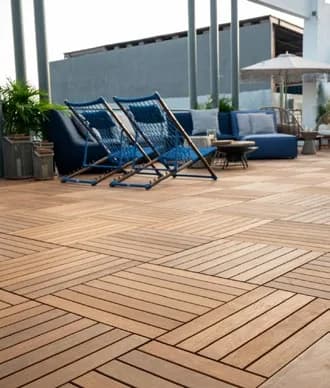
Understanding Ipe Deck Tiles in Shaded Conditions
Ipe deck tiles are known for their deep chocolate tones and exceptional hardness, making them a popular choice for outdoor surfaces. In shaded environments, the absence of direct sunlight means that any moisture from rain, dew, or cleaning will evaporate more slowly. This slower drying time can lead to surface discoloration, mildew growth, or the accumulation of organic debris if not properly managed.
Unlike areas with full sun exposure that naturally dry quickly, shaded spaces require deliberate planning to ensure adequate ventilation beneath and around the deck tiles. This becomes especially important for maintaining the aesthetic appeal of Ipe and minimizing the need for intensive cleaning.
Choosing the Right Ipe Deck Tile Format
Ipe deck tiles are typically available in two common formats: 12 x 12 inches and 24 x 24 inches. The choice between these sizes can influence drying times and the overall appearance in a shaded area.
The 12 x 12 inch format offers a compact square that can be suitable for smaller areas or layouts with more edges and transitions. The increased number of seams between tiles in this format might offer slightly more channels for moisture to escape from the surface. The 24 x 24 inch format provides a larger square, ideal for more open surfaces with fewer tile seams. While offering a more expansive look, the larger surface area of each tile might retain moisture longer if ventilation underneath is inadequate.
For shaded areas, consider how the chosen tile size interacts with the sub-surface and your ventilation strategy. A larger tile might require more attention to the sub-surface to ensure water drains away effectively and air circulates beneath it.
Sub-Surface Preparation and Drainage
A critical aspect of planning Ipe deck tiles in shaded areas is ensuring proper sub-surface preparation and drainage. The surface beneath the tiles must be clean, level, and designed to shed water efficiently.
If installing over concrete, verify that the concrete slab has a slight slope (typically 1/4 inch per foot) to prevent water pooling. Any standing water beneath the tiles will significantly prolong drying times and create an environment conducive to mildew. For installations directly on grade, a compacted gravel base with a permeable geotextile fabric can provide a stable and well-draining foundation. Ensure the ground slopes away from any structures.
Consider incorporating a drainage mat or a pedestal system to elevate the tiles. Pedestals create a consistent air gap beneath the tiles, promoting airflow and allowing water to drain away freely. This elevation is particularly beneficial in shaded areas where natural evaporation is slow.
Ventilation Strategies for Shaded Decks
Adequate ventilation is key to preventing moisture-related issues in shaded Ipe deck tile installations. The goal is to facilitate air movement both across the surface and underneath the tiles.
When laying tiles, ensure there is a small, consistent gap between each tile. This allows water to pass through and promotes air circulation. Avoid tightly butting tiles together, as this can trap moisture. If using a grid system for tile support, choose one that allows for maximum airflow.
For enclosed or partially enclosed shaded spaces, consider the overall air movement. If the area is naturally sheltered from breezes, strategic placement of furniture or planters should not obstruct what little air movement exists. Maintaining clear perimeter edges can also assist with airflow.
A Hypothetical Balcony Drying Plan
Consider a hypothetical 8-foot by 10-foot apartment balcony, primarily shaded by the building's overhang and a neighboring tree. The existing surface is a level concrete slab, and the goal is to install 24 x 24 inch Ipe deck tiles.
The total area is 80 square feet. Since each 24 x 24 inch tile covers 4 square feet, an area-equivalent calculation would suggest 20 tiles. The layout would be 4 tiles wide (8 feet / 2 feet per tile) by 5 tiles long (10 feet / 2 feet per tile) for a total of 20 tiles, with 2 extra tiles for cuts or replacements. This elevation creates a continuous air gap beneath the entire deck surface, allowing moisture to drain and air to circulate freely.
The balcony also has a slight slope towards a drain. The pedestal system will be adjusted to maintain this slope, ensuring water does not pool under the tiles. Regular light cleaning with a broom or leaf blower will be scheduled to remove debris that could trap moisture on the surface, augmenting the natural drying process.
Before you order
- Assess the degree and duration of shade your outdoor space receives.
- Verify the sub-surface drainage: does water naturally flow away or pool?
- Consider elevating the deck tiles with a pedestal system for optimal airflow.
- Plan for consistent spacing between tiles to allow for water drainage and air circulation.
- Develop a routine cleaning schedule to remove debris that can trap moisture.
- Evaluate the overall air movement in the shaded area; are there natural breezes or is it enclosed?
- Choose Ipe deck tile size based on aesthetic preference and how it integrates with your ventilation strategy.
Confirm installation details, approved uses and warranty terms in the current instructions for the exact product and profile. Your installer should verify the substrate, structure and applicable project requirements.
Questions to help you decide
Will Ipe deck tiles mold or mildew in a shaded area?
While Ipe is a dense hardwood, prolonged dampness in a poorly ventilated shaded area can lead to surface mildew or discoloration. Proper sub-surface drainage, adequate ventilation beneath the tiles (e.g., using pedestals), and regular cleaning are essential to minimize these issues. The wood itself is resistant to rot and decay, but surface growth can still occur without good airflow.
How often should I clean Ipe deck tiles in a shaded space?
In shaded areas, a more frequent cleaning schedule may be beneficial compared to sunny locations. Regularly sweeping or using a leaf blower to remove leaves, dirt, and other organic debris is recommended, perhaps weekly or bi-weekly, especially during seasons with heavy foliage. Periodically washing with water and a mild, pH-neutral cleaner can help remove any developing mildew or grime. Always allow the surface to dry completely.
Can I use Ipe deck tiles directly on soil in a shaded garden?
Installing Ipe deck tiles directly on soil, especially in a shaded garden, is generally not recommended. Direct contact with soil can lead to uneven settling, poor drainage, and prolonged moisture exposure, which can impact the tiles over time. It is much better to prepare a stable, well-draining base, such as compacted gravel with a geotextile fabric, and ideally use a pedestal system to elevate the tiles for proper ventilation and moisture management.
Ready to Transform Your Shaded Outdoor Space?
Request a material quote for Ipe deck tiles today. Provide your project dimensions, desired tile profile (12x12 or 24x24), and ZIP code. We can help confirm current availability and service options for your project.
Request a material quote →