Understanding the Need for Edge Finishes
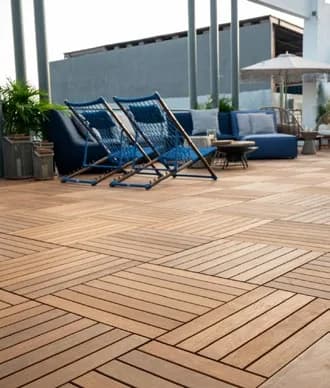
The primary purpose of finishing the edges of an Ipe deck tile installation is to create a safe transition from the tiled surface to the adjacent area. Unfinished edges can expose the tile's support structure, create uneven surfaces, and present a tripping hazard. Beyond safety, a finished edge provides a clean, intentional look that enhances the overall design of your outdoor space.
Edge treatments also help to secure the perimeter tiles, preventing movement and maintaining the integrity of the layout. Depending on the installation method, such as direct placement on a solid surface or use with a pedestal system, the edge finishing requirements may vary significantly. Consideration of the adjacent surface, whether it's a wall, grass, concrete, or another flooring material, will guide your choice of edge solution.
Common Edge Finishing Options
There are several common approaches to finishing the perimeter of an Ipe deck tile installation, each with its own advantages and suitable applications:
**1. Edge Reducers/Ramps:** These components provide a gradual slope from the deck tile surface down to the adjacent substrate. They are particularly useful where the deck tiles create a significant height difference, such as on a concrete patio, to prevent tripping.
**2. Fascia Boards:** For installations where the deck tiles are elevated, such as on a pedestal system, fascia boards can be used to cover the exposed sides of the support structure. These boards are typically installed vertically around the perimeter, matching or complementing the Ipe material for a cohesive look.
**3. Border Tiles or Strips:** Sometimes, smaller or custom-cut Ipe pieces can be used to create a border. This approach allows for a flush transition to an adjacent surface, especially if that surface is at a similar height. It can also be used to create a visual frame around the main tiled area.
**4. Abutting Against a Wall or Fixed Structure:** If one or more sides of your deck tile installation are flush against a permanent wall, railing, or other fixed structure, a dedicated edge finish might not be necessary. In such cases, the tile itself forms the edge, assuming proper spacing and fastening are maintained.
Considering Trip Hazards and Accessibility
A critical aspect of edge detailing is mitigating trip hazards. Any elevation change, even minor, can pose a risk. Edge reducers or ramps are designed specifically to address this by creating a smooth, gradual transition.
For elevated installations, ensure that fascia boards are securely attached and do not create any protruding edges. If your project needs to meet specific accessibility standards, consult local guidelines and consider solutions that provide the smoothest possible transitions, such as ADA-compliant ramps where applicable. The goal is to create a safe, navigable surface for all users.
Worked Example: Finishing a Balcony Edge
Consider a hypothetical balcony project where Ipe 24 x 24 inch deck tiles are being installed directly over an existing concrete slab. The balcony measures 10 feet by 8 feet. The Ipe deck tiles, at approximately 1 inch thick, create a noticeable step up from the adjacent interior flooring and the bare concrete at the outer perimeter.
**Perimeter Plan:**
1. **Door Threshold:** At the door leading to the interior, custom-cut Ipe strips or a low-profile Ipe reducer will be used to bridge the ~1-inch height difference. This ensures a smooth transition and prevents a trip hazard when entering or exiting.
2. **Outer Edge (Railing Side):** Along the 10-foot length facing the railing, where the tiles meet the open air, a matching Ipe fascia board will be installed vertically. This fascia will cover the exposed edge of the tiles and the underlying concrete, providing a clean, finished appearance and protecting the tile edges from direct exposure.
3. **Side Edges (Walls):** The two 8-foot sides are flush against the balcony's side walls. Here, the Ipe tiles will be cut precisely to fit, leaving a small expansion gap that can be discreetly filled with a flexible sealant if needed, or simply left as a minimal gap, depending on the wall finish. No additional edge trim is required, as the wall itself provides the boundary.
This example demonstrates how different perimeter conditions require tailored edge solutions to achieve both safety and aesthetic goals.
Compatibility with Pedestal Systems and Substrates
When Ipe deck tiles are installed on a pedestal system, the perimeter requires specific attention. The pedestals themselves will be hidden beneath the tiles, but their presence elevates the entire surface. In this scenario, fascia boards are often the most effective solution to conceal the pedestals and create a finished look around the raised deck.
For direct installations on concrete or other solid, level substrates, the primary concern is the height difference at the edge. Edge reducers or custom-milled transition pieces made from Ipe can provide a smooth ramp down to the original surface. Always ensure that any chosen edge component is compatible with the material it's transitioning to and securely fastened to prevent movement.
Consider the underlying substrate's condition. If it's uneven, addressing that first is crucial, as edge finishes alone cannot compensate for significant variations. A level and stable foundation is key for any successful deck tile installation and its perimeter details.
Selecting Complementary Products
To achieve a cohesive look for your Ipe deck tile installation, consider these complementary products:
**1. Ipe Deck Boards:** For custom fascia or trim pieces, Ipe deck boards can be milled to size, ensuring a perfect match in material and color. View our selection of Ipe deck boards here: [/deck-tiles/ipe]
**2. Garapa Deck Tiles:** If you are considering a lighter, contrasting edge or a different species for a border, Garapa deck tiles offer warm golden tones that can provide an interesting visual contrast: [/deck-tiles/garapa]
**3. Cumaru Deck Tiles:** For a rich reddish-brown alternative, Cumaru deck tiles provide another durable option that could be used for a distinct border or custom trim pieces: [/deck-tiles/cumaru]
**4. Deck Tile Connectors/Pedestals:** Ensure your edge solution is compatible with your chosen deck tile connectors or pedestal system, especially when planning fascia boards for elevated decks. Explore general deck tile options here: [/deck-tiles]
Before you order
- Identify all perimeter edges of your installation.
- Measure the height difference at each edge to the adjacent surface.
- Determine the type of adjacent surface (wall, concrete, grass, interior flooring).
- Assess potential trip hazards and accessibility requirements.
- Choose appropriate edge finishing components (reducers, fascia, custom strips).
- Confirm material compatibility with Ipe deck tiles and the substrate.
- Plan for secure fastening of all edge components.
- Consider the aesthetic impact of your chosen edge finish.
Confirm installation details, approved uses and warranty terms in the current instructions for the exact product and profile. Your installer should verify the substrate, structure and applicable project requirements.
Questions to help you decide
Can I simply leave the edges of my Ipe deck tiles unfinished?
Leaving Ipe deck tile edges unfinished is generally not recommended. It can create a trip hazard, expose the underlying support structure, and result in an incomplete or unpolished appearance. Finishing the edges provides a safer, more aesthetically pleasing, and more durable installation.
What is the best way to transition Ipe deck tiles to a grass lawn?
Transitioning Ipe deck tiles to a grass lawn often involves creating a defined border. This could be achieved by using a treated lumber border, concrete pavers, or even a low-profile curbing that is flush with the top of the deck tiles. This helps contain the grass and provides a stable edge for the tiles. Edge reducers are less common in this scenario, as the goal is usually to create a clear separation.
Do I need special tools to cut Ipe deck tiles for edge pieces?
Ipe is an exceptionally dense hardwood, so cutting it for custom edge pieces or to fit around obstacles requires appropriate tools. A miter saw or circular saw with a sharp, carbide-tipped blade suitable for hardwoods is recommended. Always wear appropriate safety gear, including eye and hearing protection, and follow tool manufacturer guidelines. For intricate cuts, a jigsaw with a hardwood blade may be useful, though precision can be more challenging.
Request a Quote for Your Ipe Deck Tile Project
Ready to enhance your outdoor space with Ipe deck tiles and the perfect edge finishes? Contact us with your project dimensions, desired Ipe profile, and ZIP code to request a material quote. We can help you confirm current availability and service options for your project.
Request a material quote →