Identify and Measure All Obstacles
Before laying any tiles, conduct a thorough site survey to identify all fixed obstacles. This includes structural columns, railing posts, permanent planters, built-in seating, and any other elements that will interrupt the regular grid of your Ipe deck tiles. Measure the dimensions of each obstacle precisely, noting its distance from existing walls or edges of the installation area.
For square or rectangular obstacles, record length and width. For circular columns, measure the diameter. Pay attention to the exact position of each obstacle relative to your planned tile grid. Small discrepancies in measurement can lead to noticeable gaps or misalignment later in the project.
Choose Your Ipe Deck Tile Size
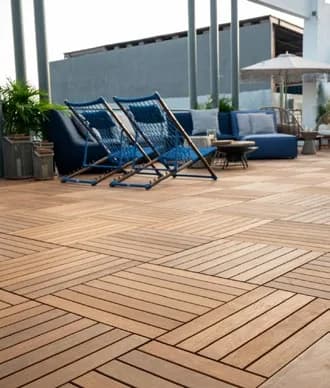
Ipe deck tiles are available in common sizes such as 12 x 12 inches and 24 x 24 inches. The chosen tile size can influence how you approach cutting around obstacles. Smaller tiles, like the 12 x 12 inch format, might require more cuts but offer greater flexibility for intricate layouts or areas with numerous interruptions. Larger 24 x 24 inch tiles may reduce the total number of seams but demand more precise planning for each cut.
Consider the overall size of your project area and the density of obstacles when selecting your tile dimensions. The 12 x 12 inch tiles cover 1 square foot per tile, while the 24 x 24 inch tiles cover 4 square feet per tile.
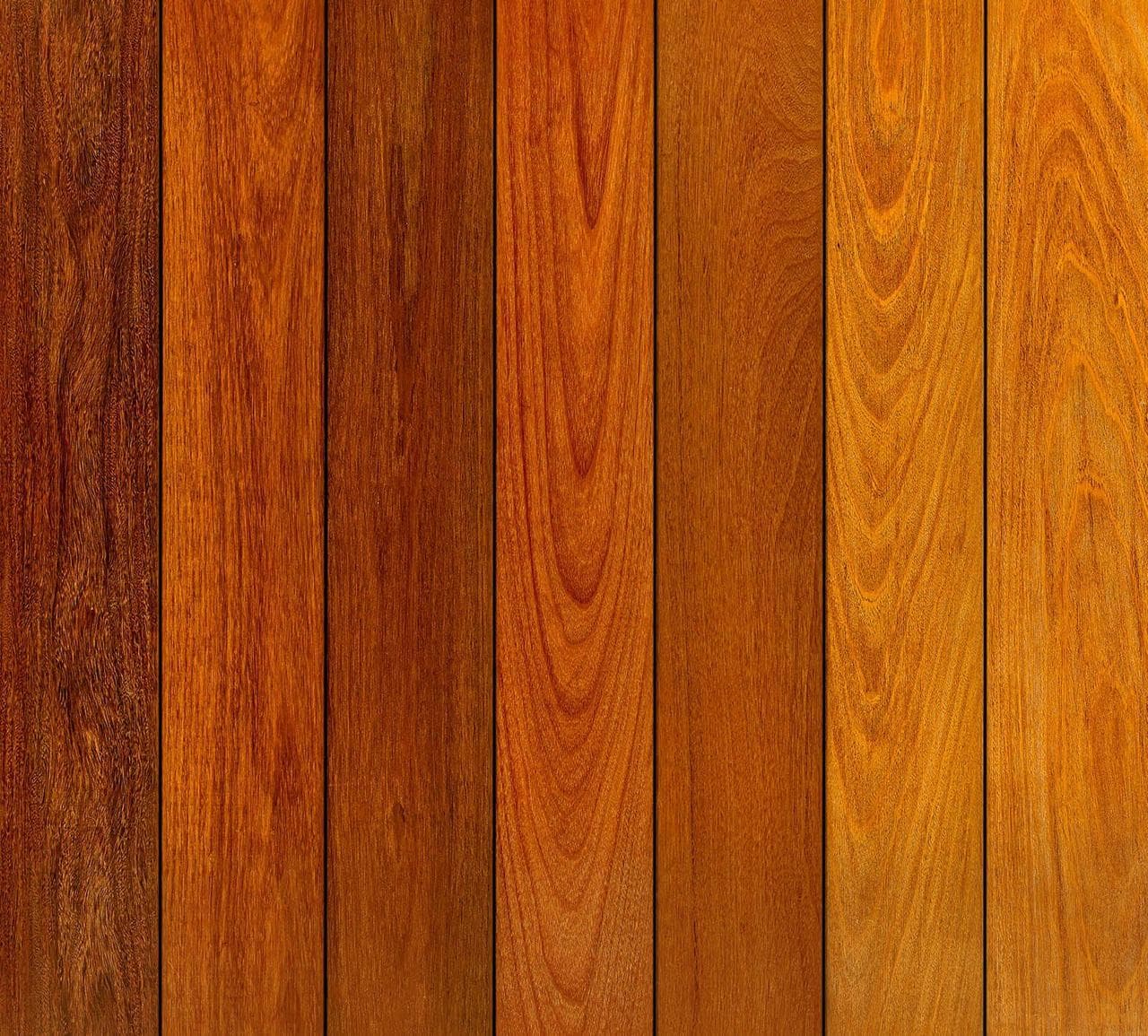
Ipe is known for its deep chocolate tones and exceptional hardness, making it a durable choice for outdoor surfaces. Garapa offers warm golden tones, and Cumaru provides a rich reddish-brown grain. All three species are dense hardwoods suitable for outdoor use.
Lumber Plus offers Ipe deck tiles in both 12 x 12 and 24 x 24 inch sizes. You can explore these options at our main <a href="/deck-tiles/ipe">Ipe Deck Tiles page</a>.
Develop a Detailed Cut Map
A detailed cut map is essential for minimizing waste and ensuring accuracy. Start by drawing a scaled diagram of your project area, including all walls, edges, and fixed obstacles. Then, overlay your chosen Ipe deck tile grid onto this diagram. This visual representation will help you identify where each tile will meet an obstacle and what type of cut will be needed.
For obstacles that fall within a tile, you'll need to mark and cut out the specific shape. For obstacles at the edge of the installation, a simple straight cut might suffice. Clearly label each tile on your map with the required cut, considering the orientation of the wood grain if aesthetic continuity is desired.
The goal of the cut map is to optimize material usage. Try to plan cuts so that offcuts from one tile can be used for another section, if feasible and if the offcut meets minimum size requirements for stability and support. However, do not assume small offcuts can be used for structural support or in high-traffic areas.
Required Tools and Techniques for Cutting Ipe
Ipe is a dense hardwood, so standard woodworking tools may not be sufficient for clean, precise cuts. You will need a circular saw with a sharp, carbide-tipped blade for straight cuts, and potentially a jigsaw with appropriate blades for curved or intricate cuts around columns. A miter saw can be useful for precise angle cuts if needed for borders or complex layouts.
Always use appropriate personal protective equipment, including safety glasses, hearing protection, and gloves. When cutting, ensure the tile is securely clamped to a stable work surface to prevent movement and ensure accuracy. Make sure to cut slowly and steadily to avoid splintering, especially on the face of the tile. Always follow manufacturer guidelines for your tools and blades.
Consider practicing on a scrap piece of Ipe or a similar dense hardwood to familiarize yourself with the material's properties and the feel of your tools before making cuts on your project tiles.
Worked Example: Cutting Around a Square Column
Consider a hypothetical 10-foot by 12-foot terrace where you plan to install 24 x 24 inch Ipe deck tiles. A 16-inch by 16-inch structural column is located 3 feet from one 10-foot wall and 4 feet from one 12-foot wall.
First, establish your tile grid. Since tiles are 24 inches (2 feet) square, your 10-foot width will accommodate 5 full tiles (10 ft / 2 ft = 5 tiles). Your 12-foot length will accommodate 6 full tiles (12 ft / 2 ft = 6 tiles). This means a total of 30 full tiles if there were no obstacles.
Now, locate the column within this grid. The column is 3 feet (1.5 tiles) from one wall and 4 feet (2 tiles) from another. A 16-inch column will occupy a portion of four adjacent 24 x 24 inch tiles. You will need to make L-shaped cuts on these four tiles to fit around the column.
Each of these four tiles will have a 16-inch by 16-inch section removed from one corner. For instance, if a tile's corner meets the column, you would measure 8 inches in from one edge and 8 inches in from the perpendicular edge (since 24-16=8 inches) and cut out a 16x16 inch square from that corner. This will require careful marking and cutting with a circular saw and potentially a jigsaw for the internal corners. You will need to purchase 30 full tiles plus at least 4 additional tiles to account for these cuts and potential errors, assuming the offcuts are not usable for other areas. This is a minimum; ordering extra for waste is always recommended.
Before you order
- Have I identified all fixed obstacles on my project site?
- Have I accurately measured the dimensions and location of each obstacle?
- Is my chosen Ipe deck tile size appropriate for the number and type of cuts required?
- Do I have a detailed cut map showing the placement of every tile and all necessary cuts?
- Have I planned how offcuts will be used (or accounted for as waste)?
- Do I have the correct tools (circular saw, jigsaw, carbide-tipped blades) for cutting Ipe?
- Am I prepared to use appropriate personal protective equipment during cutting?
- Have I accounted for extra tiles in my order to cover potential cutting errors or unforeseen issues?
Confirm installation details, approved uses and warranty terms in the current instructions for the exact product and profile. Your installer should verify the substrate, structure and applicable project requirements.
Questions to help you decide
What is the best way to cut Ipe deck tiles without splintering?
To minimize splintering when cutting Ipe deck tiles, use a sharp, carbide-tipped blade on your saw. Make slow, steady cuts, and ensure the tile is well-supported and clamped down. You can also place painter's tape along the cut line to help reduce tear-out on the top surface. For very clean cuts, a scoring pass followed by a deeper cut can be effective.
How much extra material should I order for cuts around obstacles?
It is generally recommended to order at least 10-15% extra material to account for cuts, waste, and potential errors, especially when dealing with numerous obstacles or complex layouts. For simple layouts with minimal cuts, 5-7% might suffice, but for intricate projects, a higher percentage is safer. Your detailed cut map will help you estimate more precisely.
Can I use small cut pieces of Ipe deck tiles?
Small cut pieces or offcuts should generally not be used in primary traffic areas or for structural support. While some larger offcuts might be suitable for filling in small perimeter gaps or less visible areas, always ensure that any installed piece is adequately supported and stable. Do not rely on small pieces for structural integrity or in areas subject to heavy loads. Verify the exact assembly instructions for minimum supported piece sizes.
Ready to Plan Your Ipe Deck Tile Project?
Request a material quote today. Provide your project dimensions, desired Ipe deck tile profile (12x12 or 24x24), and your ZIP code for current availability and service options.
Request a material quote →