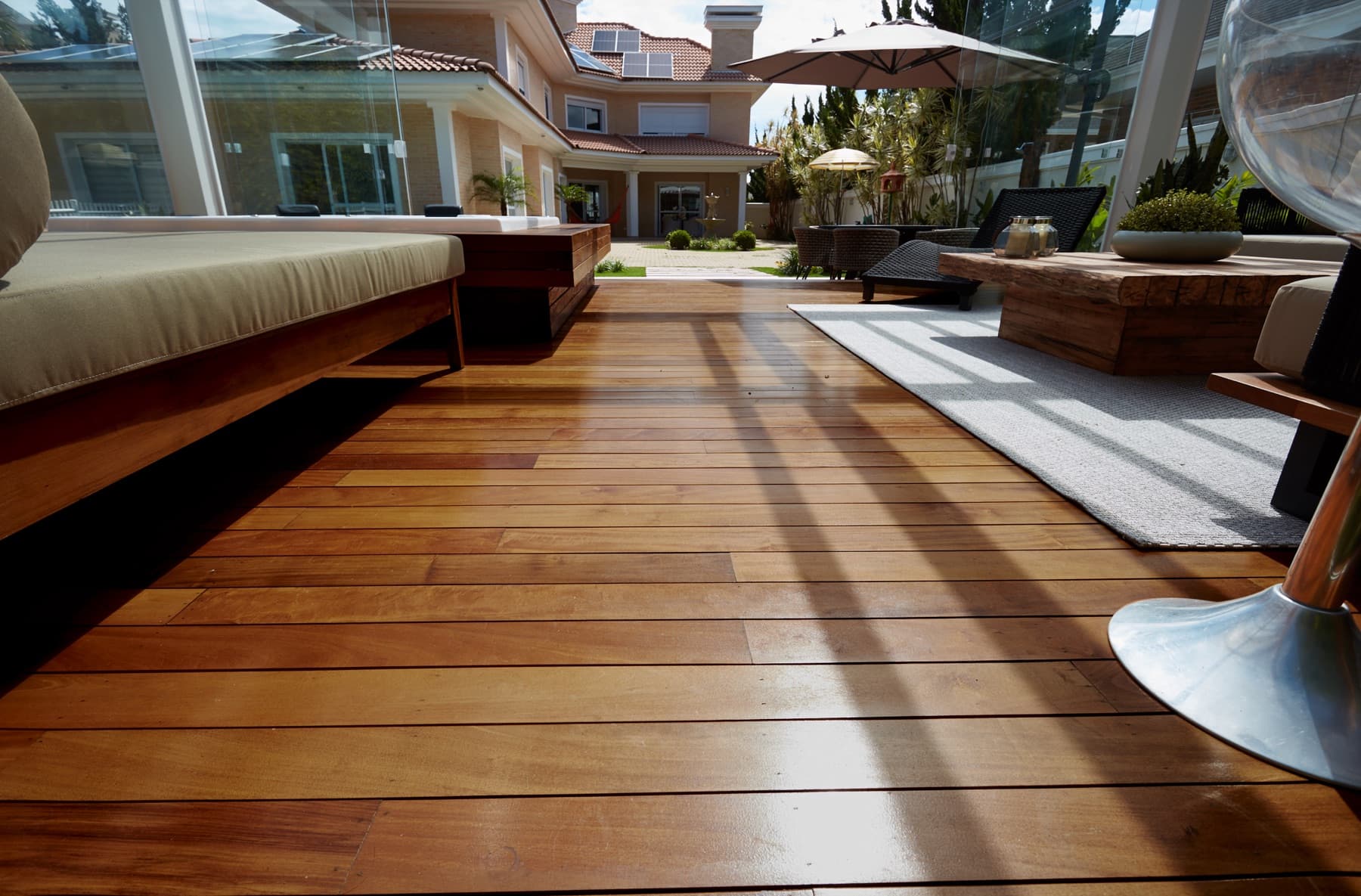
The Inherent Strengths of Hardwood in Winter
Dense tropical hardwoods like Ipe and Cumaru are recognized for their natural resistance to environmental stressors, a quality that extends to winter conditions. Their tight grain structure and natural oils contribute to their low porosity, making them less susceptible to water absorption compared to softer woods.
This reduced water uptake is crucial in winter, as it minimizes the risk of cellular damage from freeze-thaw cycles, which can lead to cracking and warping in less dense materials. Ipe, for example, is noted for its minimal movement post-installation and resistance to weather changes, while Cumaru is described as very durable and resistant to weather changes. These characteristics contribute to their ability to maintain structural stability through fluctuating winter temperatures.
Furthermore, these hardwoods are naturally resistant to rot, mold, and fungi. This is a significant advantage when snow and ice cover the deck for extended periods, creating consistently damp conditions. The inherent defense mechanisms of the wood mean that chemical treatments are not required to provide this resistance, simplifying long-term maintenance in winter environments.
Species Spotlight: Ipe and Cumaru for Cold Climates
Among hardwood decking options, Ipe and Cumaru stand out for their documented performance in demanding outdoor applications, including those with winter exposure.
Ipe, also known as Brazilian walnut, is particularly noted for its exceptional density and durability. It is described as having minimal movement post-installation and being resistant to weather changes, mold, and termites. Its natural oils are said to protect it from cracking or warping, which is beneficial when facing winter moisture and temperature swings. Ipe is also a marine-grade standard for docks and boardwalks, suggesting its suitability for wet and variable conditions.
Cumaru shares many of Ipe's robust qualities, offering stiffness, strength, and extreme hardness. It is also resistant to termites and weather changes. While Ipe is often considered the benchmark, Cumaru provides a similar level of durability and resistance for projects where budget is a primary consideration. Both species are a testament to hardwood's ability to withstand significant environmental challenges.
Other species like Garapa and Tigerwood also offer durability, but Ipe and Cumaru are frequently highlighted for their extreme resilience, making them strong candidates for winter-exposed projects.
Essential Site Preparation and Drainage
Even with the inherent resilience of hardwood, proper site preparation and drainage are critical for optimal performance in winter. Effective drainage prevents water from pooling on or under the deck, which can exacerbate moisture issues and increase the risk of ice formation.
Ensure the deck substructure allows for adequate airflow and water runoff. This includes proper grading beneath the deck to direct water away from the foundation and using appropriate joist spacing and deck board gaps. While specific spacing requirements vary by product and climate, general principles include allowing sufficient room for boards to expand and contract and for water to drain freely.
Consider the surrounding landscape. Overhanging trees that shed leaves or snow onto the deck can increase moisture retention. Planning for clear pathways for melting snow and ice to run off the deck and away from the house foundation is essential.
Winter Maintenance and Snow Removal
While hardwood decking is low maintenance, specific practices during winter can help preserve its appearance and structural integrity. The primary concern is managing snow and ice accumulation.
When removing snow, use a plastic shovel or a snow blower designed for decks to avoid scratching or damaging the wood surface. Metal shovels or sharp tools can gouge the boards. For ice, avoid using rock salt or de-icing chemicals directly on the hardwood, as these can potentially stain the wood or affect its finish over time. Instead, consider using sand for traction or allowing ice to melt naturally when temperatures rise. Always confirm product-specific recommendations for de-icer compatibility.
Regular cleaning throughout the year, including before winter, helps prevent the buildup of organic matter that can trap moisture. A simple wash once a year is generally recommended for hardwood decks. If you prefer to maintain the original color of your hardwood deck, an annual application of a UV-blocking sealer is suggested; otherwise, the wood will naturally weather to a silvery-gray patina with no structural impact.
Project Example: A Winter-Resilient Deck Design
Consider a hypothetical deck project for a mountain cabin in a region known for heavy snowfall and freezing temperatures. The client wants a durable, low-maintenance deck that can withstand harsh winters without significant degradation.
The deck measures 16 feet by 24 feet. The design specifies Ipe hardwood decking in a standard 1x6 (nominal) profile, face-fastened for maximum security. Key planning elements for winter resilience include:
1. **Substructure Design:** The deck frame is constructed with treated lumber, elevated sufficiently to allow for excellent ventilation and drainage beneath. The ground below is sloped away from the cabin foundation at a minimum of 1/4 inch per foot to prevent water pooling.
This spacing is crucial to allow for water drainage and to accommodate the natural expansion and contraction of the wood with temperature and humidity changes, reducing stress on the fasteners.
3. **Snow Management:** The client is advised to use a plastic-bladed shovel for snow removal to protect the Ipe surface. They are also instructed to avoid chemical de-icers, opting instead for sand if traction is needed on icy patches. The deck's open design without solid railings or enclosed areas further aids in natural snowmelt and evaporation.
4. **Maintenance Schedule:** An annual cleaning with a mild, pH-neutral deck cleaner is recommended. The client chooses to let the Ipe weather to its natural silvery-gray patina, eliminating the need for annual oiling to maintain color, thus reducing winter-specific maintenance tasks.
This approach leverages the inherent durability of Ipe while integrating design and maintenance practices specifically tailored to winter conditions, ensuring the deck remains functional and aesthetically pleasing for years.
Before you order
- Assess local winter conditions: heavy snowfall, frequent freeze-thaw cycles, prolonged ice cover?
- Select a dense hardwood species known for weather resistance (e.g., Ipe, Cumaru).
- Ensure proper deck substructure design for ventilation and drainage.
- Verify adequate ground slope away from the deck foundation.
- Plan for appropriate board spacing to allow water runoff and accommodate wood movement.
- Consider the impact of surrounding landscaping (e.g., snow-shedding trees).
- Acquire suitable tools for snow removal (plastic shovel, deck-safe snow blower).
- Understand limitations of de-icing products and seek non-chemical alternatives.
- Establish an annual cleaning and maintenance routine, considering color preference (patina vs. oiled look).
- Confirm product-specific installation and care instructions for winter conditions.
Confirm installation details, approved uses and warranty terms in the current instructions for the exact product and profile. Your installer should verify the substrate, structure and applicable project requirements.
Questions to help you decide
Does hardwood decking warp in freezing temperatures?
Dense hardwoods like Ipe and Cumaru are naturally resistant to warping. Their tight grain and natural oils help protect them from cracking or warping due to moisture exposure and temperature changes. Proper installation, including adequate board spacing for drainage and movement, further minimizes this risk.
Can I use rock salt or de-icers on my hardwood deck?
It is generally recommended to avoid using rock salt or chemical de-icers directly on hardwood decking. These products can potentially stain the wood or affect its finish over time. For traction, sand can be used, or allow ice to melt naturally. Always check the specific recommendations for your chosen hardwood product.
How should I remove snow from a hardwood deck?
When removing snow, use a plastic shovel or a snow blower designed for decks to prevent scratching or damaging the wood surface. Metal shovels or sharp tools should be avoided. Clear snow promptly to minimize prolonged moisture contact with the deck surface.
Ready to Plan Your Winter-Resilient Hardwood Deck?
Request a material quote today. Provide your project dimensions, desired hardwood profile, and ZIP code to confirm current availability and service options for your region.
Request a material quote →