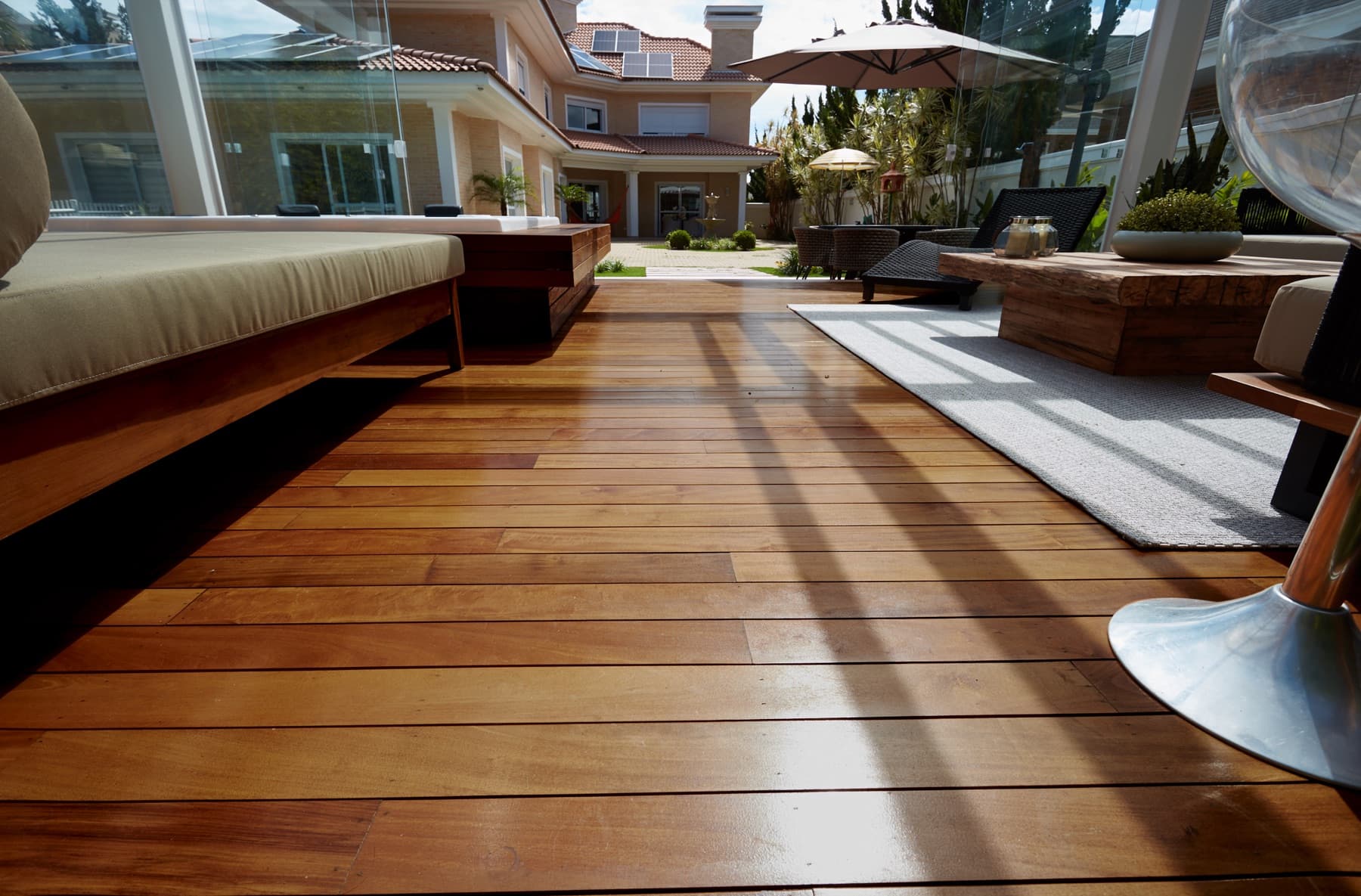
Start with a Project Vision and Preliminary Research
Before requesting samples, define your project's aesthetic and functional requirements. Consider the overall style of your home and landscape, the intended use of the deck, and your maintenance preferences. Research different hardwood species to narrow down your options based on their inherent characteristics. For instance, Ipe (Handroanthus spp.) is known for its bold grain and reddish-brown to olive-brown tones, offering exceptional durability and resistance to weather changes, mold, and termites. Cumaru (Dipteryx odorata) offers a similar durability profile with a slightly different color range and a subtle cinnamon-vanilla scent when worked.
Knowing your priorities – whether it's the darkest tone, the most pronounced grain, or a specific durability rating – will help you focus your sample requests. Lumber Plus offers a range of Brazilian hardwood decking species, including Ipe, Cumaru, Garapa, Tigerwood, Angelim, and Jatoba, each with distinct visual and performance attributes. Consider reviewing the characteristics of these species on our website before requesting samples to understand their general properties and appearance.
Also, consider the profiles and lengths that are typically available. While specific stock varies by location, understanding common dimensions (e.g., 1"x2" through 6"x6" dimensions for Ipe, in lengths from 3–24 ft) can help you visualize the finished project and anticipate any installation considerations.
Requesting and Receiving Your Hardwood Decking Samples
Once you have a few species in mind, request physical samples. Aim for at least two to three samples per species if possible, as natural wood exhibits variation even within the same type. When your samples arrive, inspect them for any damage and confirm they are correctly labeled with the species and any relevant profile information.
Ensure the samples are large enough to give you a genuine impression of the wood. Small chips can be misleading. A sample that is at least 6-12 inches long will provide a better representation of the grain pattern and color variation you can expect across a full board.
Evaluate Samples in Diverse Lighting Conditions
The appearance of hardwood decking can change dramatically under different lighting. What looks perfect indoors under artificial light might appear entirely different outdoors in direct sunlight or shade. Take your samples outside and observe them at various times of day:
Morning Light: Often softer, revealing subtle undertones.
Midday Sun: Direct, intense light can wash out colors or highlight grain patterns.
Overcast Conditions: Diffused light provides a truer representation of the wood's inherent color.
Late Afternoon/Evening Light: Warmer, golden light can enhance red and brown tones. Observe how the samples look from different angles, both close-up and from a distance, to get a comprehensive view of their visual impact.
Consider Texture and Finish
Beyond color, the texture of the decking is crucial. Run your hand over the samples. Is it smooth, or does it have a subtle texture? Some hardwoods, like Ipe and Cumaru, are known for their dense, fine grain.
Also, consider the intended finish. Will the wood be oiled to maintain its natural color, or will it be left to weather to a silvery-gray patina? If you plan to oil the deck, apply a small amount of a suitable UV-blocking sealer or oil to a portion of one sample to see how it deepens the color and enhances the grain. This step is vital because the finished look can differ significantly from the raw wood. For example, Ipe left untreated will weather to a silvery-gray, but an annual oil application can preserve its original reddish-brown to olive-brown hue.
Integrate Samples with Adjacent Finishes and Materials
A deck rarely exists in isolation. Place your hardwood samples next to existing or planned elements of your outdoor space. This includes your home's exterior siding, trim, windows, doors, pavers, landscaping, and outdoor furniture. Observe how the wood tones interact with these other materials. Does it create a harmonious blend, or does it clash? For example, a deck of Ipe, with its rich, deep tones, might complement a light-colored stucco house, while a golden-toned Garapa could enhance a more rustic brick exterior.
Pay attention to undertones. A reddish-brown hardwood might bring out the warmth in a nearby brick wall, while an olive-brown tone could complement cooler, gray stone features. The goal is to ensure the decking choice contributes to a cohesive and appealing outdoor environment.
A Hypothetical Sample Selection Scenario
Imagine you are planning a new 15-foot by 20-foot deck for a contemporary home with light gray fiber cement siding and dark bronze window frames. You're looking for a durable hardwood that will stand up to heavy foot traffic and complement the modern aesthetic. You've narrowed your choices down to Ipe and Cumaru, based on their strength and resistance properties.
You request samples of both species. Upon arrival, you notice the Ipe sample is a deep reddish-brown with a tight, almost invisible grain, while the Cumaru sample is a lighter, more golden brown with a slightly more pronounced, wavy grain.
You take both samples outside. In direct midday sun, the Ipe maintains its deep color, appearing elegant and substantial. The Cumaru, however, seems to lighten slightly, taking on a warmer, honeyed hue. Against the light gray siding, the Ipe creates a striking contrast, emphasizing its rich tones. The Cumaru blends a bit more, offering a softer transition. When placed next to a dark bronze outdoor planter, the Ipe's deep color harmonizes well, while the Cumaru introduces a brighter element. You decide to apply a small amount of clear UV-blocking oil to a corner of each sample. The Ipe's color deepens further, becoming even richer, while the Cumaru's golden tones become more vibrant. After several days of observing the samples in various lights and against different elements, you decide that the Ipe's bold, deep reddish-brown offers the strong visual statement and sophisticated contrast you desire for your contemporary home. You then proceed to request a quote for Ipe decking in your desired profile and lengths.
Before you order
- Define your project's aesthetic and functional goals.
- Research different hardwood species to narrow down options.
- Request multiple physical samples of your top choices.
- Inspect samples for damage and verify labels.
- Evaluate samples outdoors in morning, midday, and evening light.
- Assess the wood's texture and consider how it feels underfoot.
- Apply a test finish (e.g., UV-blocking oil) to a portion of the sample if you plan to maintain the original color.
- Place samples next to your home's exterior, existing hardscaping, and outdoor furniture.
- Observe how colors and textures interact to ensure harmony.
- Consider the overall visual impact from both close-up and a distance.
- Make your final selection based on a comprehensive evaluation of all factors.
Confirm installation details, approved uses and warranty terms in the current instructions for the exact product and profile. Your installer should verify the substrate, structure and applicable project requirements.
Questions to help you decide
How many samples should I request?
It is recommended to request at least one, and ideally two to three, samples for each hardwood species you are considering. Natural wood has variations in grain and color, even within the same species, so multiple samples will give you a more accurate representation of what to expect across your entire deck.
What is the best size for a decking sample?
While small swatches can give an idea of color, a sample that is at least 6-12 inches long and representative of the actual board width will provide a much better impression of the wood's grain pattern and how it will look in a larger application. This size allows you to see more of the wood's natural characteristics.
Should I apply a finish to my samples?
Yes, if you plan to apply a finish (like a UV-blocking oil) to your completed deck to preserve its original color, it's highly recommended to apply that same finish to a small section of your samples. This will show you how the finish deepens the color and enhances the grain, giving you a more accurate preview of your deck's final appearance.
Ready to Select Your Hardwood Decking?
Request a material quote with your project dimensions, exact profile, and ZIP code. We can also confirm current availability and service options for Ipe, Cumaru, Garapa, Tigerwood, Angelim, and Jatoba hardwood decking. Visit our product page to explore species: /decking/hardwood
Request a material quote →