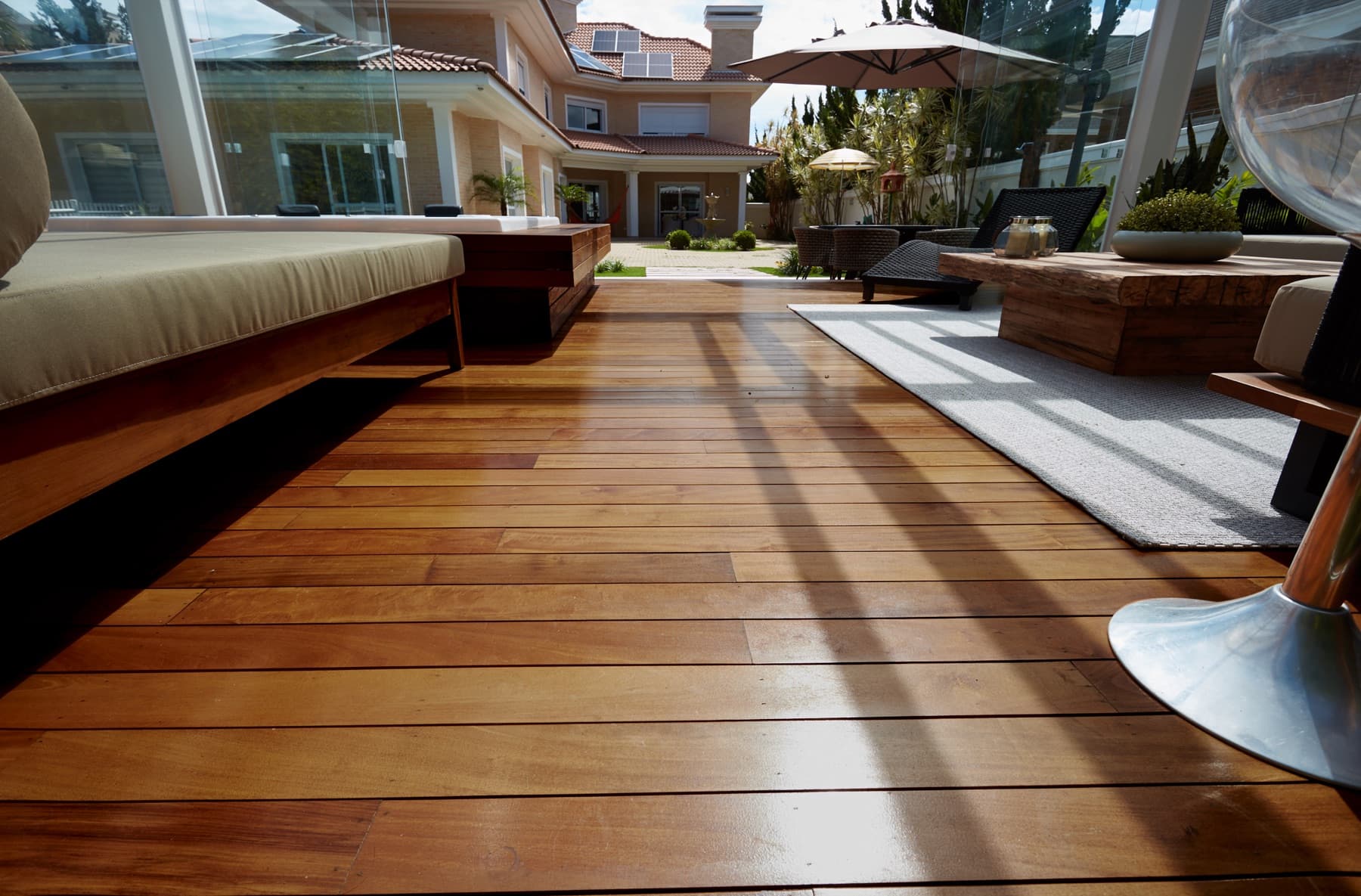
Understanding Hardwood's Natural Color Palette
Hardwood decking species offer a range of natural colors. Ipe, often called Brazilian walnut, typically presents reddish-brown to olive-brown tones. Cumaru can feature a similar spectrum, sometimes with a slightly lighter, more golden-brown hue. Garapa is known for its lighter, golden-yellow to amber shades, while Tigerwood exhibits dramatic dark stripes against an orange-brown background. These inherent colors are a fundamental aspect of the wood's aesthetic.
When planning your project, consider how these natural tones will complement existing elements like house siding, stone features, or garden greenery. A sample board viewed in different lighting conditions — morning, midday, and evening — can reveal how the color shifts and interacts with its surroundings. This initial assessment helps establish a foundational aesthetic for your deck.
The Impact of UV Exposure and Weathering
Hardwood decking, when exposed to sunlight and weather, undergoes a natural process of weathering. This typically results in the wood developing a silvery-gray patina over time. For example, Ipe can weather to a silvery-gray if left untreated. This change is purely aesthetic and does not compromise the structural integrity of the wood, which is naturally resistant to rot, insects, and mold.
Some homeowners intentionally choose to let their hardwood deck weather to this silvery-gray for a coastal or aged look. Others prefer to preserve the wood's original rich color. Understanding this natural process is key to deciding whether to apply a UV-blocking sealer or oil.
Finishing Options: Oils vs. Natural Weathering
To maintain the original color of your hardwood deck, a UV-blocking sealer or oil can be applied. These products help protect the wood from the sun's rays, slowing down the weathering process. For example, applying an annual oil treatment to Ipe will help it retain its espresso brown color. These finishes often enhance the wood's natural grain and can provide a richer, deeper appearance.
Choosing to let the wood weather naturally means embracing the silvery-gray patina without additional treatments. This approach offers a low-maintenance option for color, requiring only routine cleaning. Both options provide structurally identical results, allowing you to select based on your preferred aesthetic and maintenance commitment. It is important to confirm the compatibility of any chosen finish with your specific hardwood species.
The Role of Lighting in Color Perception
Daylight, shade, and artificial lighting all influence how hardwood decking colors are perceived. A deck that appears rich and warm in direct sunlight might look cooler or more subdued in shaded areas. Similarly, evening lighting from string lights or landscape fixtures can dramatically alter the deck's appearance, bringing out different undertones in the wood.
When evaluating color samples, observe them at various times of day and in different light conditions that mimic your project's environment. If your deck will be partially covered or exposed to varying levels of sun throughout the day, this exercise is particularly useful. Consider how nearby elements that cast shadows, such as pergolas, trees, or adjacent structures, will interact with the deck's surface.
Worked Example: Selecting Ipe for a Sunny Patio
Consider a hypothetical 12-foot by 16-foot backyard patio that receives full sun for most of the day. The homeowner wants a sophisticated, rich look that complements their home's light-colored stucco exterior and dark bronze window frames. They are drawn to the deep, reddish-brown tones of Ipe.
To achieve this, they decide to apply an annual UV-blocking oil. They test Ipe samples (available in various profiles and lengths, typically 3-24 ft) from Lumber Plus, observing them at different times: in bright midday sun to see the full richness, and in late afternoon to gauge how the color deepens as shadows lengthen. They note that the oil enhances the natural grain and provides a consistent, deep tone. For a 12x16 ft area, requiring approximately 192 linear feet of 1x6 Ipe decking (accounting for typical waste and cuts), they would plan to purchase sufficient quantities of decking and a compatible UV-blocking oil, budgeting for annual reapplication. This decision ensures the Ipe maintains its desired color, aligning with the home's dark accents and providing a striking contrast to the stucco. The total area is 192 square feet. For 1x6 decking (actual width approximately 5.5 inches), this would mean approximately 420 linear feet of decking, assuming no significant waste from cuts; however, a precise cut plan is needed to confirm the exact linear footage and number of boards to purchase.
This example illustrates how product selection, finish choice, and environmental factors work together to create the desired aesthetic outcome. The homeowner's commitment to annual oiling is a key part of maintaining the chosen color.
Before you order
- What is the natural color range of your chosen hardwood species?
- Do you prefer to maintain the wood's original color or allow it to weather to a silvery-gray patina?
- Will your deck receive full sun, partial shade, or full shade throughout the day?
- How will artificial lighting (e.g., landscape lights, string lights) affect the deck's appearance in the evening?
- What existing colors in your home's exterior and landscaping will the deck need to complement?
- Are you prepared for the maintenance (e.g., annual oiling) required to preserve the original color?
- Have you viewed physical samples of the wood species in various lighting conditions?
- Have you considered how the color of adjacent materials (e.g., railings, furniture) will interact with the deck?
Confirm installation details, approved uses and warranty terms in the current instructions for the exact product and profile. Your installer should verify the substrate, structure and applicable project requirements.
Questions to help you decide
Does the color of hardwood decking change over time?
Yes, hardwood decking naturally weathers to a silvery-gray patina when exposed to sunlight and the elements. This is a natural process and does not affect the wood's durability. If you prefer to maintain the original color, a UV-blocking sealer or oil can be applied periodically.
What is the difference between oiling and sealing hardwood decking?
Oils penetrate the wood to nourish it and enhance its natural color, often providing UV protection. Sealers typically form a protective layer on the surface to resist moisture and UV damage. Both help preserve the wood's color, but their application and maintenance schedules may differ. Always confirm product compatibility with your specific hardwood species.
How do I choose a finish that complements my home's exterior?
Consider the existing color palette of your home's siding, trim, and landscaping. Bring samples of your chosen hardwood and any potential finishes to your outdoor space and observe them at different times of day. This helps you visualize how the deck will integrate with its surroundings. Darker finishes can create contrast, while lighter ones might blend more seamlessly.
Ready to Select Your Hardwood Decking?
Request a material quote with your project dimensions, exact profile, and ZIP code. Confirm current availability and service options for your hardwood decking project.
Request a material quote →