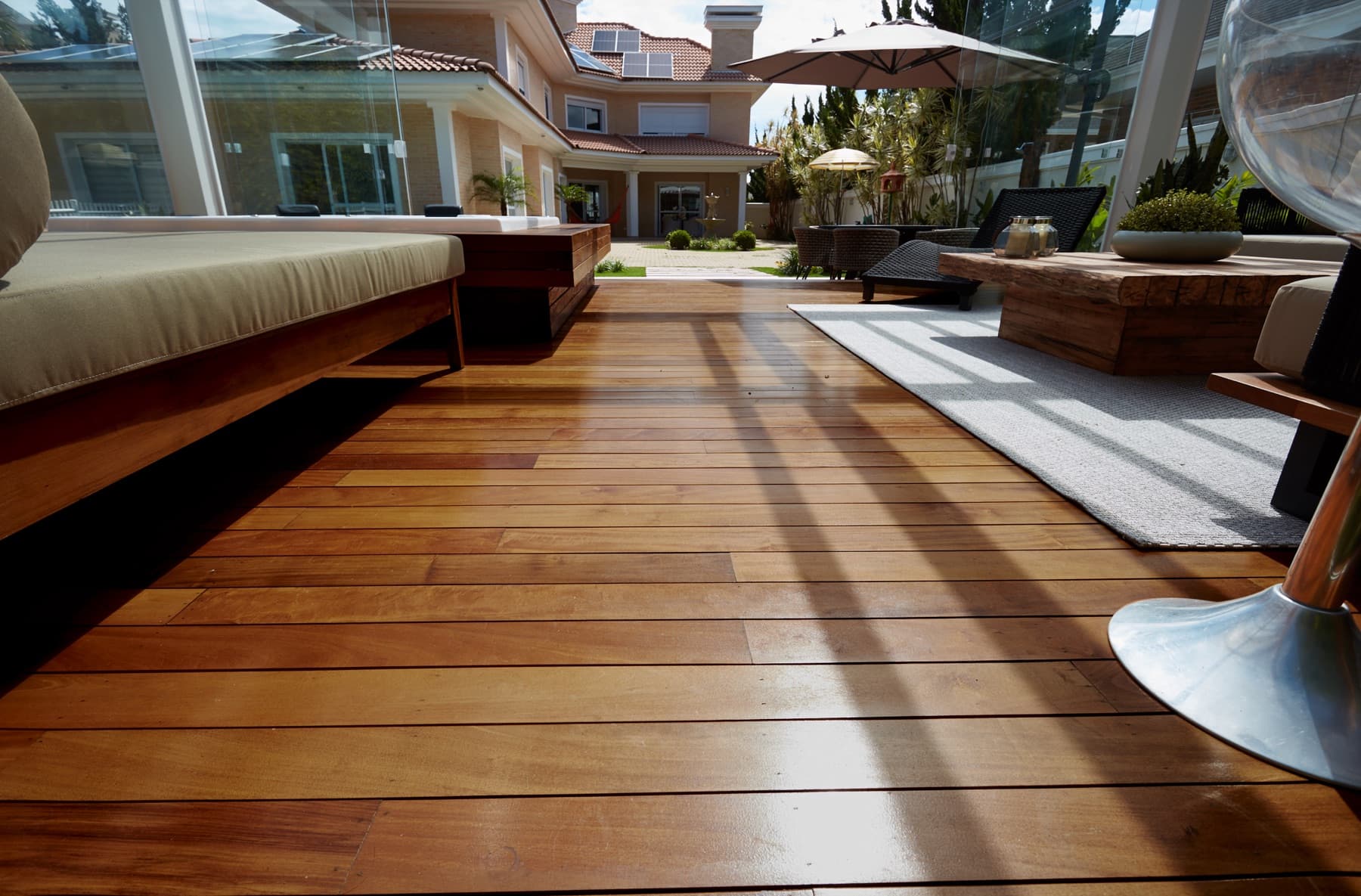
Understanding the Vacation Home Context
The primary difference for a vacation home deck is the extended periods of vacancy. This means the material must be resilient enough to handle varying weather conditions without constant oversight. Issues like rot, insect infestation, or excessive warping become more critical when routine inspections or immediate repairs are not feasible. Your choice of decking material should prioritize inherent durability and natural resistance to common outdoor stressors.
Consider also the level of maintenance you are prepared to undertake during your visits. Will you have time for annual sealing and cleaning, or do you prefer a material that can be left to weather naturally with only occasional attention? Hardwood decking, especially dense tropical species, offers flexibility in this regard, allowing for either a preserved look with regular care or a natural patina with less frequent intervention.
Why Hardwood for Vacation Home Decking?
Hardwood decking, particularly from dense tropical species, offers several advantages for vacation homes. These woods are known for their natural resilience and longevity. Species like Ipe and Cumaru are inherently resistant to rot, termites, and marine borers, which is a significant benefit in environments where maintenance might be less frequent. This natural defense means no chemical treatments are required to protect the wood.
The density of these hardwoods also contributes to their stability and resistance to weathering. They are less prone to warping or cracking even after prolonged exposure to moisture and temperature fluctuations. This characteristic is particularly valuable for vacation homes that may experience periods of extreme weather without immediate human intervention. Furthermore, many hardwood suppliers adhere to sustainable forestry standards, offering an environmentally responsible choice.
For coastal vacation homes, Ipe and Cumaru are considered marine-grade standards, often used for docks and boardwalks. They are resistant to salt air and spray, making them a suitable choice for seaside properties where other materials might degrade more quickly. This inherent resistance simplifies long-term care in challenging environments.
A key benefit is the option to choose your desired aesthetic outcome with minimal structural impact. You can oil the deck annually to maintain its rich brown tones, or allow it to weather naturally to a silvery-gray patina. Structurally, the deck remains sound either way, giving you control over its appearance without compromising its integrity.
Top Hardwood Species for Vacation Homes
When selecting hardwood for a vacation home, two species frequently stand out: Ipe and Cumaru. Both are tropical hardwoods known for their exceptional durability and low maintenance requirements.
Ipe (Handroanthus spp.), also known as Brazilian walnut, is often considered the benchmark for hardwood decking. It boasts extreme density and natural resistance to rot, insects, and mold. Ipe ranges in color from reddish-brown to olive-brown and exhibits minimal movement post-installation. It is highly resistant to weather changes. If left untreated, Ipe will weather to a silvery-gray patina. Occasional cleaning and sealing can help preserve its original color and extend its life.
Cumaru (Dipteryx odorata) is another very durable tropical hardwood. It is resistant to termites and weather changes, making it a robust choice for various applications. It shares Ipe's natural resistance to insects, rot, and fungi, and can also be left to weather to a gray tone or maintained with oil to retain its warmer hues.
While Ipe may be a premium upfront investment, its decades of service often make it a cost-effective choice over its lifespan, especially when factoring in reduced maintenance needs. Cumaru provides a similar level of performance at a slightly lower price point, offering an excellent balance of durability and value.
Planning for Appearance and Maintenance Intervals
One of the most practical benefits of hardwood decking for a vacation home is the flexibility in maintenance. You have a choice: maintain the original color or allow it to naturally weather. If you prefer to keep the rich brown tones of Ipe or the cinnamon-vanilla hues of Cumaru, an annual application of a UV-blocking sealer or oil is recommended. This can typically be done during one of your visits.
However, if you prefer a lower-maintenance approach, both Ipe and Cumaru will gracefully weather to a beautiful silvery-gray patina over time if left untreated. This natural aging process does not compromise the structural integrity of the wood. In this scenario, maintenance can be as simple as an annual wash to remove dirt and debris, with no need for frequent oiling or sealing.
For example, a vacation home visited quarterly might benefit from the weathered gray look, requiring only a thorough cleaning once a year during a longer stay. If you visit more frequently and enjoy the process of deck care, maintaining the original color with an annual oiling might be preferable. The key is to align your maintenance preference with your visiting schedule and desired aesthetic.
Considering Climate and Environmental Factors
Vacation homes are often in diverse climates, from humid coastal regions to snowy mountain areas. Hardwood decking is well-suited to handle these variations. Its natural oils protect it from cracking or warping due to moisture exposure. The density of species like Ipe and Cumaru contributes to their stability in fluctuating temperatures.
For coastal properties, the natural resistance of Ipe and Cumaru to salt air and marine borers is a significant advantage. These woods are proven in demanding marine environments. In regions with winter exposure, their inherent density and resistance to rot help them withstand snow and ice without the need for specialized winterization treatments beyond basic cleaning.
Proper deck design, including adequate ventilation beneath the deck, is crucial in any climate to prevent moisture buildup. Your installer should ensure sufficient airflow to help the decking dry evenly after rain or snow, further enhancing its longevity. Even with highly resistant hardwoods, good design practices are essential.
Worked Example: Vacation Home Deck in a Coastal Setting
Let's consider a hypothetical vacation home in a coastal area, requiring a 16-foot by 10-foot deck. The homeowners visit approximately four times a year and prefer a low-maintenance approach, allowing the deck to weather naturally.
For this project, Cumaru decking boards, 5/4" x 6" (nominal), are selected. These boards are available in various lengths, typically 3 to 24 feet. To minimize waste and seams for a 16-foot length, 16-foot boards would be ideal. For the 10-foot width, we calculate the number of boards needed.
Total width: 10 feet = 120 inches. Number of boards = 120 inches / 5.625 inches per board ≈ 21.33 boards. Therefore, 22 boards of 16-foot length would be needed for the main deck area. This calculation assumes a simple rectangular layout without complex cuts for borders or angles. For a 16-foot length, 22 boards would total 352 linear feet.
Given the coastal environment, Cumaru's natural resistance to salt air, insects, and rot is a key benefit. The homeowners' preference for a weathered look means annual oiling is not necessary. Instead, a pressure wash or thorough scrub with a deck cleaner once a year during a longer visit would suffice to remove any accumulated salt, sand, or organic debris. This plan aligns with infrequent visits and provides a durable, aesthetically pleasing outdoor space with minimal hands-on maintenance.
Before you order
- How frequently will the vacation home and deck be visited?
- What is the desired aesthetic: maintained original color or natural weathered patina?
- What are the primary climate challenges (e.g., intense sun, heavy rain, salt air, snow)?
- What is the available budget for initial material cost vs. long-term maintenance?
- Will professional installation be used, or is DIY considered (note: hardwoods are dense and require specialized tools)?
- Are there local building codes or HOA restrictions to consider for decking materials or finishes?
- What are the specific dimensions of the deck project to estimate material quantities?
- Is under-deck ventilation adequate for the chosen hardwood species and climate?
- What is the plan for cleaning and debris removal between visits?
Confirm installation details, approved uses and warranty terms in the current instructions for the exact product and profile. Your installer should verify the substrate, structure and applicable project requirements.
Questions to help you decide
How often does a hardwood deck on a vacation home need maintenance?
The frequency of maintenance depends on your desired appearance. If you want to retain the original rich color, an annual cleaning and application of a UV-blocking oil or sealer is recommended. If you prefer the natural silvery-gray patina that hardwoods like Ipe and Cumaru develop, a simple annual cleaning to remove dirt and debris is usually sufficient. Structurally, the wood remains sound either way.
Are certain hardwood species better for coastal vacation homes?
Yes, Ipe and Cumaru are excellent choices for coastal vacation homes. They are known for their natural resistance to salt air, marine borers, rot, and insects, making them highly durable in demanding seaside environments. These species are often used in boardwalks and docks due to their resilience.
Can I leave hardwood decking untreated on a vacation home?
Yes, you can leave Ipe, Cumaru, and other dense hardwoods untreated. If left untreated, the wood will naturally weather to a beautiful silvery-gray patina over time. This process does not compromise the structural integrity or durability of the deck. An annual cleaning is still recommended to remove any accumulated dirt or organic matter.
Plan Your Hardwood Vacation Home Decking Project
Ready to select the ideal hardwood for your vacation home deck? Request a material quote today. Provide your project dimensions, desired profile (e.g., 5/4" x 6" Cumaru), and your ZIP code. Our team can confirm current availability and service options for your project. Explore our selection of <a href="/decking/hardwood">hardwood decking</a>, including <a href="/decking/hardwood/ipe">Ipe</a> and <a href="/decking/composite">composite</a> or <a href="/decking/pvc">PVC decking</a> for comparison.
Request a material quote →