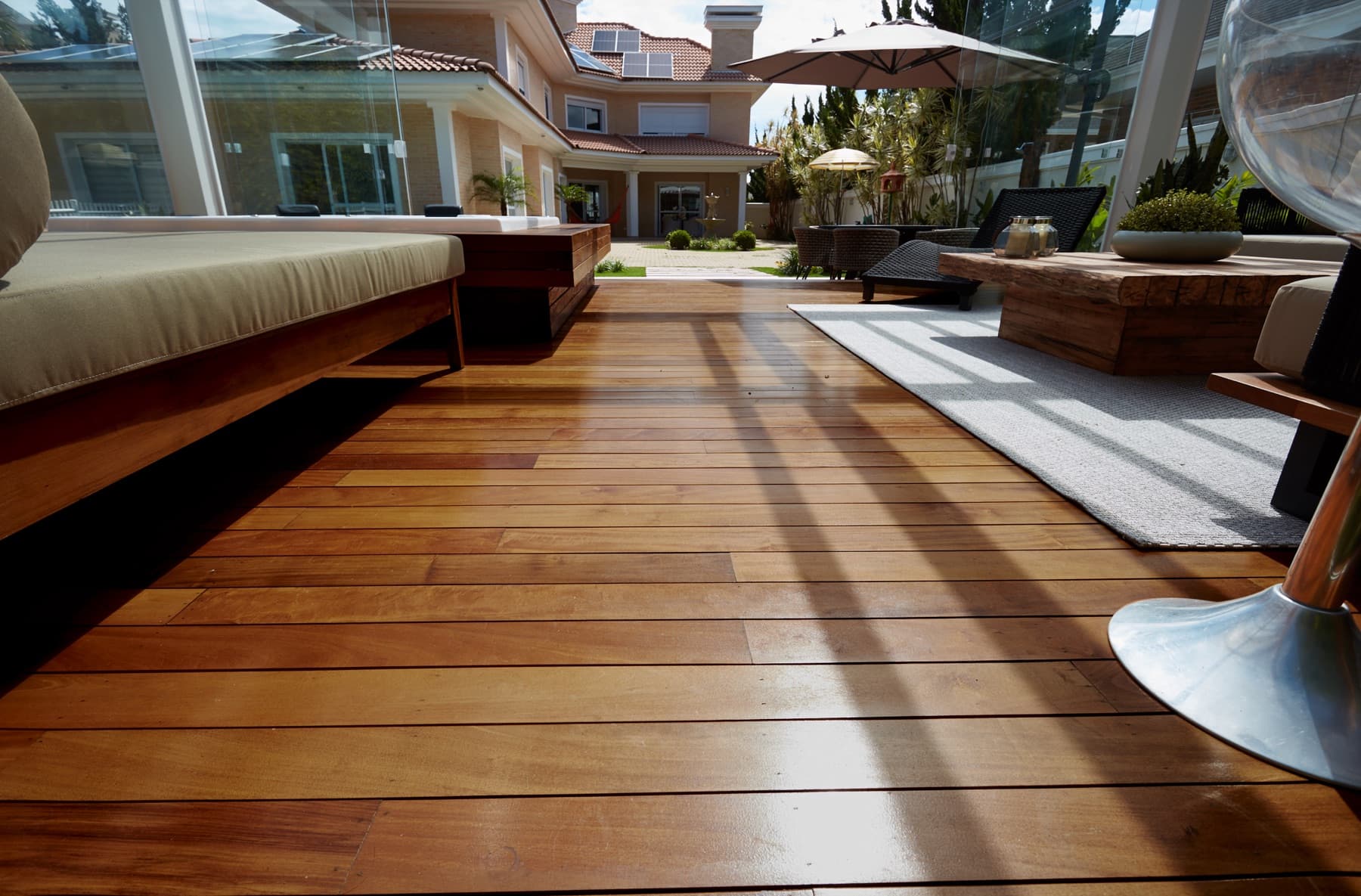
Understanding Hardwood Suitability for Stairs
Hardwood species such as Ipe and Cumaru are frequently chosen for exterior stairs due to their inherent strength and resistance to environmental factors. Ipe, for example, is recognized for its high density and minimal movement post-installation, making it a stable choice for treads and risers.
Cumaru also offers significant durability and resistance to termites and weather changes. These characteristics are particularly important for stairs, which experience concentrated foot traffic and exposure to the elements. The robust nature of these hardwoods means they can withstand the rigors of outdoor use without compromising structural integrity or visual appeal over time. However, the specific profile and dimensions of the lumber must be appropriate for stair construction and meet local code requirements for load-bearing applications.
It's important to differentiate between decking boards and structural stair components. While decking boards form the walking surface, the stringers, risers, and treads require specific dimensions and secure fastening to support weight safely.
Key Components of Hardwood Deck Stairs
A typical deck stair assembly includes several key components, each serving a distinct purpose:
Stringers: These are the structural supports that run diagonally from the deck to the ground, carrying the weight of the treads and risers. They must be appropriately sized and spaced according to local building codes and the expected load.
Treads: The horizontal surfaces you step on. For hardwood stairs, these are often made from solid hardwood boards, selected for their density and resistance to wear. The dimensions of the treads, including depth and thickness, are critical for safety and code compliance.
Risers: The vertical boards between treads. While not always load-bearing, risers contribute to the stair's rigidity and finished appearance. Hardwood risers can be matched to the decking for a seamless look.
Landings: Flat platforms at the top, bottom, or intermediate points of a stair run. These should also be constructed with compatible hardwood decking to maintain aesthetic continuity and structural consistency.
Selecting the Right Hardwood Profile for Treads and Risers
When choosing hardwood for stair treads and risers, consider both the aesthetic match with your deck and the structural requirements. Hardwood decking is available in various profiles and lengths. For treads, solid boards that can withstand concentrated loads are essential. For example, Ipe and Cumaru are available in dimensions suitable for structural applications, not just surface decking.
The most common approach is to use solid hardwood boards for treads, often thicker than standard decking boards, to ensure adequate strength. Risers can be thinner, matching the aesthetic of the decking fascia or trim. It's crucial to confirm the specific profiles and lengths available for your chosen species, as these can vary. For instance, Ipe lumber is available in various dimensions, from 1"x2" up to 6"x6", which can be cut to create custom stair components.
Ensure that the selected material is suitable for exterior exposure and meets any requirements for slip resistance or edge treatment that may be mandated by local building codes.
Structural Support and Local Building Codes
The structural integrity of your deck stairs is paramount. All stair components, especially stringers and treads, must be designed and installed to support anticipated loads safely. This typically involves using appropriately sized lumber for stringers, securely fastening them to the deck frame and the ground, and ensuring treads are firmly attached.
Local building codes specify requirements for rise, run, tread depth, riser height, handrail design, and baluster spacing. These codes are in place to ensure safety and must be reviewed with your project team before material selection or construction begins. For instance, some codes may require specific tread thickness or a certain number of stringers based on the stair width.
The density and strength of hardwoods like Ipe can contribute to meeting these structural demands, but it does not negate the need for proper design and construction practices. Always consult with a qualified contractor or engineer to ensure your stair design complies with all applicable local regulations.
Worked Example: Designing Ipe Deck Treads
Let's consider a hypothetical project where we need to create 48-inch wide stair treads for a deck. The local building code requires a minimum tread depth of 10 inches and a minimum thickness of 1.5 inches for exterior stair treads. We want to use Ipe for its durability and aesthetic.
We find that Ipe is available in nominal 2x6 and 2x8 dimensions (actual dimensions approximately 1.5" x 5.5" and 1.5" x 7.25" respectively) in various lengths. To achieve a 10-inch tread depth, we could use two 2x6 boards side-by-side (5.5" + 5.5" = 11" total depth, exceeding the 10" minimum). Alternatively, we could use one 2x8 board (7.25" depth) combined with a narrower board or a custom cut to reach the desired depth.
For a 48-inch wide tread, using two 2x6 Ipe boards, each 48 inches long, would provide a robust and compliant tread. Each tread would require two pieces of 2x6x48" Ipe. If we have a staircase with 5 treads, we would need 10 pieces of 2x6x48" Ipe. Assuming Ipe is stocked in 8-foot lengths, we could get two 48-inch pieces from each 8-foot board, meaning we would need 5 full 2x6x8' Ipe boards for the treads.
This example highlights the importance of checking available dimensions and planning cuts to minimize waste while meeting structural and code requirements. Always confirm actual lumber dimensions, not just nominal sizes, and account for saw kerf in your calculations.
Before you order
- Confirm local building codes for stair rise, run, tread depth, and thickness.
- Verify available hardwood species profiles and lengths suitable for treads and risers.
- Decide on the aesthetic match between deck boards, stair treads, and risers.
- Plan stringer material and dimensions based on stair width and load requirements.
- Consider fastening methods for treads and risers that ensure durability and safety.
- Account for any required non-slip treatments or edge profiles for treads.
- Review the complete stair design with your contractor or a structural engineer.
Confirm installation details, approved uses and warranty terms in the current instructions for the exact product and profile. Your installer should verify the substrate, structure and applicable project requirements.
Questions to help you decide
Can I use the same hardwood boards for my deck and my stair treads?
While you can use the same species of hardwood, stair treads often require thicker or wider boards than standard decking to meet structural load requirements and local building codes for tread depth and thickness. Always verify the suitability of the specific board dimensions for stair treads with your contractor and local authorities.
Do hardwood deck stairs require special maintenance?
Hardwood deck stairs benefit from similar maintenance as your hardwood deck: annual cleaning to remove debris and optional application of a UV-blocking sealer to maintain the original color. If left untreated, hardwoods like Ipe will naturally weather to a silvery-gray patina, which does not affect their structural integrity. Regular inspection for loose fasteners or wear is also recommended due to foot traffic.
What are the most durable hardwoods for exterior stairs?
Ipe and Cumaru are among the most durable hardwoods for exterior stairs. Ipe is known for its exceptional density and resistance to rot, insects, and decay, with a long lifespan. Cumaru also offers high density, strength, and resistance to termites and weather changes, making both excellent choices for demanding outdoor applications like stairs.
Ready to Plan Your Hardwood Deck Stairs?
Request a material quote for your project. Provide your project dimensions, desired hardwood profile, and ZIP code to confirm current availability and service options for Ipe, Cumaru, or other hardwood species.
Request a material quote →