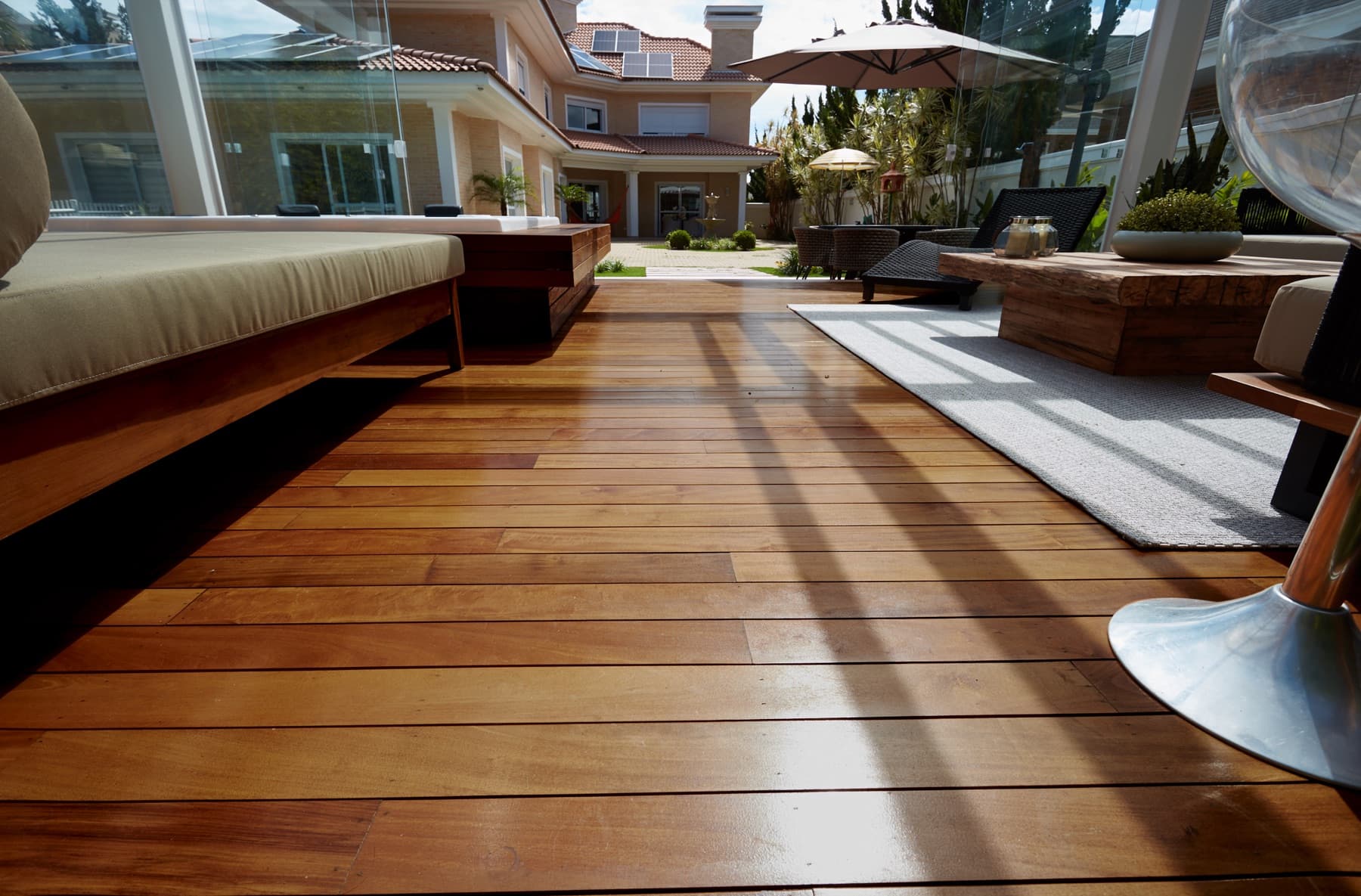
Understanding Hardwood Decking Dimensions
Hardwood decking dimensions refer to the thickness and width of the individual boards. These are typically expressed in nominal sizes, which are larger than the actual milled dimensions. For instance, a nominal 1x6 board will have actual dimensions that are slightly smaller. It's important to clarify both the nominal and actual dimensions when ordering, as this impacts calculations for board spacing and overall deck area.
Available dimensions can vary significantly by species and supplier. For example, Ipe hardwood decking may be available in a range of profiles from 1"x2" up to 6"x6", allowing for diverse applications from standard decking to structural elements or custom railings. Confirming these dimensions is a fundamental step in project planning.
Consider the final look and structural requirements of your deck. Wider boards can create a more contemporary aesthetic and reduce the number of fasteners needed, while narrower boards might offer a more traditional look or better accommodate slight variations in sub-structure. Always check the specific dimensions listed for the species you are considering.
Decking Profiles: Square Edge vs. Grooved
The profile of a decking board refers to the shape of its edges. The two most common profiles for hardwood decking are square edge and grooved (or pre-grooved).
Square edge boards have straight, 90-degree edges. These are typically installed using face fasteners, where screws or nails are driven through the face of the board into the joists below. This method provides a strong connection and is often preferred for its robust hold. Square edge boards can also be used with some hidden fastening systems that require a specific cut or routing on site.
Grooved boards feature a routed channel along one or both long edges of the board. These grooves are designed to accommodate hidden fastening clips, which fit into the groove and attach to the joist, creating a smooth, fastener-free deck surface. This profile is popular for its clean aesthetic and can simplify installation for certain systems. Always ensure the hidden fasteners you choose are compatible with the specific grooved profile of your decking.
For species like Ipe, availability may include a range of profiles suitable for various installation methods. The choice of profile directly influences the fastening system and the final appearance of your deck surface.
Understanding Board Lengths and Availability
Hardwood decking boards are typically available in a range of lengths. For many species, such as Ipe, lengths can range from 3 to 24 feet. This wide range allows for flexibility in design, minimizing seams and waste, especially for larger projects.
However, exact length availability can fluctuate based on current stock and the specific species. It is crucial to confirm the current lengths available when requesting a quote. Ordering a variety of lengths can help optimize your cut plan and reduce material waste.
For projects requiring specific long lengths, early planning and communication with your supplier are key. Custom milling options might be available for unique project requirements, though this often involves additional lead time and cost.
Drying Methods: Air Dried (AD) vs. Kiln Dried (KD)
The drying method of hardwood decking impacts its stability and suitability for certain applications. The two primary methods are Air Dried (AD) and Kiln Dried (KD).
Air Dried (AD) lumber is dried naturally by exposure to air, typically under a cover to protect it from direct sun and rain. This process can take several months to achieve a stable moisture content. AD lumber is often preferred for outdoor applications where it will eventually acclimate to ambient humidity.
Kiln Dried (KD) lumber is dried in a controlled environment (a kiln) where temperature and humidity are carefully managed to reduce moisture content to a specific level. KD lumber is generally more stable and less prone to movement after installation, making it suitable for both interior and exterior applications where dimensional stability is critical.
Some species, like Ipe, may be available in both AD and KD options. Your project's specific climate, installation method, and desired stability should guide your choice of drying method. Discuss this with your installer or supplier to ensure the selected material is appropriate for your regional conditions.
Worked Example: Planning a 10x12 Foot Deck with Ipe
Let's consider a hypothetical project: building a 10-foot by 12-foot deck. You've chosen Ipe hardwood decking for its durability and appearance. After reviewing the product specifications, you learn that Ipe is available in 1x6 (nominal) square edge boards, with actual dimensions of approximately 0.75 inches thick by 5.5 inches wide, and in lengths ranging from 8 to 16 feet.
**Step 1: Determine Board Quantity for Width.** For a 10-foot wide deck (120 inches), and using 5.5-inch wide boards, you'll need approximately 120 / 5.5 = 21.8 boards. Since you can't have a partial board, you'll need 22 boards across the 10-foot width. This calculation assumes minimal spacing. Always account for manufacturer-recommended spacing between boards, which will slightly increase the number of boards required.
**Step 2: Determine Board Quantity for Length.** For a 12-foot long deck, you'd ideally want 12-foot boards to avoid seams. If 12-foot lengths are available, you'd purchase 22 boards at 12 feet each. Total linear feet: 22 boards * 12 feet/board = 264 linear feet.
**Step 3: Consider Offcuts and Waste.** If 12-foot boards are not available, or if you prefer to use shorter lengths to minimize waste for a complex layout, you might use 8-foot and 4-foot boards, or other combinations. For instance, if you purchase 16-foot boards, you could get one 12-foot section and have a 4-foot offcut. This 4-foot piece might be usable for a different part of the deck or for trim, depending on your layout. Always add a percentage (typically 10-15%) for cuts, mistakes, and future repairs.
This example highlights how specific dimensions and available lengths directly influence the quantity you need to order and your cutting strategy. Always confirm current stock with Lumber Plus for the exact profiles and lengths.
Approved Uses and Documented Limits
Hardwood decking species like Ipe and Cumaru are known for their exceptional durability and resistance. Ipe, also known as Brazilian walnut, is a dense, durable hardwood native to South America. It is popular for outdoor decking and siding, and its natural resistance to rot, insects, and mold makes it a benchmark hardwood. Cumaru is another very durable tropical hardwood, resistant to termites and weather changes, suitable for a wide variety of applications.
These hardwoods are suitable for various demanding applications, including residential decks, commercial patios, and even marine-grade uses like boardwalks and docks. Their natural density provides resistance to rot, termites, and marine borers without the need for chemical pressure treatment.
While highly durable, all materials have limits. For instance, Ipe's density makes it difficult to work with, often requiring specialized tools and techniques for cutting and fastening. Professional installation is recommended. Understanding these characteristics from the product specifications helps in planning not just the material order, but also the installation process and long-term maintenance expectations.
Before you order
- Confirm nominal and actual board dimensions (thickness and width).
- Identify the desired board profile (square edge or grooved) for your fastening system.
- Verify the currently available board lengths to optimize your order and minimize waste.
- Determine if Air Dried (AD) or Kiln Dried (KD) lumber is best suited for your climate and project.
- Factor in recommended board spacing for accurate quantity calculations.
- Account for a waste factor (e.g., 10-15%) in your material order.
- Review approved applications and any specific installation considerations for the chosen species.
Confirm installation details, approved uses and warranty terms in the current instructions for the exact product and profile. Your installer should verify the substrate, structure and applicable project requirements.
Questions to help you decide
What is the difference between nominal and actual dimensions?
Nominal dimensions are the sizes used for identification (e.g., 1x6), while actual dimensions are the precise measurements of the milled board (e.g., 0.75 inches thick by 5.5 inches wide). Always use actual dimensions for precise calculations and planning.
Can I use hidden fasteners with any hardwood decking?
Hidden fasteners are typically designed for grooved decking profiles. If you choose square edge boards, you may need to route your own grooves or use a compatible face-fastening system. Always verify compatibility between your chosen decking profile and fastening system.
Does board length availability affect my project cost?
Yes, board length availability can impact cost by influencing material waste and labor for cutting. Ordering lengths that closely match your deck dimensions can reduce offcuts. If only shorter lengths are available, you might need more boards and potentially more seams, which can affect both material cost and installation time.
Ready to Plan Your Hardwood Decking Project?
Request a material quote today. Provide your project dimensions, desired profile, and ZIP code to confirm current availability and service options for Ipe, Cumaru, Garapa, and other hardwood decking species.
Request a material quote →