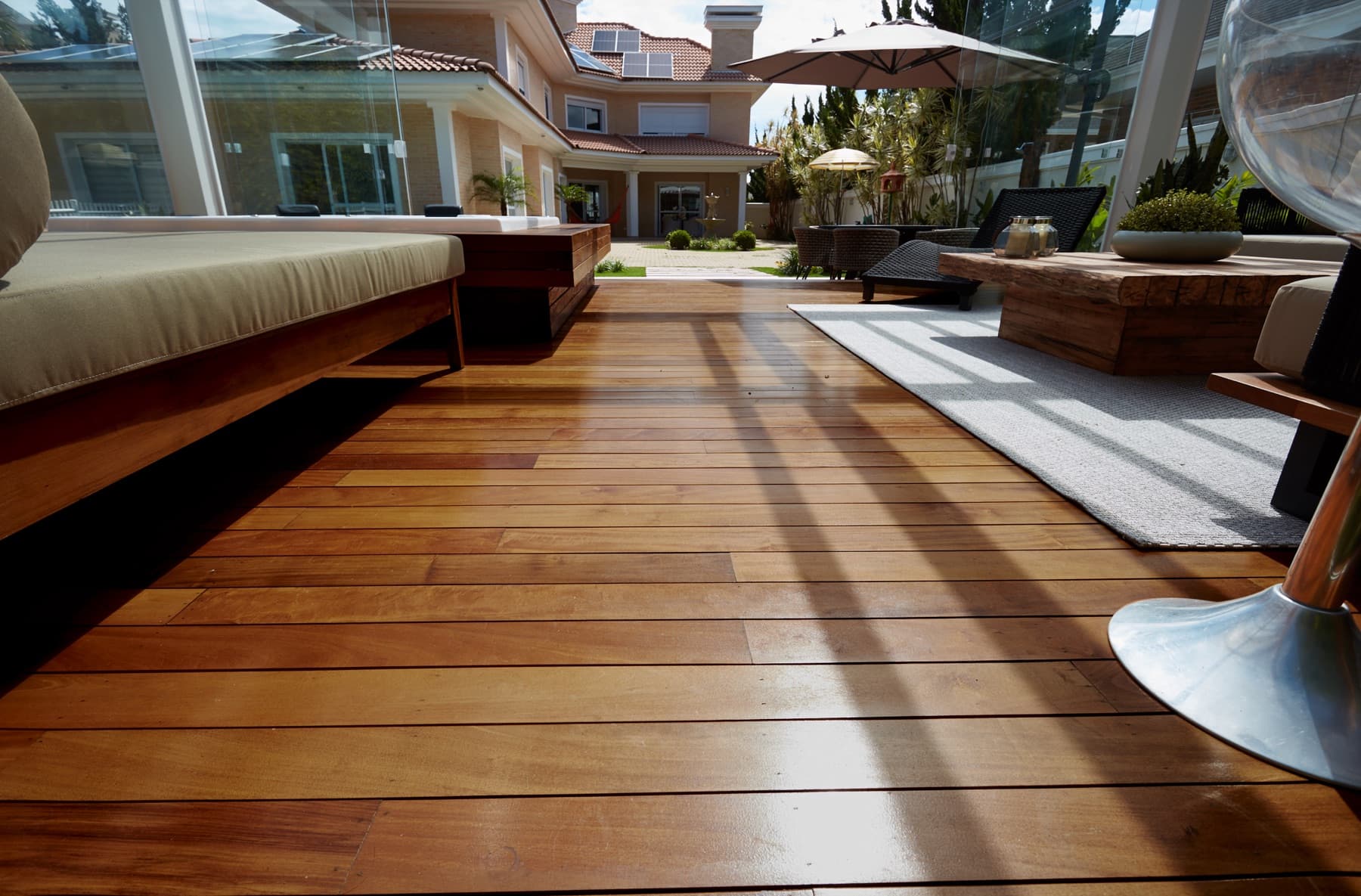
Why Board Spacing Matters for Hardwood Decking
Hardwood, even after being milled and dried, is a natural material that responds to its environment. It expands when it absorbs moisture and contracts as it dries out. This natural movement is a key reason why proper board spacing is essential. Adequate gaps allow for this expansion and contraction without boards pressing against each other or pulling apart excessively.
Beyond accommodating wood movement, proper spacing ensures effective water drainage, preventing pooling on the deck surface that can lead to rot or slippery conditions. It also allows for air circulation beneath the deck, which is crucial for drying out the wood evenly and preventing moisture-related issues.
Finally, consistent spacing contributes significantly to the aesthetic appeal of your deck. Evenly spaced boards create clean lines and a professional finish, enhancing the overall look of your outdoor living space.
Factors Influencing Hardwood Deck Board Spacing
Several key factors dictate the precise spacing required for your hardwood deck boards:
Species of Hardwood: Different hardwood species have varying densities and natural movement characteristics. For example, Ipe and Cumaru are known for their minimal movement post-installation compared to other wood types. This inherent stability can influence the recommended gap. Always verify the specific properties of your chosen species.
Moisture Content at Installation: The moisture content (MC) of the boards when they are installed is perhaps the most critical factor. Hardwood decking is typically sold as Air Dried (AD) or Kiln Dried (KD). AD lumber has a higher MC and will shrink as it acclimates, requiring tighter initial spacing. KD lumber has a lower MC and will expand, necessitating wider initial gaps. Your supplier will provide the MC of the material.
Local Climate and Exposure: The average humidity and temperature fluctuations in your project's location, as well as the deck's exposure to sun and rain, play a role. Decks in humid climates or those exposed to frequent moisture may require slightly wider gaps to accommodate potential swelling, while those in drier climates might need narrower gaps.
Fastener Type: The type of fastener used can also influence spacing. Hidden fastening systems often come with built-in spacers that dictate the gap, while face-fastened boards offer more flexibility for manual spacing.
Ipe Decking: A Worked Example for Spacing
Let's consider a hypothetical project using Ipe hardwood decking. Ipe is renowned for its density and minimal movement after installation, making it a benchmark for durability. For this example, we'll assume a standard 1x6 (nominal 1-inch thick, 5.5-inch actual width) Ipe board.
Ipe is often supplied air-dried, meaning it contains a certain level of moisture. This allows for slight expansion as the wood absorbs ambient moisture, or slight contraction if it dries further. Some installers might opt for a slightly tighter gap if the wood is particularly dry at installation, anticipating some expansion.
It is crucial to verify the specific recommendations from your Ipe supplier. They can provide guidance based on the moisture content of the specific batch of lumber you receive and the typical climate conditions in your area. Using a consistent spacer tool during installation is vital to maintain uniform gaps across the entire deck surface.
For Ipe and Cumaru, which are marine-grade standards, their natural oils protect them from cracking or warping, even near saltwater. This inherent stability means that while spacing is still important, these species are less prone to extreme movement compared to less dense hardwoods.
General Guidance for Other Hardwood Species
While Ipe offers exceptional stability, other hardwood species like Cumaru, Garapa, and Tigerwood also have distinct characteristics.
Cumaru: Similar to Ipe in density and durability, Cumaru also exhibits minimal movement.
Always consult product-specific instructions.
Tigerwood: With its dramatic grain, Tigerwood is also a dense hardwood. Its movement characteristics are generally good, but like all hardwoods, precise spacing based on its moisture content at installation is necessary.
The overarching principle remains: the exact gap size is a function of the wood's expected movement, which is influenced by its species, initial moisture content, and environmental factors. Generic advice can be a starting point, but the product-specific instructions are the definitive guide.
Tools and Techniques for Consistent Spacing
Achieving consistent board spacing is vital for both performance and appearance. Here are some tools and techniques to help:
Deck Board Spacers: These are small, wedge-shaped or T-shaped tools specifically designed to create uniform gaps. They come in various thicknesses (e.g., 1/16, 3/32, 1/8 inch) and are invaluable for maintaining consistency.
Temporary Fasteners/Clamps: For longer boards or if you're working alone, temporary clamps can hold boards in place while you set your spacers and secure the fasteners.
Chalk Lines and Measuring Tape: Before you begin, snapping chalk lines to guide your joist placement and regularly measuring your board widths can help you anticipate and adjust for any slight variations in board dimensions, ensuring your overall deck width remains on track.
Working in Sections: Install a few boards, check your spacing, and adjust as needed before proceeding. This allows for fine-tuning rather than discovering inconsistencies across the entire deck at the end.
Before you order
- Identify the specific hardwood species you are using (e.g., Ipe, Cumaru, Garapa).
- Obtain the moisture content (MC) of your decking boards from your supplier.
- Consult the manufacturer's or supplier's installation guidelines for recommended spacing based on species and MC.
- Consider your local climate (humidity, temperature fluctuations) and the deck's exposure.
- Choose appropriate deck board spacers to maintain consistent gaps.
- Plan for consistent air circulation beneath the deck to aid in drying and stability.
Confirm installation details, approved uses and warranty terms in the current instructions for the exact product and profile. Your installer should verify the substrate, structure and applicable project requirements.
Questions to help you decide
Can I use the same spacing for all hardwood decking species?
No, it is not recommended to use the same spacing for all hardwood decking species. Each species has unique density and moisture movement characteristics. Always refer to the specific product guidelines for your chosen hardwood, such as Ipe or Cumaru, as well as the moisture content of the boards at installation.
What happens if I don't leave enough space between deck boards?
If insufficient space is left, boards can swell and press against each other, leading to cupping, buckling, or warping. This can compromise the deck's structural integrity and create an uneven, potentially hazardous surface. It can also trap moisture, increasing the risk of rot.
What if I leave too much space between deck boards?
Excessive spacing can create tripping hazards and allow small objects to fall through. While it might prevent buckling, it can also make the deck feel less stable and detract from its appearance. It may also expose more of the substructure to UV, which can lead to premature aging of the framing.
Request a Material Quote for Your Hardwood Decking Project
Ready to select the right hardwood decking for your outdoor space? Provide your project dimensions, desired profile, and ZIP code to request a material quote. Our team can help confirm current availability and service options for your chosen hardwood species, ensuring you get the precise material you need with expert guidance on installation details like board spacing.
Request a material quote →