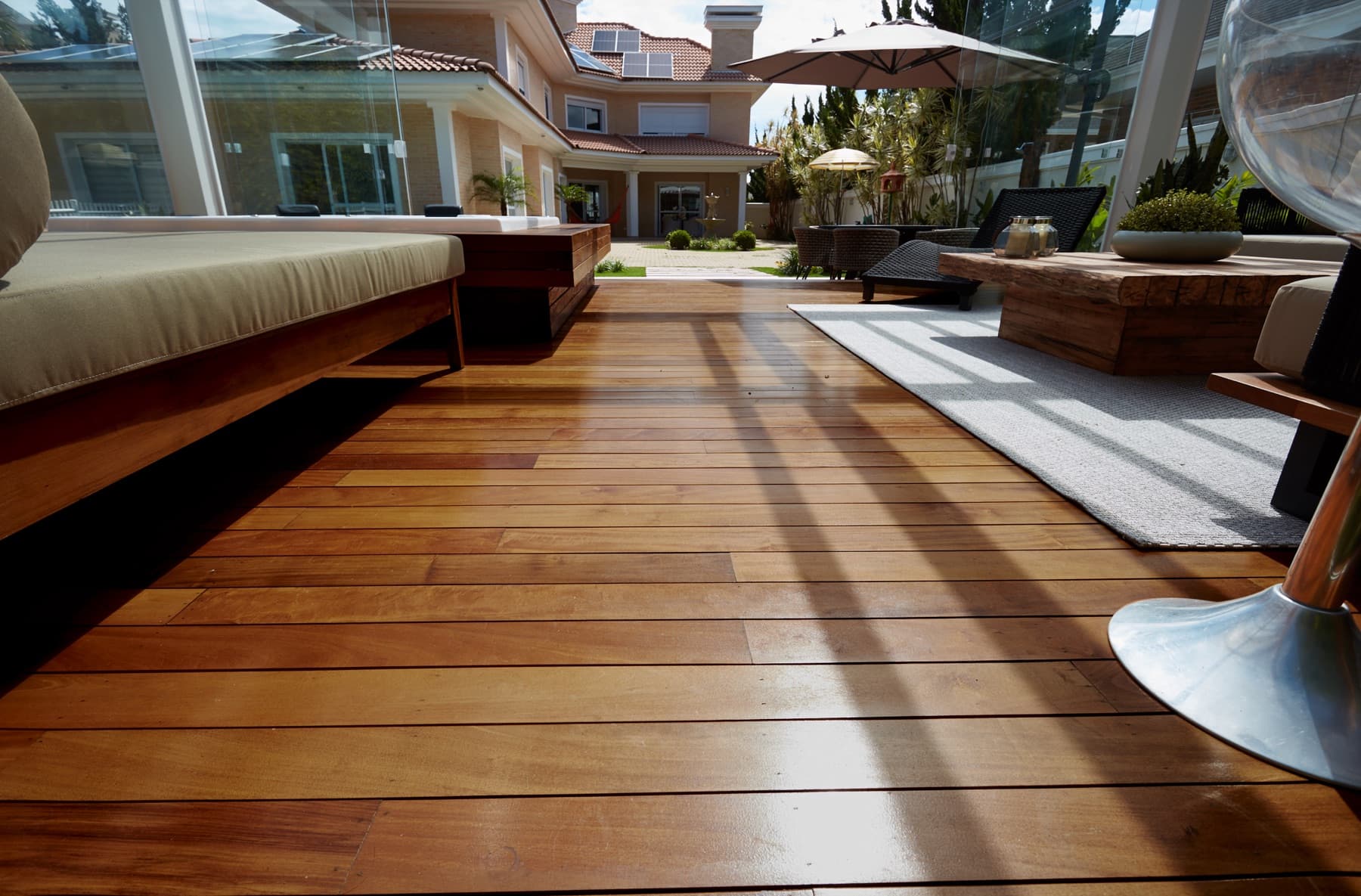
Why Exact Identification Matters for Decking Repairs
Hardwood decking, especially species like Ipe or Cumaru, develops a distinct character over time. Weathering, UV exposure, and maintenance routines all contribute to its unique appearance. Introducing a new board without careful matching can create an obvious patch, diminishing the overall look of your deck. Beyond aesthetics, using an incompatible species or profile could lead to differences in expansion and contraction, potentially affecting the long-term stability of the repaired section.
A precise match ensures that the new board will weather similarly to its neighbors, blending in more effectively over time. It also confirms that the structural properties, such as density and hardness, are consistent across the deck, which is important for uniform performance and wear.
Step 1: Determine the Hardwood Species
The first and most crucial step is to identify the species of hardwood currently installed on your deck. Common Brazilian hardwoods used for decking include Ipe, Cumaru, Garapa, Tigerwood, Angelim, and Jatoba. Each has a distinct color range, grain pattern, and density.
Ipe, for example, typically ranges from reddish-brown to olive-brown and is known for its fine grain and exceptional hardness. Cumaru often presents in a slightly lighter, reddish-brown to yellowish-brown hue, sometimes with an interlocking grain. Garapa tends to be golden-yellow to light brown. Observing these characteristics, perhaps by cleaning a small, inconspicuous section of an existing board, can provide valuable clues. If you have original project documentation, this is the most reliable source for species information.
If unsure, a small sample cut from an inconspicuous area (e.g., the end of a board hidden by fascia) can be helpful for comparison with known samples or for professional identification. Note any unique features like scent when cut, as Cumaru, for instance, is noted for a cinnamon and vanilla aroma when worked.
For a general comparison, you can refer to common species characteristics like those for Ipe (Handroanthus spp.), which is reddish-brown to olive-brown, or Cumaru (Dipteryx odorata), which is known for its very durable nature and often a reddish-brown tone.
Step 2: Measure the Profile and Dimensions
Once the species is identified, the next step is to accurately measure the profile and dimensions of your existing boards. This includes the exact width, thickness, and any specific milling details.
Standard hardwood decking is typically milled in specific dimensions, but variations exist. Measure the width of several boards across different areas of your deck to account for any slight inconsistencies or swelling/shrinking. Also, note the thickness. Some hardwoods, like Ipe, are available in a range of dimensions, such as 1"x2" through 6"x6" profiles. Pay close attention to the edge profile: are they square-edged, eased-edge (slightly rounded), or grooved for hidden fasteners? If grooved, you'll need to match this detail precisely for compatibility with existing fasteners and a consistent appearance.
Record these measurements precisely. Even a small difference in width or edge profile can make a new board stand out.
Step 3: Account for Batch and Aging Differences
Even if you find the exact species and profile, new hardwood will look different from weathered material. Hardwoods develop a patina over time; Ipe, for instance, can silver to a driftwood grey if left untreated, while Cumaru also weathers if not regularly oiled. A brand-new board will likely display its fresh, rich color.
Consider how you plan to manage this difference. You might choose to let the new board weather naturally to eventually match the older material, or you might apply a UV-blocking sealer to the new board to try and accelerate its blending. If your deck is regularly oiled, applying the same oil to the new board will help it integrate more quickly. Be prepared for some initial color variation, which will lessen with time and consistent maintenance.
Worked Example: Replacing a Damaged Ipe Board
Imagine you need to replace a damaged board on your 10-foot by 12-foot Ipe deck. You observe the existing boards are dark reddish-brown, have a very dense feel, and a tight grain. After careful measurement, you find the boards are consistently 5.5 inches wide and 0.75 inches thick, with a slightly eased edge. The deck has weathered to a silvery-grey patina, as it has been left untreated for several years.
You consult your original project plans (or a small sample) and confirm the species is Ipe (Handroanthus spp.). You also note that the boards were face-fastened, so no special hidden fastener groove is required. You need one 10-foot long board.
When requesting a quote, you would specify: "One (1) 10-foot length of Ipe decking, 0.75 inches thick by 5.5 inches wide, with eased edges." You would also discuss with the supplier the typical color of new Ipe and confirm that you understand it will initially appear darker than your weathered deck, planning to let it naturally silver over time.
Sourcing Replacement Hardwood Decking
Once you have identified the species, profile, and dimensions, you can begin sourcing your replacement boards. Provide all collected details when requesting a quote. Be specific about species, dimensions (width and thickness), and edge profile (eased, square, grooved).
It is always recommended to order slightly more material than your exact measurements, to account for any cutting errors, future repairs, or to allow for selecting boards that best match your existing deck's color and grain patterns. In the worked example, if you need a 10-foot board, consider ordering an 11 or 12-foot length if available, to allow for trimming the ends for a perfect fit, or a second board for future needs. Hardwood availability can vary by profile and length, so checking current stock is essential.
Explore options such as Ipe decking, Cumaru decking, Garapa decking, or other hardwood decking available. Consider if you need other decking accessories like fasteners or sealers.
Before you order
- Identify the exact hardwood species (e.g., Ipe, Cumaru, Garapa).
- Measure the precise width of existing boards.
- Measure the precise thickness of existing boards.
- Determine the edge profile (e.g., square, eased, grooved).
- Note the fastening method (face-fastened or hidden fasteners).
- Assess the current weathered color and finish of your deck.
- Decide how to manage the color difference between new and old boards.
- Measure the length(s) of the board(s) you need to replace.
- Consider ordering extra material for cuts and future use.
- Confirm current profile and length availability with your supplier.
Confirm installation details, approved uses and warranty terms in the current instructions for the exact product and profile. Your installer should verify the substrate, structure and applicable project requirements.
Questions to help you decide
How can I tell the difference between Ipe and Cumaru?
Ipe typically ranges from reddish-brown to olive-brown with a very dense, fine grain, and is known for its exceptional hardness. Cumaru is often reddish-brown to yellowish-brown, sometimes with an interlocking grain, and can emit a cinnamon/vanilla scent when cut. Both are very durable, but Ipe has a higher Janka hardness rating and is often darker.
Will a new hardwood board ever perfectly match my old deck?
Initially, a new board will likely display its fresh, natural color, which will differ from your weathered deck. Over time, with exposure to the elements and consistent maintenance (or lack thereof, allowing it to silver), the new board will begin to blend with the existing material. Exact perfect matching upon installation is rare due to natural aging processes.
What if my hardwood decking is an unusual size or profile?
If your decking has a unique size or profile, you may need to discuss custom milling options with your supplier. While standard profiles are common, some projects might have used non-standard dimensions or custom-routed edges. Provide detailed measurements and photos if possible to assist with identification and sourcing.
Ready to Source Replacement Hardwood Decking?
Request a material quote with your project dimensions, exact profile, and ZIP code to confirm current availability and service options. Our team can assist in matching your existing hardwood for a seamless repair.
Request a material quote →