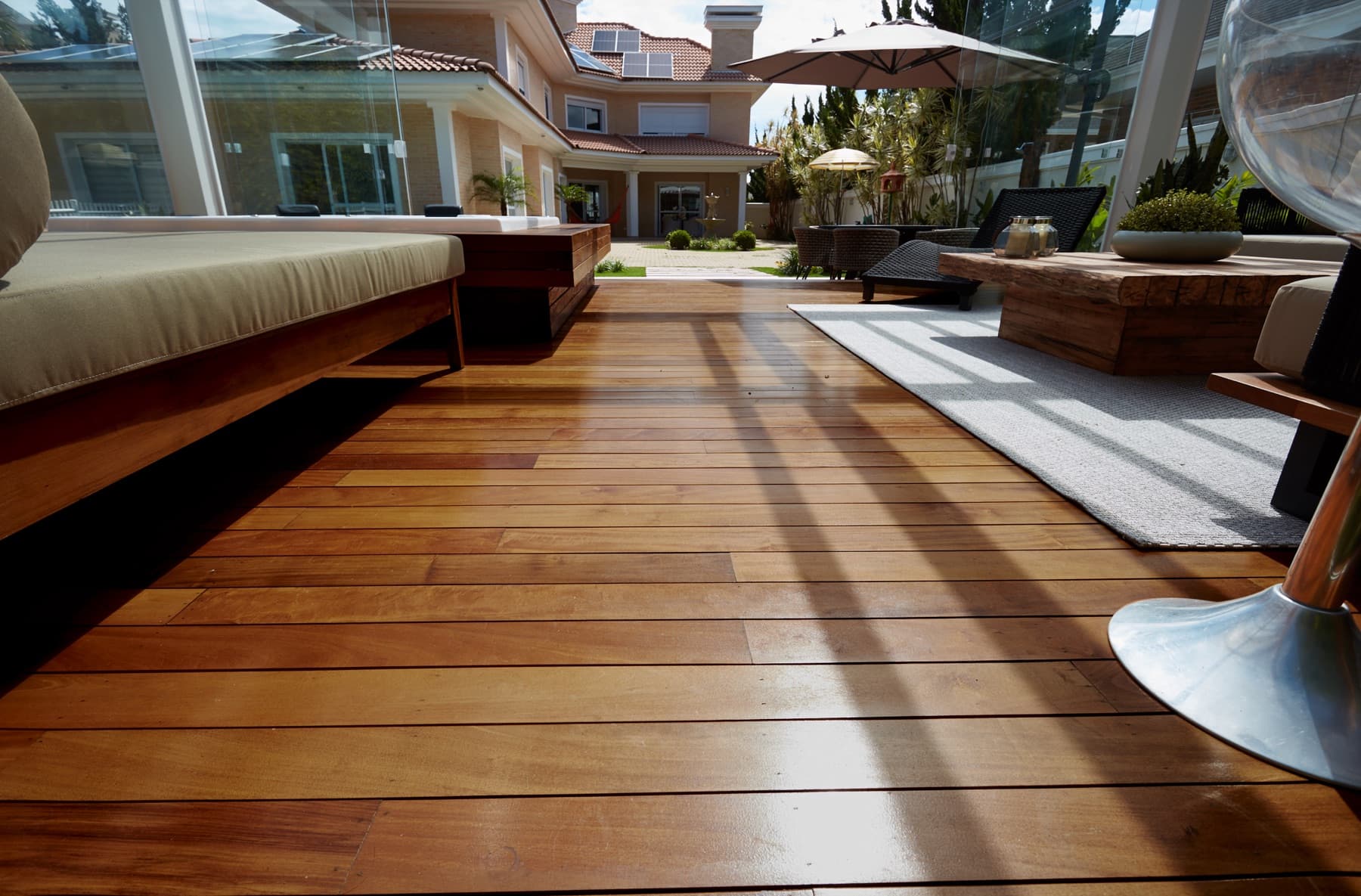
Why Choose a Picture-Frame Border?
A picture-frame border offers several aesthetic and practical benefits for your hardwood deck. Visually, it provides a finished edge that can contrast with the main decking field, drawing attention to the deck's perimeter or accentuating a unique shape. This can be particularly effective when using different board widths or species for the border, though consistency in material is often preferred for hardwood decks to ensure uniform weathering and maintenance.
From a practical standpoint, a picture-frame border can simplify the installation of the main deck boards by providing a clean starting and ending point. It also offers a robust edge detail, which can be important for decks that will see heavy foot traffic or require a clear transition to other outdoor elements like stairs or landscaping. For certain fastening systems, a border can conceal cut ends of the main field boards, contributing to a cleaner appearance.
Design Considerations for Your Border
Before selecting your boards, consider the overall design you envision. Will the border be a single board width, or multiple? A common approach is a single board, typically matching the width of the main deck boards, for a subtle frame. For a more pronounced effect, two or even three boards can be used. Keep in mind that wider borders will consume more of your deck's usable surface.
The direction of the border boards relative to the main field is also a key decision. Typically, border boards run perpendicular to the main field boards, creating a clear visual break. This also helps with drainage, as water can run off the main field and into the gaps of the border. Consider the species of hardwood you plan to use, such as Ipe or Cumaru, which offer distinct colors and grain patterns that will influence the border's appearance, whether left to silver naturally or maintained with an oil finish.
For example, Ipe wood, known for its reddish-brown to olive-brown tones, offers a bold grain that can create a striking frame. Cumaru, with its slightly warmer hues, also provides a durable and attractive option. Both species are noted for their natural resistance to weathering and insects, making them suitable for demanding outdoor applications.
An important detail to plan is how the corners of your picture frame will meet. Mitered corners (cut at 45 degrees) offer a clean, seamless look, but require precise cutting and careful installation to maintain tight joints over time. Butt joints (where one board end meets the side of another) are simpler to execute but can be more visible. The chosen corner detail will impact the amount of waste and the skill level required for installation.
Structural Support and Blocking
A critical aspect of picture-frame border installation is ensuring adequate structural support. Hardwood decking boards, especially dense species like Ipe or Cumaru, require solid blocking beneath all board ends. This is crucial for stability, preventing movement, and allowing for proper fastening.
For a single-board picture frame, joists or blocking should be installed around the perimeter of the deck to support the border boards. The main deck joists will typically run perpendicular to these border joists/blocking. When the main field boards meet the picture frame, their ends will also need support. This often involves additional blocking between the main joists where the field boards terminate against the inside edge of the picture frame.
Consider an example: if your picture frame uses a 5.5-inch wide board, you will need continuous blocking to support this width. Where the main field boards butt against the inside of the frame, there must be a joist or blocking to support both the end of the field board and the inside edge of the frame board. This often necessitates double joists or specific blocking configurations to provide sufficient material for fastening.
Board Selection and Fastening
Selecting the right hardwood decking boards is key. Ensure all boards for the picture frame and main field are of the same species and profile to maintain consistency in appearance and performance. Lumber Plus offers a range of hardwood decking species, including Ipe and Cumaru, which are well-suited for such applications due to their durability and stability.
Hardwood decking is typically available in various dimensions. For example, Ipe and Cumaru decking can be found in common profiles. Verify the specific profiles and lengths available for your chosen species. For a picture frame, it is often advantageous to select longer boards to minimize butt joints along the perimeter, especially for mitered corners.
Fastening methods will also influence your planning. Hidden fastening systems are popular for hardwood decks as they create a clean, fastener-free surface. These systems often require specific grooved board profiles or clips that attach to the sides of the boards. For the picture-frame border, especially at mitered corners or where boards meet blocking, face-fastening may be necessary. If face-fastening, pre-drilling and countersinking are essential for hardwoods to prevent splitting and ensure a flush finish.
Always confirm the manufacturer's recommended spacing between boards, as this can vary by species and profile. Proper spacing allows for drainage and accommodates the wood's natural movement. For Ipe and Cumaru, minimal movement post-installation is a characteristic, but appropriate spacing is still vital.
Worked Example: Single Board Picture Frame
Let's consider a hypothetical 12-foot by 16-foot rectangular deck with a single picture-frame border using 5.5-inch wide Ipe decking boards. The main field boards will run parallel to the 16-foot dimension.
1. **Perimeter Frame Layout:** The picture frame will consist of boards running along all four sides. For the 16-foot sides, you would need two boards, each 16 feet long. For the 12-foot sides, you would need two boards, each 12 feet long. If using mitered corners, you would cut 45-degree angles on the ends of these boards to form the frame.
These would run continuously around the deck's edge.
This blocking should align with the inside edge of the picture frame.
5. **Material Takeoff (Example):** For the picture frame, you would need approximately 2 (16-foot) boards and 2 (12-foot) boards of 5.5-inch Ipe decking. This detailed planning ensures all boards are supported and fastened correctly.
Before you order
- Determine the desired width of your picture-frame border (single board, double board, etc.).
- Choose your hardwood species (e.g., Ipe, Cumaru) and confirm available profiles and lengths.
- Decide on the corner detail: mitered for a seamless look or butt joints for simpler installation.
- Plan the direction of the border boards relative to the main deck field.
- Map out the necessary structural blocking and joist configuration to support all board ends.
- Select your preferred fastening method (hidden or face-fastened) and ensure compatibility with the border design.
- Calculate material quantities for both border and main field boards, accounting for cuts and waste.
- Confirm required board spacing for drainage and wood movement.
- Consider how the border will integrate with adjacent features like stairs or railings.
Confirm installation details, approved uses and warranty terms in the current instructions for the exact product and profile. Your installer should verify the substrate, structure and applicable project requirements.
Questions to help you decide
Can I use different hardwood species for the picture frame and the main deck?
While technically possible, it is generally recommended to use the same species for both the picture frame and the main deck. Different species can have varying densities, expansion/contraction rates, and weathering characteristics, which might lead to an uneven appearance or potential issues over time. If a contrasting look is desired, consider using different board widths or a different finish application on the same species.
What is the best way to fasten picture-frame boards?
The best fastening method depends on your aesthetic preference and the specific product. Hidden fasteners are popular for a clean look on the main deck field. However, for picture-frame boards, especially at mitered corners or where boards terminate against blocking, face-fastening with pre-drilled and countersunk screws is often necessary to ensure secure attachment. Always follow the manufacturer's recommendations for your specific hardwood decking.
Do I need special tools for cutting mitered corners on hardwood decking?
Yes, cutting precise mitered corners on dense hardwoods like Ipe or Cumaru requires a high-quality miter saw with a sharp, carbide-tipped blade. Accuracy is crucial for tight joints that will hold up over time. Professional installation is often recommended for complex cuts and overall precision with hardwood decking.
Ready to Plan Your Hardwood Decking Project?
Request a material quote with your project dimensions, exact profile preferences, and ZIP code. We can help you confirm current availability and service options for your hardwood decking needs. Explore our range of hardwood decking, including Ipe and Cumaru, to find the perfect material for your picture-frame border project.
Request a material quote →