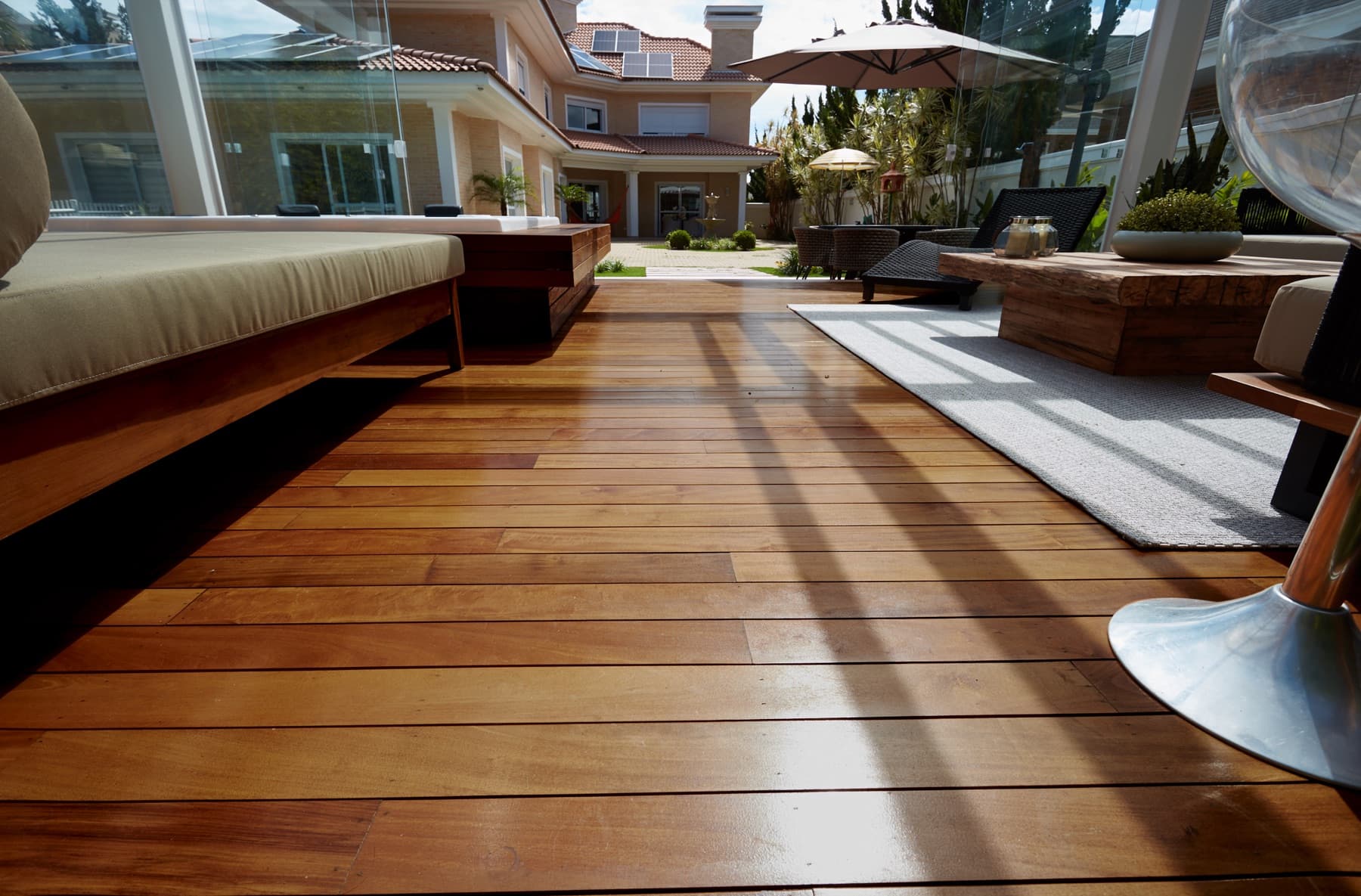
Selecting the Right Hardwood for Outdoor Kitchen Areas
When planning an outdoor kitchen, the choice of hardwood decking material becomes particularly important due to the presence of heat, spills, and heavy appliances. Hardwoods like Ipe and Cumaru offer qualities that make them suitable for such demanding environments. Ipe, often referred to as Brazilian walnut, is known for its exceptional density and natural resistance to decay, insects, and weathering. It also carries a Class A fire rating, which can be a significant advantage near cooking equipment. Cumaru is another dense tropical hardwood, offering high durability and resistance to termites and weather changes, along with a Class A fire resistance.
Both Ipe and Cumaru are noted for their stiffness, strength, and hardness, making them robust choices for areas that will experience heavy foot traffic and the weight of kitchen units. While they are naturally resistant to many environmental factors, routine cleaning and optional annual oiling can help maintain their appearance over decades of service.
Understanding Appliance Clearances and Placement
Outdoor kitchen appliances, especially grills, side burners, and pizza ovens, generate heat and require specific clearances from combustible materials like wood decking. Always consult the manufacturer's installation manual for each appliance to determine minimum required distances to adjacent surfaces, including the deck boards themselves.
These clearances are critical for fire safety. For example, a grill might require a certain distance from walls or overhead structures. Ensure that any built-in components or cabinetry are also positioned to respect these safety zones. Planning the layout of your outdoor kitchen early will help you confirm that your chosen hardwood decking can safely accommodate these appliances without modification or risk.
Managing Structural Loads from Heavy Equipment
Outdoor kitchen components, such as built-in grills, refrigerators, sinks, and stone countertops, can be significantly heavier than standard deck furniture. The underlying deck structure must be designed to safely support these concentrated loads. This may require additional joists, beams, or reinforced footings beneath the kitchen area.
Before finalizing your deck design, identify all major kitchen appliances and their estimated weights. Share this information with your deck builder or structural engineer. They can assess whether the standard deck framing is sufficient or if reinforcements are needed to prevent sagging, instability, or even structural failure over time. For freestanding units, ensure the deck surface itself can bear the weight without excessive deflection.
Planning for Utilities: Gas, Water, and Electrical
An outdoor kitchen often requires connections for gas lines, water supply and drainage, and electrical outlets. These utilities need to be integrated into the deck design in a safe and code-compliant manner. Gas lines typically run beneath the deck and emerge at the appliance location, requiring careful routing and protection.
Water lines for sinks and refrigerators, along with drainage, also need to be planned to prevent leaks or standing water that could affect the deck structure. Electrical outlets for small appliances, lighting, or charging stations should be weather-rated and installed by a qualified electrician. Coordinate the placement of these utility access points with your decking layout to ensure proper installation and minimal impact on the finished appearance.
Protecting Hardwood Decking from Spills and Splashes
While hardwoods like Ipe and Cumaru are dense and naturally resistant, outdoor kitchens are prone to spills of grease, oil, food, and beverages. Regular cleaning is important to prevent stains from setting into the wood. Consider placing protective mats or rugs in high-spill areas, particularly under grills or prep zones, to catch drips.
For daily maintenance, a simple wash with water and a mild cleaner can often address most spills. If you choose to apply a UV-blocking sealer to maintain the wood's original color, this can also offer an additional layer of protection against staining. Prompt cleanup is always the best defense against potential marks on your hardwood surface.
Worked Example: Decking for a Grill Island
Let's consider a hypothetical outdoor kitchen project: a 6-foot by 3-foot grill island with a built-in grill and a small prep counter. The island itself weighs approximately 400 pounds when empty, with an additional 150 pounds for the grill and accessories.
For the decking, we'll use 5/4x6 Ipe boards (actual dimensions approximately 1 inch thick by 5.5 inches wide). To accommodate the grill island:
The Ipe decking itself, being a Class A fire-rated material, can be directly beneath the grill island, but the grill's specific clearances to *vertical* combustible surfaces must be respected.
2. **Structural Support:** The total weight of the island and grill is 550 pounds. This weight will be distributed over the 6x3 foot area. To ensure adequate support, the deck frame beneath this 18 square foot section will be reinforced. The exact reinforcement depends on the overall deck design and span lengths.
3. **Decking Layout:** The Ipe boards will run parallel to the 6-foot dimension of the island. Since the boards are 5.5 inches wide, approximately 7 boards will be needed across the 3-foot depth (36 inches / 5.5 inches = 6.54 boards, so 7 boards are purchased). For the 6-foot length, standard board lengths like 8-foot or 10-foot could be used, with cuts made to fit the island's perimeter if it's a built-in feature, or simply laid continuously if the island is freestanding on top. If the island is built-in, precise measurements for cutting the Ipe boards around its base would be taken during installation.
Before you order
- Confirm appliance manufacturer's minimum clearances to combustible materials.
- Detail all outdoor kitchen appliances and their estimated weights for structural planning.
- Map out the location of all utilities (gas, water, electrical) and plan their integration.
- Determine if additional deck framing or footings are required to support kitchen loads.
- Consider pathways and workflow within the kitchen area and how they interact with decking.
- Plan for spill protection and routine cleaning in high-traffic/high-spill zones.
- Select a hardwood species with appropriate durability and fire rating for kitchen use.
- Coordinate deck board layout with appliance and cabinetry placement for a cohesive look.
Confirm installation details, approved uses and warranty terms in the current instructions for the exact product and profile. Your installer should verify the substrate, structure and applicable project requirements.
Questions to help you decide
Can any hardwood decking be used with an outdoor kitchen?
While many hardwoods are durable, species like Ipe and Cumaru are particularly well-suited due to their density, natural resistance to rot and insects, and Class A fire ratings. Always check the fire resistance and density of your chosen material, and ensure it meets local building codes and appliance manufacturer requirements for proximity to heat sources.
How do I protect my hardwood deck from grease spills?
Hardwood decking can be protected by promptly cleaning up spills with a mild detergent and water. For areas directly under grills or prep stations, consider using protective mats designed for outdoor use. Applying a UV-blocking sealer can also add a layer of resistance to staining, though it will not prevent all marks if spills are left for extended periods.
Do I need special structural support for an outdoor kitchen on a deck?
Yes, outdoor kitchen components, especially built-in units with stone countertops, refrigerators, and grills, can be very heavy. The deck structure beneath these areas typically requires reinforcement, such as additional joists, stronger beams, or dedicated footings, to safely support the concentrated loads. Consult with a structural engineer or experienced deck builder to ensure adequate support.
Ready to Plan Your Hardwood Deck and Outdoor Kitchen?
Request a material quote with your project dimensions, desired hardwood profile (e.g., Ipe 5/4x6), and ZIP code. We can help confirm current availability and service options for your outdoor kitchen decking project. Visit our product pages for more information on Ipe, Cumaru, and other hardwood decking options.
Request a material quote →