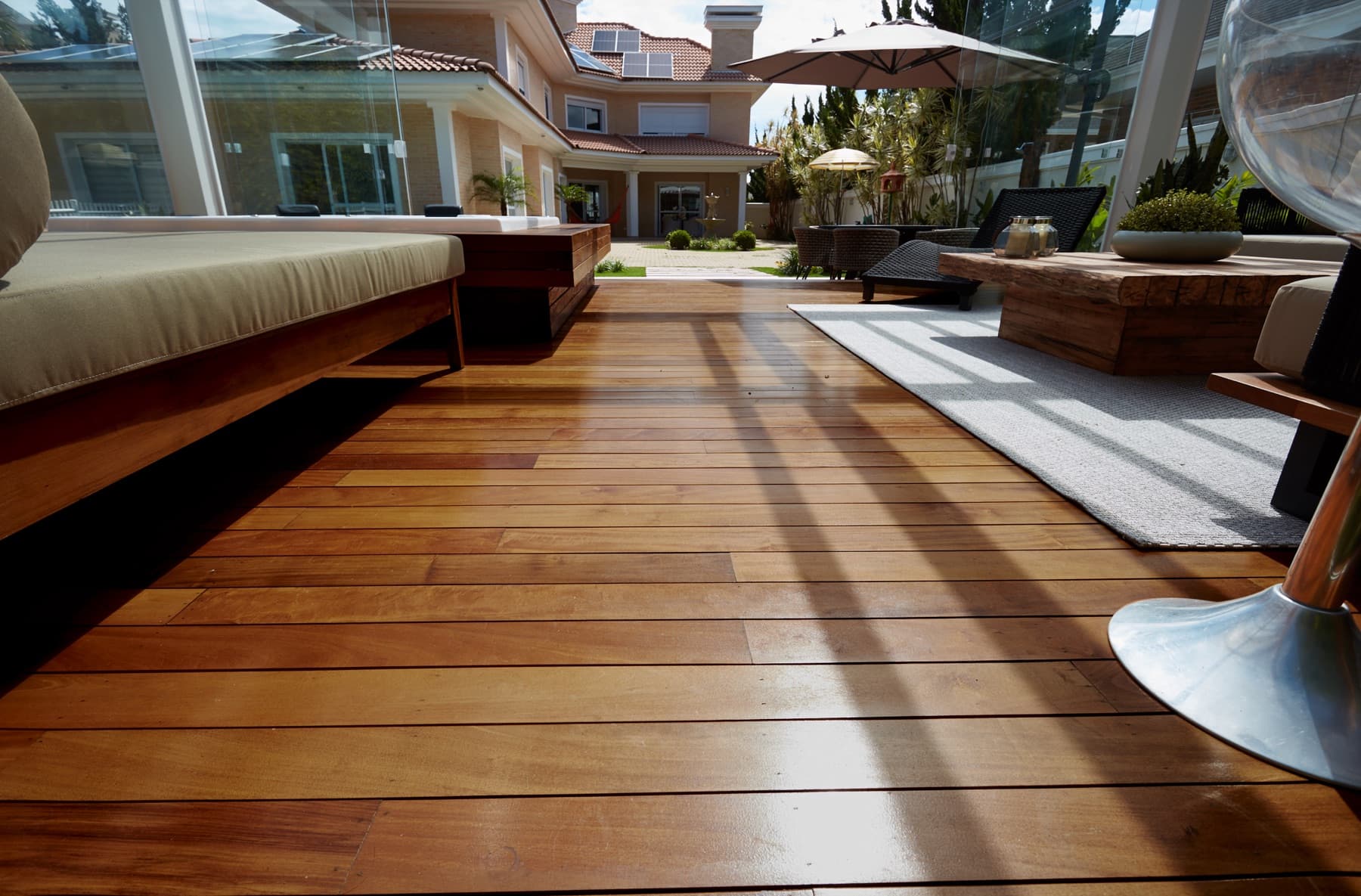
Upfront Material Cost: Hardwood vs. Alternatives
Hardwood decking, particularly species like Ipe or Cumaru, typically represents a premium upfront material investment compared to many composite or pressure-treated lumber options. This initial cost reflects the density, natural resistance, and aesthetic qualities of these woods.
Its robust nature and rich, reddish-brown to olive-brown tones contribute to its higher price tier. These woods are selected for their inherent properties that reduce the need for chemical treatments.
When budgeting, consider that the material cost per linear foot or square foot for hardwood will be higher. However, this initial outlay is balanced by characteristics that may reduce long-term expenses in other areas.
Installation Costs and Considerations
The density of hardwood decking species like Ipe and Cumaru means installation can require specialized tools and techniques. Pre-drilling is often necessary to prevent splitting when fastening boards. This can add to labor time and, consequently, installation costs if you are hiring a professional.
While professional installation is recommended for optimal results, experienced DIYers can undertake the project with the right equipment and careful planning. Hidden fastener systems are popular for a clean, uninterrupted surface but may also add to installation complexity and time compared to face-fastening. Always confirm the exact assembly requirements for your chosen hardwood and fastener system.
Annual Maintenance: Cleaning and Oiling
Hardwood decking requires a consistent, but often straightforward, annual maintenance regimen. The primary task is cleaning, which typically involves a wash once a year to remove dirt, pollen, and mildew. This helps to maintain the deck's appearance and prevent organic buildup.
Beyond cleaning, the decision to oil your hardwood deck is primarily an aesthetic one. If you prefer to preserve the original rich brown tones of species like Ipe or Cumaru, an annual application of a UV-blocking sealer or oil is recommended. If left untreated, these hardwoods will naturally weather to a silvery-gray patina, which many homeowners find appealing. Structurally, there is no difference in durability whether the deck is oiled or allowed to silver.
The cost associated with maintenance includes cleaning solutions, brushes, and, if desired, decking oil. These are recurring annual expenses, but the materials themselves are generally not costly on an individual basis.
Long-Term Durability and Repair
A key advantage of dense hardwoods is their natural resistance to rot, insects, and mold. This inherent durability means less need for chemical treatments or frequent board replacement due to decay or pest damage. Ipe, for instance, is noted for its resistance to weather changes and minimal movement post-installation. Cumaru shares similar characteristics, being resistant to termites and weather changes.
While individual board replacement is possible if damage occurs, the overall need for structural repairs or extensive material replacement may be less frequent with hardwoods compared to some other decking materials. This contributes to lower long-term material replacement costs.
Choosing a marine-grade standard hardwood like Ipe or Cumaru for coastal applications, docks, or boardwalks further illustrates their resilience against harsh environmental conditions like salt air and spray, which can impact other materials over time.
Worked Example: Lifecycle Cost Considerations for a 300 sq ft Deck
Let's consider a hypothetical 300 square foot deck project. For this example, we'll compare Ipe and Cumaru, focusing on the material cost and estimated annual maintenance tasks.
Assumptions:
1. Deck size: 300 sq ft (e.g., 15 ft x 20 ft).
2. Material: Hardwood decking (e.g., 1x6 nominal boards, requiring approximately 2.25 linear feet per square foot for a total of 675 linear feet).
3. Installation: Professional installation, assuming higher labor for dense hardwoods.
4. Maintenance: Annual cleaning; optional annual oiling to retain color.
Scenario 1: Ipe Decking
Initial Material Cost: Ipe is in price tier 4. While exact prices vary, expect the material cost to be at the higher end of the hardwood spectrum. This upfront investment is significant.
Installation: Due to Ipe's density, installation labor may be slightly higher than for less dense woods. Pre-drilling is essential.
Annual Maintenance: One annual cleaning (e.g., 2-3 hours labor, plus cleaning solution cost). If color retention is desired, one application of UV-blocking oil (e.g., 4-6 hours labor, plus oil cost).
Long-Term: Ipe's durability means minimal risk of rot or insect damage, reducing future repair material costs.
Scenario 2: Cumaru Decking
Initial Material Cost: Cumaru is in price tier 3, making it a more accessible premium hardwood. The initial material cost would be less than Ipe but still a significant investment.
Installation: Similar to Ipe, Cumaru's density will require careful installation, including pre-drilling.
Annual Maintenance: One annual cleaning (similar time and cost to Ipe). Optional annual oiling for color retention (similar time and cost to Ipe).
Long-Term: Cumaru's natural resistance to termites and weather changes also translates to lower long-term material replacement expectations.
In both scenarios, the recurring costs are primarily labor and materials for cleaning and optional oiling. The initial material and installation costs are the most substantial difference. Over the decades of service these hardwoods can provide, the annual maintenance costs become a smaller fraction of the total investment, especially when compared to materials that might require more frequent replacement or repair.
Before you order
- Determine your project's total square footage and linear footage needs.
- Research current material pricing for Ipe, Cumaru, and other hardwoods, as well as alternative decking materials.
- Obtain installation quotes from professionals, specifying hardwood decking to ensure accurate labor estimates.
- Evaluate your willingness and ability to perform annual cleaning and optional oiling tasks.
- Consider the long-term aesthetic: do you prefer the original wood color (requiring oiling) or a natural silver-gray patina (no oiling)?
- Factor in the natural resistance properties of hardwoods, which can reduce future repair and replacement costs.
- Compare the total estimated cost over an extended period (e.g., 10-20 years) for different material options, including initial purchase, installation, and recurring maintenance.
Confirm installation details, approved uses and warranty terms in the current instructions for the exact product and profile. Your installer should verify the substrate, structure and applicable project requirements.
Questions to help you decide
How does the upfront cost of hardwood decking compare to composite?
Hardwood decking, especially premium species like Ipe and Cumaru, generally has a higher upfront material cost than many composite decking options. This difference is often due to the density, natural durability, and aesthetic qualities of the hardwoods.
What are the main ongoing costs for a hardwood deck?
The main ongoing costs for a hardwood deck are for annual cleaning supplies and, if you choose to maintain the original wood color, the cost of UV-blocking oil or sealer. Labor for these tasks can be a cost if you hire someone, or a time investment if you do it yourself.
Does hardwood decking require more maintenance than other materials?
Hardwood decking requires consistent annual cleaning. If you wish to preserve its original color, an annual application of oil is also needed. While some materials may claim lower maintenance, hardwood's natural resistance to rot and insects often means fewer structural repairs or board replacements over its lifespan, which can balance out the maintenance tasks.
Ready to Plan Your Hardwood Decking Project?
Request a material quote with your project dimensions, desired profile, and ZIP code to confirm current availability and service options for Ipe, Cumaru, and other hardwood decking species. Visit our product pages for more information: Hardwood Decking, Ipe Decking, Cumaru Decking, Garapa Decking, Tigerwood Decking.
Request a material quote →