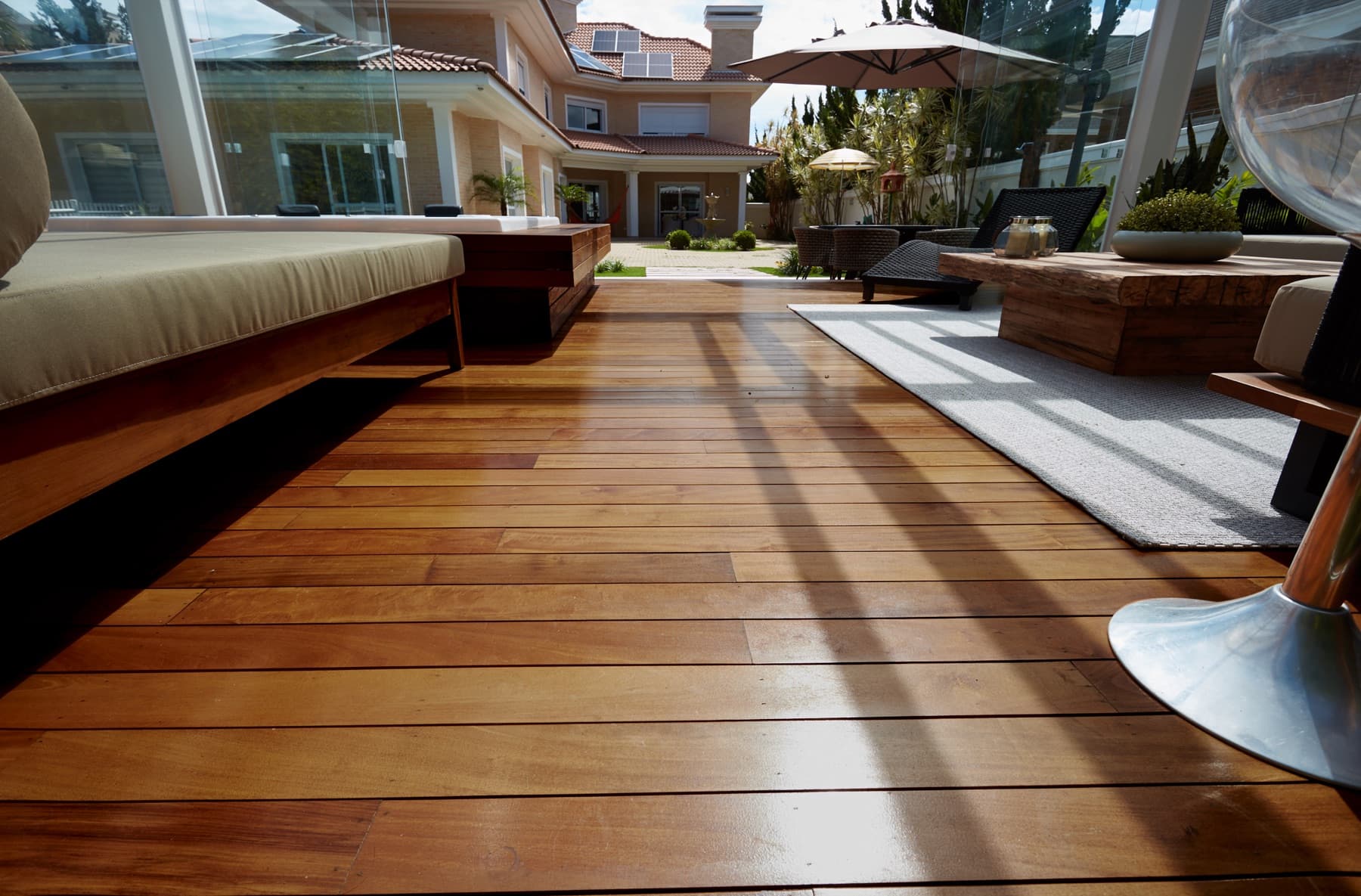
Prioritizing Durability and Resistance for Commercial Use
Hospitality environments demand materials that can withstand rigorous use. Hardwood decking species like Ipe and Cumaru are recognized for their exceptional density and natural resistance, making them suitable for high-traffic areas.
Its natural oils contribute to resistance against rot, insects, and mold, reducing the need for chemical treatments. This inherent resilience is crucial for areas where constant guest interaction and exposure to spills or moisture are common, such as around pools or dining areas.
It is also resistant to termites and weather changes. Both species are often specified for marine-grade applications, indicating their performance in challenging outdoor conditions, including coastal salt air and spray, which can be relevant for resort properties.
The inherent strength of these hardwoods means they can endure the wear and tear of daily commercial operation without significant degradation, maintaining structural integrity and appearance over time. This reduces the frequency of replacements or major repairs, aligning with long-term operational efficiency.
Aesthetic Consistency and Design Integration
The visual appeal of an outdoor space directly influences guest perception. Hardwood decking offers a natural, luxurious aesthetic that can complement various architectural styles, from modern to classic.
Ipe wood displays a range from reddish-brown to olive-brown, offering a sophisticated and natural appearance. Cumaru presents similar warm tones. These natural variations mean no two boards are identical, contributing to a unique and authentic look.
For hospitality projects, maintaining a consistent aesthetic across multiple outdoor areas—such as a poolside deck, a rooftop bar, and a ground-level patio—is often a key design objective. Hardwood's ability to be oiled to preserve its deep brown tones or allowed to weather to a silvery-grey patina provides flexibility. This choice allows designers to integrate the decking seamlessly with the property's overall design scheme and brand identity, while still using the same durable material.
Careful planning of board widths, lengths, and patterns can further enhance the design. While the natural color can be maintained with UV-blocking sealers, the structural performance remains unchanged whether the wood is oiled or left to weather naturally.
Maintenance Planning for Hospitality Operations
In hospitality settings, maintenance schedules must be efficient and minimally disruptive to guest experience. Hardwood decking, particularly dense species, generally requires less intensive maintenance compared to some other outdoor materials.
For species like Ipe and Cumaru, basic maintenance involves an annual wash to remove dirt and debris. If the aim is to retain the original rich color, an annual application of a UV-blocking oil or sealer is recommended. Without this, the wood will naturally transition to a silvery-grey patina, which is structurally sound but alters the aesthetic.
The natural resistance of these hardwoods to rot, insects, and mold reduces the need for frequent chemical treatments, simplifying maintenance protocols and potentially lowering ongoing costs. This 'low maintenance' aspect is a significant advantage for busy hotel and restaurant operations where resources and time are often constrained.
It is important to establish a clear maintenance plan during the design phase, considering the property's specific climate and expected foot traffic, to ensure the deck's longevity and appearance are consistently managed.
Project Example: A Resort Pool Deck Renovation
Consider a hypothetical renovation of a resort pool deck measuring 50 feet by 30 feet, requiring a durable and visually appealing surface that can withstand constant moisture exposure and heavy foot traffic.
The design calls for 1x6 (nominal, actual dimensions vary by profile) Ipe decking boards in varied lengths to create a dynamic, natural look around the pool area. The total area to cover is 1,500 square feet. Assuming a standard board coverage, and allowing for waste from cuts and pattern alignment, approximately 1,650 square feet of Ipe decking boards would be purchased. This accounts for roughly 10% waste, typical for such projects.
The project also includes a 2-foot wide border around the entire deck perimeter. This border will be installed with picture-frame detailing. This requires additional linear footage of Ipe, potentially in specific lengths to minimize seams. For this example, an additional 160 linear feet of 1x6 Ipe boards would be allocated for the border, allowing for miter cuts at corners.
Hidden fasteners are specified to ensure a smooth, barefoot-friendly surface, critical for a pool area. The support structure is confirmed to be adequate for the weight of the dense hardwood. The resort opts to maintain the Ipe's natural reddish-brown color, necessitating an annual application of a UV-blocking oil, factored into the long-term maintenance budget.
This approach ensures the deck is not only visually stunning but also built to endure the specific demands of a high-end resort environment for decades.
Sourcing and Availability Considerations
When planning a hospitality decking project, understanding the sourcing and availability of hardwood species is crucial for project timelines and budget management.
Lumber Plus sources Ipe and Cumaru from regions like Brazil, with many suppliers adhering to sustainable forestry standards and FSC certification under our Green+ program. This commitment ensures responsible sourcing, which can be an important factor for hospitality brands focused on sustainability.
These hardwoods are typically available in a range of profiles and lengths, such as 1"x2" through 6"x6" dimensions and lengths from 3 to 24 feet. However, specific stock and custom milling options can vary.
It is recommended to confirm current profiles and lengths with a supplier early in the planning process. Providing project dimensions and desired profiles will help ensure that the necessary materials can be sourced within the project's timeframe, avoiding potential delays.
Before you order
- Identify the specific use case (pool deck, restaurant patio, rooftop bar) and expected foot traffic.
- Evaluate desired aesthetic: natural weathering to grey or maintained original color.
- Confirm local building codes and fire ratings (Ipe carries a Class A fire rating).
- Assess structural support for the density and weight of hardwood decking.
- Determine required board profiles and lengths based on design layout.
- Plan for fastening methods: hidden fasteners for a smooth surface or face-fastening.
- Establish a long-term maintenance plan, including cleaning and optional oiling schedules.
- Verify supplier's sourcing practices and sustainability certifications.
- Request a material quote with exact dimensions and profiles from your supplier.
- Confirm current availability and lead times for selected hardwood species.
Confirm installation details, approved uses and warranty terms in the current instructions for the exact product and profile. Your installer should verify the substrate, structure and applicable project requirements.
Questions to help you decide
What hardwood species are best for high-traffic hospitality areas?
Ipe and Cumaru are excellent choices for high-traffic hospitality areas due to their exceptional density, durability, and natural resistance to rot, insects, and weather changes. Ipe, in particular, is considered a benchmark for demanding outdoor applications.
How do I maintain the original color of hardwood decking in a commercial setting?
To maintain the original reddish-brown to olive-brown color of Ipe or Cumaru decking, an annual application of a UV-blocking oil or sealer is recommended after cleaning. If left untreated, the wood will naturally weather to a silvery-grey patina over time.
Is hardwood decking suitable for coastal hospitality properties?
Yes, species like Ipe and Cumaru are marine-grade standard and highly suitable for coastal properties. Their natural oils and density provide resistance to salt air, spray, and moisture, making them a durable option for docks, boardwalks, and resort decks near the ocean.
Request a Quote for Your Hospitality Decking Project
Ready to enhance your hospitality outdoor space with durable hardwood decking? Request a material quote by providing your project dimensions, exact profile requirements, and ZIP code. Our team can confirm current availability and service options for Ipe, Cumaru, and other premium hardwood species.
Request a material quote →