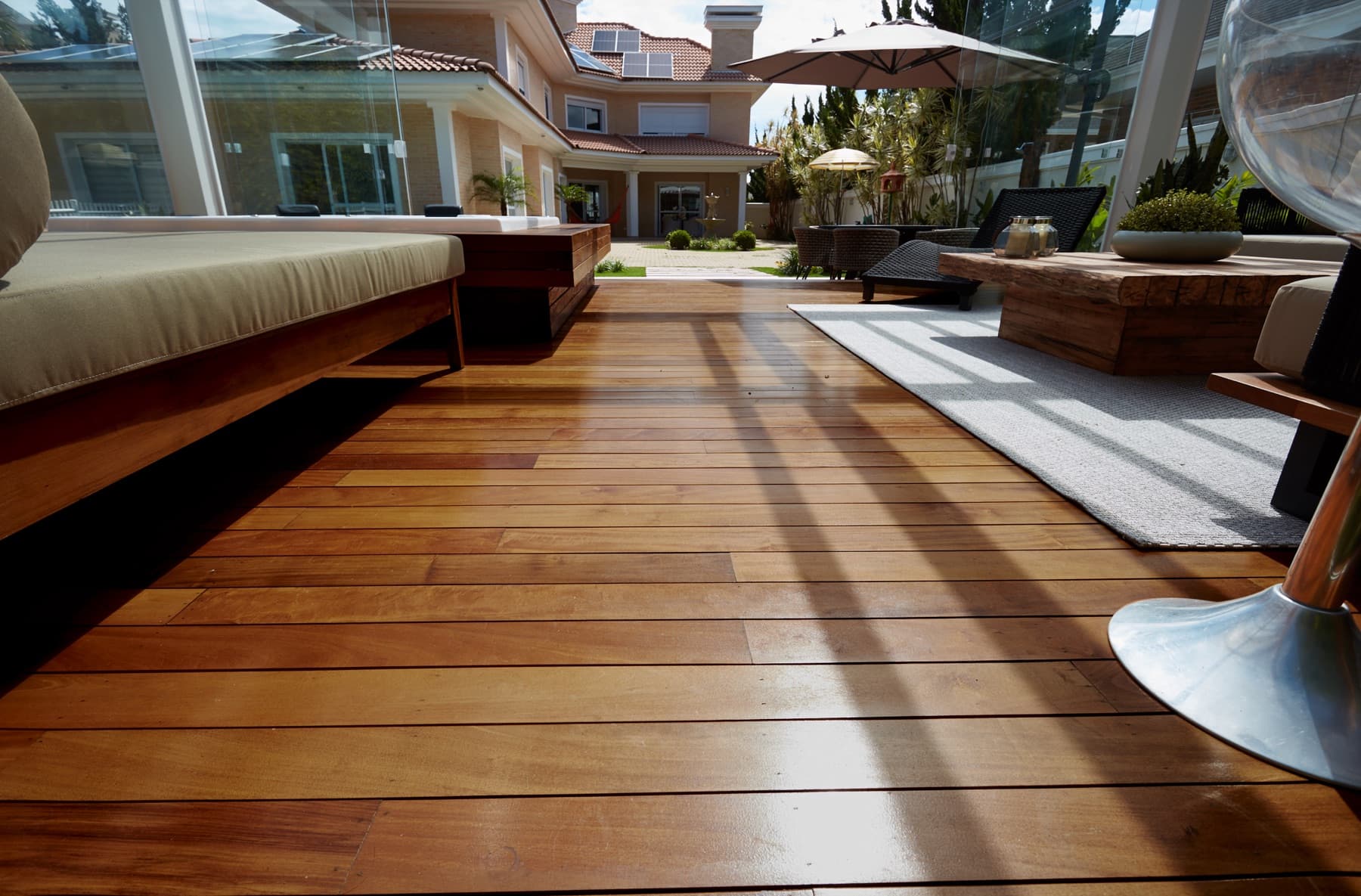
Understanding Fascia and Edge Trim in Hardwood Decking
Fascia boards are typically installed vertically along the perimeter of the deck frame, covering the joists and rim joist. This provides a clean, finished look, hiding the structural components beneath. Edge trim, sometimes referred to as skirting or banding, serves a similar purpose but can also include specialized profiles for stairs, railings, or other transitions.
For hardwood decks, using the same species for fascia as for the main deck boards ensures color consistency and a unified aesthetic. This approach leverages the natural beauty and durability of species like Ipe or Cumaru throughout the visible structure.
Why Coordinate Fascia with Decking Material?
Coordinating your fascia and edge trim with your primary hardwood decking material offers several advantages. Firstly, it maintains a consistent visual flow, as the wood will weather similarly over time. If you choose to apply a UV-blocking sealer to maintain the original color of your Ipe or Cumaru deck, the fascia will respond in the same way, preventing mismatched tones.
Secondly, using the same species ensures comparable durability and resistance to the elements. Hardwoods like Ipe and Cumaru are naturally resistant to rot, insects, and weather changes, making them suitable for all exposed components of a deck. This uniformity in material helps in long-term maintenance planning and overall longevity of the structure. Ipe, for instance, is known for its minimal movement post-installation and resistance to weather changes, mold, and termites. Cumaru offers similar resistance to termites and weather changes.
Finally, from an ordering perspective, coordinating materials simplifies the process. You can often specify the same species in different profiles or dimensions suitable for fascia, streamlining your material procurement.
Common Fascia and Trim Profiles
Hardwood decking is available in various profiles, and many of these can be adapted or specifically milled for fascia applications. While flat boards are most common for fascia, other profiles might be used for specific trim needs.
Standard decking boards, such as 1x6 or 5/4x6, can often be used as fascia, installed on edge. For thicker or more substantial fascia, you might consider larger dimension lumber. When planning, consider the desired thickness and width of the fascia to ensure it adequately covers the substructure and achieves the intended visual impact. For example, Ipe is available in dimensions from 1"x2" through 6"x6", offering flexibility for various fascia requirements.
Fastening Fascia Boards
Proper fastening is essential for securing fascia boards and ensuring their longevity. Face-fastening is a common method for fascia, where screws are driven directly through the board into the substructure. Pre-drilling is often necessary for dense hardwoods like Ipe and Cumaru to prevent splitting and ensure a clean installation. Stainless steel screws are recommended for outdoor applications to prevent corrosion and staining.
Alternatively, some installers may opt for hidden fastening systems designed for fascia, which can create a cleaner look by concealing the fasteners. Always consult the manufacturer's specific installation guidelines for your chosen hardwood species and fastening system.
Worked Example: Ordering Ipe Fascia for a Deck
Let's consider a hypothetical deck project where you are building a rectangular deck, 12 feet by 20 feet, with Ipe decking. The deck is elevated, requiring fascia on all four sides.
For a clean, substantial look, you decide to use 1x10 Ipe boards for the fascia. You have two 20-foot sides and two 12-foot sides. You will need two 20-foot boards and two 12-foot boards. However, to account for potential cuts, waste, and to ensure you have enough material, it's prudent to order slightly more.
For the two 20-foot sides, you would order two 20-foot lengths of 1x10 Ipe. For the two 12-foot sides, you might order two 12-foot lengths of 1x10 Ipe. If longer lengths are available (e.g., 24-foot), you could potentially get both 12-foot pieces from a single 24-foot board, minimizing waste. Always confirm current profiles and lengths with your supplier. If a single 20-foot length is not available, you would need to piece together shorter boards, planning for seams that align with structural supports.
In this example, your order for fascia would be: two 1x10 Ipe boards at 20 feet each, and two 1x10 Ipe boards at 12 feet each. This provides enough material for the perimeter, assuming no complex cuts or angles. Always measure your specific project dimensions accurately before ordering.
Before you order
- Determine the exact dimensions of your deck perimeter requiring fascia and trim.
- Decide on the desired width and thickness of the fascia boards to cover the substructure.
- Choose a hardwood species for fascia that matches your main decking (e.g., Ipe, Cumaru, Garapa).
- Consider the fastening method: face-fastening with pre-drilling, or a hidden system.
- Account for waste and potential cuts by ordering a slight overage.
- Confirm the availability of specific profiles and lengths with your supplier.
- Plan for any specialized trim pieces for stairs, railings, or other transitions.
Confirm installation details, approved uses and warranty terms in the current instructions for the exact product and profile. Your installer should verify the substrate, structure and applicable project requirements.
Questions to help you decide
Can I use a different wood species for fascia than my deck boards?
While technically possible, it is generally recommended to use the same hardwood species for both decking and fascia. This ensures consistent weathering, color retention (if treated), and similar durability characteristics. Using different species might lead to uneven aging or maintenance requirements.
How do I calculate the amount of fascia I need?
Measure the total linear footage of the deck perimeter where fascia will be installed. Add a small percentage (typically 10-15%) for cuts, waste, and potential errors. Then, determine the board lengths you need, aiming to minimize seams and waste based on available stock lengths. Our worked example provides a practical illustration.
What is the best way to maintain hardwood fascia?
Hardwood fascia, like your deck boards, benefits from an annual wash to remove dirt and debris. If you wish to preserve the original reddish-brown to olive-brown color of species like Ipe or Cumaru, applying a UV-blocking sealer annually or bi-annually is recommended. If left untreated, the wood will naturally weather to a silvery-gray patina, which does not affect its structural integrity. This maintenance routine is generally consistent across all exposed hardwood components.
Ready to Plan Your Hardwood Deck Fascia?
Request a material quote with your project dimensions, desired profile, and ZIP code to confirm current availability and service options for hardwood decking and fascia.
Request a material quote →