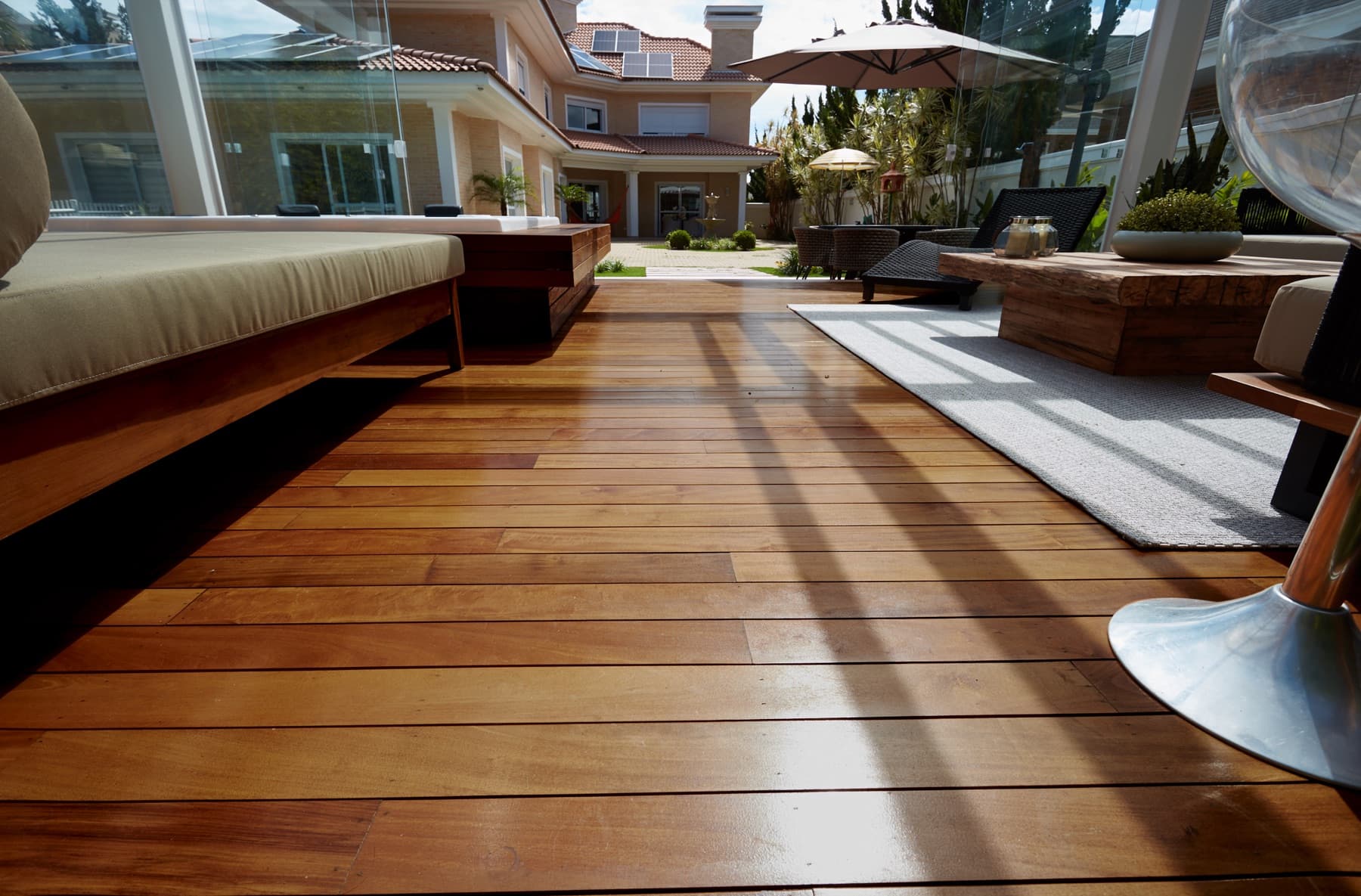
Why Choose Face-Fastening for Hardwood Decking?
Face-fastening involves driving screws directly through the face of the deck board into the joists below. This method is often chosen for its direct mechanical strength, which can be particularly advantageous for hardwoods known for their density and resistance to movement.
Hardwood species like Ipe and Cumaru are exceptionally dense and durable, offering natural resistance to rot, insects, and weather changes. Their inherent stiffness and strength mean they require a secure fastening method that can handle their robust characteristics. Face-fastening provides a direct, unyielding connection, often preferred for its reliability.
While some hidden fastening systems exist for hardwoods, face-fastening remains a proven technique, especially for projects where maximum holding power and a distinct visual aesthetic are desired. It also simplifies board replacement if a repair ever becomes necessary, as individual boards can be accessed and removed more directly than with some hidden systems.
Essential Fastener Selection: Screws for Hardwood
The type of screw used is critical for face-fastened hardwood decking. Standard deck screws may not be suitable due to the density of hardwoods. Stainless steel screws are generally recommended to prevent corrosion, which can lead to unsightly stains on the wood and compromise the fastener's integrity over time.
For hardwoods, screws should be self-tapping or designed with a cutting tip to reduce the effort required for installation and minimize the risk of splitting the wood. The length of the screw is also important; it must be long enough to achieve adequate embedment into the joist after passing through the deck board.
Consider the head type: trim-head screws offer a smaller, less obtrusive appearance, while bugle-head screws provide greater bearing surface, which can be beneficial for some applications. The choice often comes down to the desired aesthetic and the specific hardwood species' properties.
The Importance of Pilot Holes and Countersinking
Attempting to drive screws without pilot holes will likely result in stripped screw heads, broken fasteners, or split deck boards.
The pilot hole diameter should be slightly smaller than the screw's shank diameter, allowing the threads to properly engage the wood. An installer will use a drill bit gauge or refer to the screw manufacturer's recommendations to select the correct size. Consistency in pilot hole size is key to uniform fastening.
Countersinking is also necessary to allow the screw head to sit flush with or slightly below the deck board surface, preparing it for plugging or to minimize surface protrusion.
Plugging for a Refined Finish
After screws are driven and countersunk, wood plugs are inserted to conceal the fastener, creating a clean, uniform surface. This method is highly favored for its aesthetic appeal, as it allows the natural beauty of the hardwood to dominate without visible screw heads.
Plugs are typically made from the same species of hardwood as the deck boards, ensuring a perfect color and grain match. They are cylindrical pieces of wood, often tapered, that are glued into the countersunk holes. Once the adhesive cures, the plugs are sanded flush with the deck surface.
The precision of the drilling and plugging process directly impacts the final appearance. An installer will use a specialized plug cutter to create plugs that fit snugly into the countersunk holes, minimizing gaps and ensuring a seamless integration. This technique requires careful attention to detail and proper tools.
Worked Example: Face-Fastening a Cumaru Deck Board
The project requires face-fastening with stainless steel screws and plugs.
For a 12-foot board on 16-inch centers, this means fastening at 0, 16, 32, 48, 64, 80, 96, 112, and 128 inches (assuming a small overhang or starting point).
For each screw location, a combined pilot hole and countersink bit would be used.
Finally, 3/8-inch Cumaru wood plugs are dipped in exterior-grade adhesive and tapped into each countersunk hole. Once the adhesive has fully cured, the excess plug material is carefully trimmed or sanded flush with the deck surface, leaving a smooth, uninterrupted Cumaru finish.
Before you order
- Confirm the specific hardwood species' density and recommended fastening methods.
- Verify the type and material of screws (e.g., stainless steel, self-tapping) suitable for the hardwood.
- Ensure the installer has the correct drill bits for pilot holes and countersinking.
- Discuss the plug material (matching species recommended) and adhesive type.
- Review the proposed fastening pattern and spacing for the deck boards.
- Confirm the method for trimming and sanding plugs flush with the deck surface.
- Understand the timeline for plug curing before final sanding or finishing.
Confirm installation details, approved uses and warranty terms in the current instructions for the exact product and profile. Your installer should verify the substrate, structure and applicable project requirements.
Questions to help you decide
Can I use common deck screws for hardwood face-fastening?
No, common deck screws are typically not suitable for dense hardwoods like Ipe or Cumaru. You need specialized stainless steel screws designed for hardwood, often with self-tapping or cutting tips, to prevent stripping, breaking, or splitting the wood.
Is pre-drilling always necessary for face-fastening hardwood?
Yes, pre-drilling pilot holes is essential for face-fastening dense hardwoods. Without pilot holes, the extreme density of the wood can cause screws to strip, break, or lead to splitting of the deck boards during installation.
How do I ensure the wood plugs match my deck boards?
To ensure the best match, wood plugs should be made from the exact same species of hardwood as your deck boards. This provides consistent color, grain, and weathering characteristics. Your installer can source these or even create them on-site from leftover board material.
Request a Material Quote for Your Hardwood Decking Project
Ready to discuss face-fastening options for your hardwood deck? Provide your project dimensions, desired hardwood profile, and ZIP code to request a material quote. We can confirm current availability and service options for Ipe, Cumaru, and other premium hardwoods.
Request a material quote →