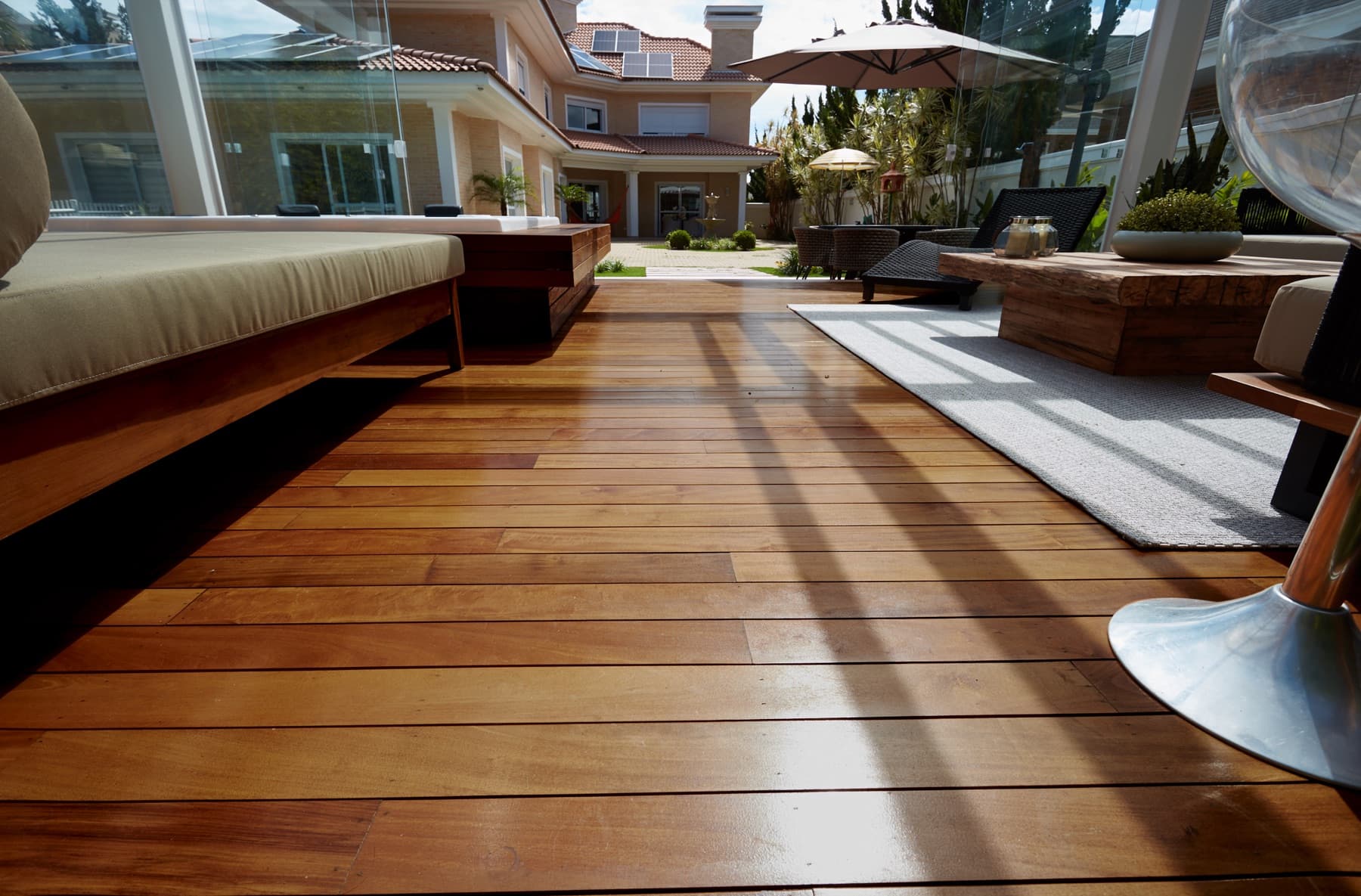
Evaluating Your Existing Deck Frame for Hardwood
Before selecting your hardwood decking, a thorough inspection of your existing deck frame is essential. Hardwood species like Ipe and Cumaru are known for their exceptional density and weight. This density translates to a heavier deck surface compared to many common softwoods or composite materials. Your existing joists, beams, and footings must be structurally sound and adequately spaced to bear this increased load.
Check for any signs of rot, insect damage, or excessive deflection in the current framing. Consult a local building professional or structural engineer to confirm your frame's capacity for the specific hardwood species and board dimensions you plan to use.
Ensure all fasteners, hangers, and connectors are in good condition and appropriate for the intended load. Any compromised elements should be replaced or reinforced before new decking is installed. This foundational check is critical for the safety and longevity of your renovated deck.
Understanding Hardwood Decking: Ipe and Cumaru
Lumber Plus offers several Brazilian hardwood decking species, with Ipe and Cumaru being prominent choices for their durability and aesthetic appeal. These woods are naturally dense and resistant to many challenges common in outdoor environments.
Ipe, also known as Brazilian walnut, is a benchmark hardwood. It is known for its reddish-brown to olive-brown tones and minimal movement post-installation. Its density also contributes to its resistance to warping after moisture exposure. With proper care, Ipe decking can provide decades of service. (S1)
It is resistant to termites and weather changes, and, like Ipe, it is dense enough to naturally resist rot, insects, and fungi. Cumaru presents a different aesthetic and can be recognized by its subtle scent of cinnamon and vanilla when being worked. (S1)
Appearance and Weathering Options
Hardwood decking offers distinct aesthetic choices for your Green Bay renovation. Both Ipe and Cumaru have rich natural colors when first installed. Ipe typically ranges from reddish-brown to olive-brown, presenting a luxurious curb appeal. Cumaru also features rich natural tones. (S1)
One of the advantages of these hardwoods is their ability to weather naturally. If left untreated, both Ipe and Cumaru will gradually silver to a beautiful, silvery-gray patina, resembling driftwood. This transformation is purely cosmetic and does not compromise the structural integrity of the wood. (S1)
If you prefer to maintain the original deep brown and reddish tones, annual application of a UV-blocking sealer or oil is recommended. This can help preserve the wood's initial color and enhance its appearance, while still requiring minimal cleaning a wash once a year. (S1, S2)
Planning for Maintenance in a Green Bay Climate
While hardwood decking is known for its low maintenance requirements, understanding these needs in the context of Green Bay's climate is important. Exposure to sun, rain, snow, and freeze-thaw cycles can influence the rate of weathering and the need for cleaning.
A simple annual wash is typically sufficient to keep hardwood decks clean. For those who wish to preserve the original color, an annual reapplication of a UV-blocking oil or sealer will be necessary. If you choose to let your deck silver, this step can be skipped, and the deck will still maintain its structural performance. (S1, S2)
Regular removal of leaves, snow, and debris will help prevent moisture accumulation and maintain the deck's appearance. Proper ventilation beneath the deck is also crucial, especially in varying climates, to prevent moisture buildup that could affect the decking and substructure.
Hypothetical Project Example: Decking a 10'x12' Renovation
Consider a hypothetical deck renovation project in Green Bay, WI, where an existing 10-foot by 12-foot deck frame needs new decking. They prefer the deep tones of Ipe and want to maintain the original color.
For a 10-foot by 12-foot deck, the total area is 120 square feet.
To calculate the linear footage needed, we can approximate: 120 sq ft / (5.5 inches / 12 inches/foot) = 120 / 0.458 = approximately 262 linear feet. However, this is a simplified area calculation. Actual purchases need to account for specific board lengths available (e.g., 8-foot, 10-foot, 12-foot, 14-foot, 16-foot, 18-foot, 20-foot, 22-foot, 24-foot), waste from cuts, and a small buffer for future repairs. For a 10-foot length, using 10-foot boards would be efficient, minimizing end cuts. If 12-foot boards are used across the 10-foot width, each board would yield 2 feet of offcut. Careful planning of board layout can optimize material use.
For instance, if using 10-foot boards, you would need approximately 27-28 boards (262 linear feet / 10 feet per board). It's always advisable to add 5-10% for cuts and waste, so planning for 30-31 boards would be prudent. Additionally, consider fascia boards for the perimeter, which would add another 44 linear feet (10+10+12+12).
The project would also require compatible fasteners, whether hidden clips or face screws, and a suitable UV-blocking oil for initial application and annual maintenance.
Before you order
- Verify the structural integrity of your existing deck frame: check joists, beams, and footings for rot, damage, or excessive deflection.
- Select hardwood species: consider Ipe for its durability and deep tones, or Cumaru for similar strength and distinct character.
- Decide on finished appearance: will you let the wood weather to a silvery-gray patina or maintain its original color with a UV-blocking oil?
- Measure accurately: obtain precise dimensions of your deck area, including any stairs or railings, to calculate material needs.
- Plan board layout: consider board lengths to minimize waste and optimize visual flow.
- Choose fasteners: select compatible hidden fasteners or face screws appropriate for hardwood.
- Account for ventilation: ensure adequate airflow beneath the deck to prevent moisture issues.
- Budget for maintenance: factor in the cost and time for annual cleaning and optional oiling.
- Consult local professionals: consider engaging a structural engineer or experienced contractor to review your plans and ensure compliance with local building codes.
Confirm installation details, approved uses and warranty terms in the current instructions for the exact product and profile. Your installer should verify the substrate, structure and applicable project requirements.
This is a planning guide for projects in Green Bay, WI. Ask our team to confirm availability, delivery to your ZIP code and which branch can support your order.
Questions to help you decide
Can I install hardwood decking over my existing deck boards?
No, hardwood decking should not be installed directly over existing deck boards. The existing boards would trap moisture, leading to rot and an unstable surface. The old decking must be removed, and the underlying frame inspected and prepared for the new hardwood.
How long does hardwood decking last in Green Bay's climate?
With proper installation and minimal care, hardwood species like Ipe can last up to 75 years, and Cumaru over 25 years. Their natural density and resistance to rot and insects contribute to their longevity, even in varying climates like Green Bay, WI. (S1)
Do I need special tools to install hardwood decking?
Due to the extreme density of hardwood species like Ipe and Cumaru, specialized tools may be required. Pre-drilling is often necessary for fasteners to prevent splitting, and high-quality saw blades are recommended for cutting. Professional installation is often advised for these materials. (S1)
Ready to Transform Your Green Bay Deck?
Request a material quote today! Provide your project dimensions, desired hardwood profile, and ZIP code to confirm current availability and service options for your renovation project.
Request a material quote →