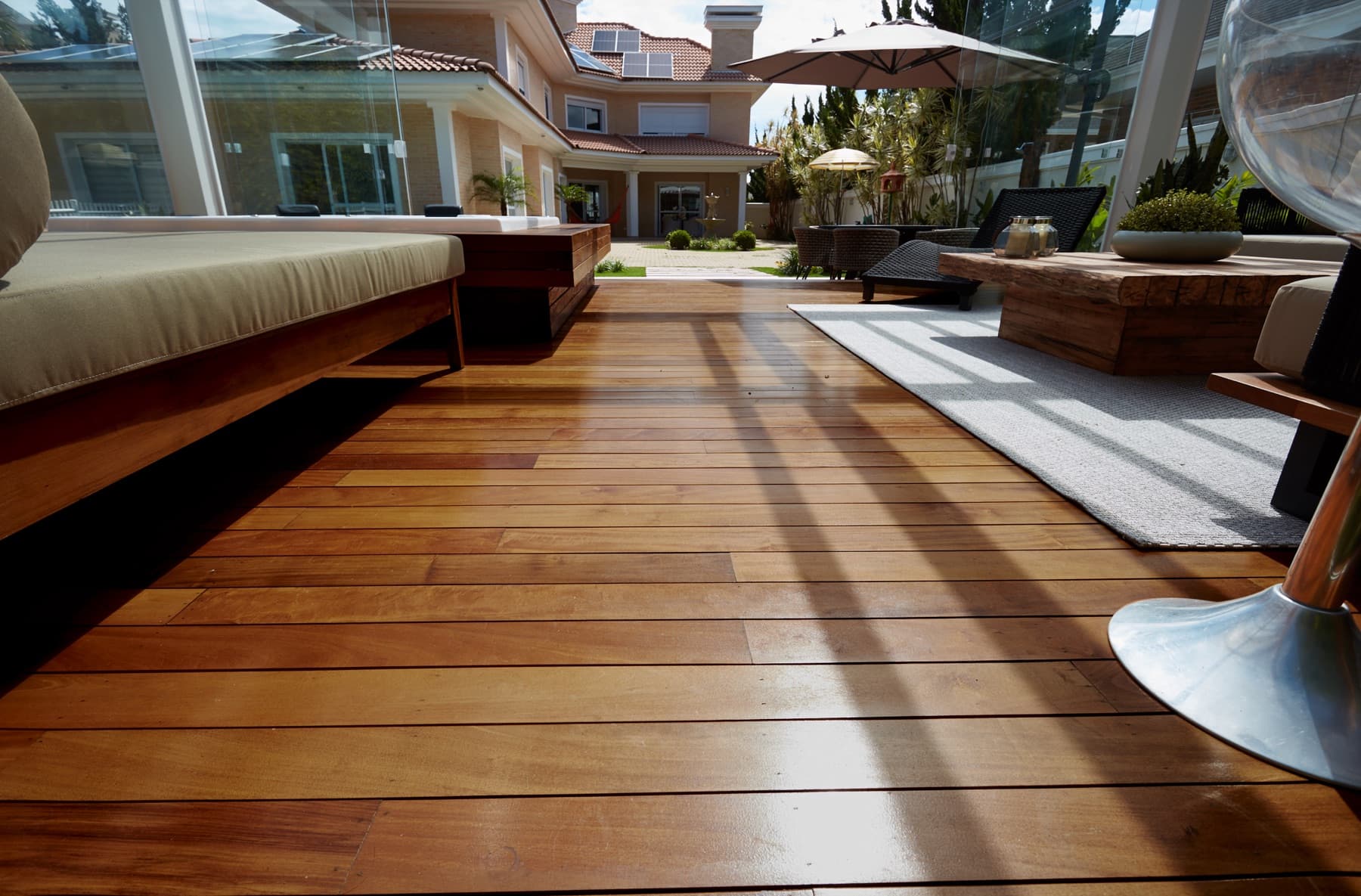
Why Hardwood for a Covered Porch?
Hardwood decking, particularly species like Ipe and Cumaru, offers inherent advantages for covered porch applications. These materials are characterized by their density and natural resistance to rot, insects, and mold, reducing the need for chemical treatments. Their structural integrity means they resist warping and movement even with ambient moisture changes.
The aesthetic appeal of hardwood is another key factor. Its rich, varied grain patterns and natural color variations, from reddish-brown to olive-brown (Ipe) or warmer tones (Cumaru), can enhance the visual warmth and luxury of a covered porch. Over time, if left untreated, hardwood can weather to a silvery-gray patina, offering a different aesthetic that many homeowners find appealing, without compromising structural performance. If the original color is preferred, a UV-blocking sealer can be applied.
Choosing the Right Hardwood Species
The selection of hardwood species depends on factors such as desired appearance, durability, and budget. Lumber Plus offers a range of Brazilian hardwoods, each with distinct characteristics:
Ipe (Handroanthus spp.): Often considered the benchmark for hardwood decking, Ipe is exceptionally dense and durable. Its color ranges from reddish-brown to olive-brown. Ipe is suitable for projects requiring maximum longevity and resilience. For a covered porch, its stability and low maintenance are significant benefits. You can explore Ipe further at: [https://lumberplus.com/decking/hardwood/ipe](https://lumberplus.com/decking/hardwood/ipe)
Cumaru is resistant to termites and weather changes, offering stiffness, strength, and hardness. It presents a slightly lighter, often golden-brown hue compared to Ipe. Cumaru provides a balance of performance and value, making it an excellent choice for covered porches. More details on Cumaru can be found at: [https://lumberplus.com/decking/hardwood/cumaru](https://lumberplus.com/decking/hardwood/cumaru)
Garapa: Known for its golden tone and good durability, Garapa is often considered a value pick among hardwoods. It offers natural resistance to decay and insects.
Tigerwood: This species is characterized by its dramatic striped figure, offering a distinctive aesthetic. It is a durable option, suitable for those seeking a unique visual impact on their covered porch.
For a covered porch, all these species will perform well, with the primary distinction being the aesthetic and initial investment. Consider how the wood's natural color and grain will complement your home's exterior and interior finishes.
Transitioning from Indoors to the Porch
A critical aspect of a covered porch design is the seamless transition from the interior living space. Consider the threshold height and material continuity. Ideally, the interior flooring and the porch decking should be as close to flush as possible to minimize trip hazards and create an expansive feel. This might involve careful planning of subfloor heights and decking profiles.
When designing the transition, also think about how the porch will be used. If it's an extension of an indoor dining area, maintaining a consistent aesthetic with the interior can enhance the flow. For a more distinct outdoor lounge area, a slight visual separation through material or color contrast might be desired. Coordinate with your builder to ensure proper waterproofing and drainage at the transition point, especially where the porch meets the main structure.
Planning for Furniture and Usage
The intended use of your covered porch directly influences decking choices. If you plan to host gatherings with heavy furniture, the inherent density and strength of hardwood species like Ipe or Cumaru are advantageous, as they are less prone to denting or scratching from furniture legs compared to softer materials. Their resistance to wear also means they stand up well to foot traffic.
Consider the layout of furniture and potential traffic patterns. Hardwood's uniform surface provides a stable base for tables and chairs. While hardwood is robust, using furniture glides or pads can further protect the surface, especially with frequently moved items. The natural resilience of these hardwoods means they can withstand the rigors of outdoor living with minimal fuss.
Maintenance Considerations for Covered Porches
One of the benefits of hardwood decking on a covered porch is its relatively low maintenance. While protected from the harshest direct elements, it still requires some care to retain its appearance and longevity. A simple wash once a year is generally sufficient to remove dirt and debris. If you prefer to maintain the wood's original rich brown tones, an annual application of a UV-blocking oil or sealer is recommended. Without this, the wood will naturally weather to a silvery-gray patina.
The covered nature of the porch means less direct sun exposure, which can slow down the weathering process compared to a fully exposed deck. This can also mean less frequent oiling if you choose to preserve the color. Always use cleaning products compatible with hardwood and follow manufacturer guidelines. Avoid harsh chemicals that could damage the wood's natural properties.
Worked Example: Decking for a 10'x16' Covered Porch
Let's consider a hypothetical covered porch measuring 10 feet wide by 16 feet long, totaling 160 square feet. For this example, we'll plan for 1x6 (nominal size, actual dimensions are typically 3/4" thick by 5.5" wide) Ipe decking boards, which are available in lengths from 3 to 24 feet. We'll aim for a mostly linear layout with minimal seams.
To calculate the number of boards needed, we first determine the linear feet of decking. Each 1x6 board covers 5.5 inches (or 0.458 feet) in width. For a 10-foot (120-inch) width, you would need approximately 120 / 5.5 = 21.8 boards across. Since you can't have partial boards, you'd need 22 boards across the 10-foot dimension. If we use 16-foot long boards, the total linear footage required would be 22 boards * 16 feet/board = 352 linear feet.
Assuming a standard practice of adding 10-15% for waste, cuts, and potential imperfections, we would add 15% to 352 linear feet, resulting in approximately 405 linear feet of Ipe decking. For this project, ordering 26 boards of 16-foot length (26 * 16 = 416 linear feet) would provide sufficient material. This allows for any necessary cuts around posts or irregular shapes, and provides a small buffer for future repairs or replacement. Always confirm exact board dimensions and recommended waste factors with your supplier.
Before you order
- Desired aesthetic: Do you prefer the rich brown tones of new hardwood or the silvery-gray patina of weathered wood?
- Budget: Which hardwood species aligns with your project's financial plan?
- Transition points: How will the porch decking connect seamlessly with interior flooring and exterior landscaping?
- Furniture and traffic: Will the porch accommodate heavy furniture or high foot traffic, requiring maximum density?
- Maintenance commitment: Are you prepared for annual cleaning and optional oiling to preserve color?
- Local building codes: Are there specific requirements for porch decking materials or installation in your area?
- Substructure condition: Is your existing porch substructure adequate for the weight and fastening requirements of hardwood decking?
Confirm installation details, approved uses and warranty terms in the current instructions for the exact product and profile. Your installer should verify the substrate, structure and applicable project requirements.
Questions to help you decide
Can hardwood decking be installed directly on concrete for a covered porch?
While it's possible, hardwood decking typically requires a proper subframe or sleepers to ensure adequate ventilation and drainage underneath the boards. Direct contact with concrete can trap moisture, potentially leading to issues. Consult with an installer to ensure the correct assembly for your specific conditions.
How do I prevent my hardwood porch deck from becoming slippery when wet?
Hardwood decking, like any outdoor surface, can become slippery when wet. Regular cleaning to remove algae, mold, and dirt can help maintain traction. Some oil finishes can also offer a degree of slip resistance. Ensure proper drainage on your porch to prevent standing water.
What is the typical lifespan of hardwood decking on a covered porch?
With proper installation and minimal maintenance, hardwoods like Ipe can last up to 75 years, and Cumaru over 25 years. The protection offered by a covered porch can help extend this lifespan by shielding the wood from the most extreme weather fluctuations, though it still requires basic cleaning and care.
Request a Hardwood Decking Quote for Your Covered Porch Project
Ready to enhance your covered porch with the enduring beauty of hardwood? Contact us today for a material quote. Provide your project dimensions, desired hardwood profile (e.g., Ipe 1x6), and your ZIP code to confirm current availability and service options.
Request a material quote →