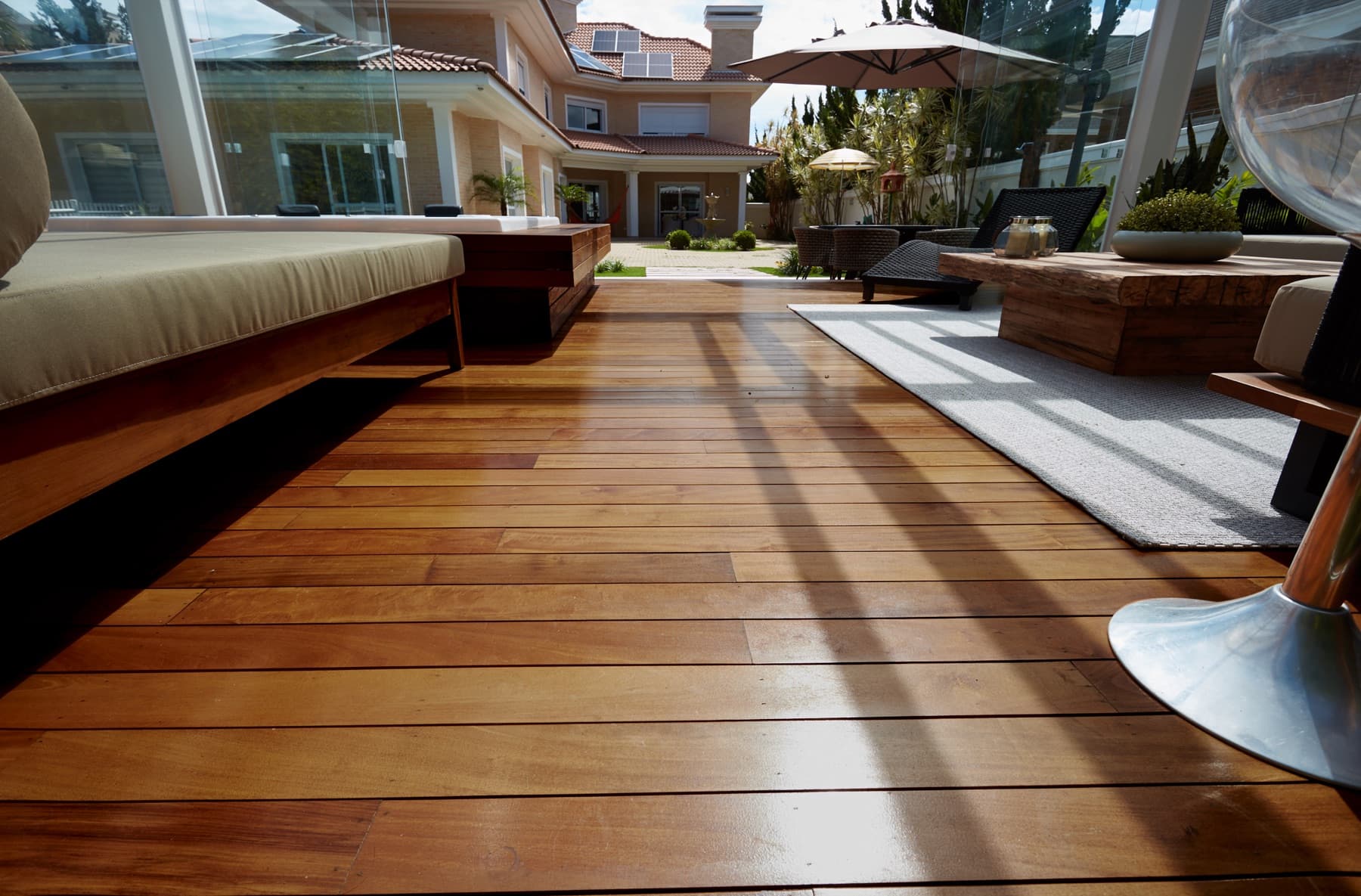
Why Hardwood for a Courtyard Deck?
Courtyards often serve as focal points, visible from multiple interior rooms. The natural beauty and rich tones of hardwood decking, such as Ipe's reddish-brown to olive-brown hues or Cumaru's warm shades, can elevate the aesthetic appeal of these spaces. Beyond aesthetics, hardwoods offer inherent durability that is well-suited to the demands of a courtyard.
Species like Ipe and Cumaru are known for their resistance to rot, insects, and fungi, which can be particularly beneficial in potentially shaded or enclosed courtyard environments where moisture might linger. Their density also contributes to stability, minimizing movement after installation, which is important when dealing with precise layouts in constrained areas. If left untreated, hardwoods will weather to a silvery-gray patina, offering a different aesthetic while maintaining structural integrity.
The ability of hardwoods to withstand weather changes and resist warping makes them a dependable choice for areas that may experience both direct sun and persistent shade, or fluctuating moisture levels from irrigation or rainfall. This resilience means less frequent maintenance beyond routine cleaning, a practical advantage for any deck, especially one that is a central feature of your home.
Considering Courtyard Size and Layout
Courtyards vary significantly in size, from intimate nooks to more expansive, multi-functional areas. When planning a hardwood deck, carefully measure the available space, noting any existing features like planters, water features, or pathways. A precise layout is crucial to maximize usable space and ensure smooth transitions.
For smaller courtyards, consider narrower board widths to make the area feel larger and less visually cluttered. A simple, linear layout can enhance a sense of order. In larger courtyards, you might explore more intricate patterns, such as a diagonal installation or a picture-frame border, to define different zones for seating or dining. Always account for furniture placement and circulation paths to ensure the deck remains functional and inviting.
Remember to account for setbacks from adjacent structures, walls, or landscaping elements. Proper spacing is essential for air circulation and drainage around the deck perimeter.
Managing Shade and Moisture for Longevity
Courtyards often have microclimates with areas of persistent shade, which can impact the drying time of your deck. While hardwoods like Ipe and Cumaru are naturally resistant to mold and rot, good ventilation is still key to their longevity. Plan for adequate spacing between deck boards to allow water to drain and air to circulate underneath and between the boards. The specific spacing requirements will depend on the chosen product and manufacturer guidelines.
Consider the direction of prevailing winds and sun exposure throughout the day. If a significant portion of your courtyard deck will be consistently shaded, ensure that the sub-structure allows for maximum airflow. This might involve designing a slightly elevated deck or incorporating additional vents in any surrounding skirting, if applicable. Regular cleaning to remove organic debris like leaves and dirt will also prevent moisture buildup and potential staining in shaded areas.
Drainage and Water Management
Effective drainage is paramount in a courtyard, where water can collect and cause issues if not properly managed. Your deck design must integrate with the existing courtyard drainage system. This could involve sloping the ground underneath the deck away from the house or adjacent walls, directing water to a French drain, or ensuring that the deck boards themselves are installed with a slight pitch to encourage runoff.
Hardwood decking naturally allows water to pass through the gaps between boards. However, the substructure beneath must be designed to handle this water. Consider materials for the deck frame that are also resistant to moisture, such as pressure-treated lumber or steel. If your courtyard has a solid surface underneath, ensure there's a clear path for water to flow away from the deck's footprint. Avoid creating areas where standing water can accumulate, as this can compromise both the deck and the surrounding structures.
Worked Example: A Compact Courtyard Deck with Ipe
Let's consider a hypothetical courtyard measuring 10 feet by 12 feet, accessible from a sliding glass door. The homeowner wants a durable, low-maintenance deck that provides a defined seating area. We'll use Ipe decking for its resilience and aesthetic.
First, determine the deck footprint. To allow for a small planting bed along one 12-foot side and a clear walkway to a gate on the other, the deck will be 8 feet wide by 10 feet long, creating an 80 square foot surface. This leaves a 2-foot wide strip for landscaping and access.
For materials, we'll select Ipe decking with a nominal dimension of 1x6 (actual approximately 0.75 inches by 5.5 inches). For an 8-foot width, we would need 8 feet / 5.5 inches = 17.45 boards. We'd purchase 18 boards to ensure full coverage and account for cuts. For the 10-foot length, this means each board would be 10 feet long. Total purchase: 18 boards x 10 feet = 180 linear feet. If boards are sold in specific lengths, such as 10-foot lengths, we would purchase 18 pieces of 10-foot Ipe boards.
The deck will be elevated slightly (e.g., 6 inches) to allow for drainage and ventilation underneath. We would also ensure a slight slope in the sub-grade for water runoff towards an existing storm drain.
For installation, hidden fasteners would be chosen to maintain a clean, modern aesthetic suitable for a courtyard. This also allows for the precise, consistent board spacing critical for drainage and air circulation. The Ipe will be left untreated to weather to a natural silvery-gray, minimizing ongoing finish maintenance while complementing the courtyard's stone walls.
Before you order
- Measure courtyard dimensions precisely, noting existing features and setbacks.
- Assess sun exposure and shade patterns throughout the day.
- Evaluate existing drainage and plan for water runoff beneath the deck.
- Select a hardwood species (e.g., Ipe, Cumaru) based on durability, appearance, and maintenance preferences.
- Determine board width and layout (linear, diagonal, border) to maximize space and aesthetics.
- Plan for adequate ventilation underneath the deck, especially in shaded areas.
- Choose appropriate fasteners (hidden or face-fastened) and ensure correct board spacing.
- Consider the finish (oiled vs. natural weathering) and ongoing maintenance commitment.
- Coordinate deck design with surrounding landscaping and pathways for seamless transitions.
Confirm installation details, approved uses and warranty terms in the current instructions for the exact product and profile. Your installer should verify the substrate, structure and applicable project requirements.
Questions to help you decide
Which hardwood species are best for a courtyard deck?
Ipe and Cumaru are excellent choices due to their exceptional durability, natural resistance to rot and insects, and ability to withstand varying weather conditions. Ipe is often considered the benchmark for outdoor performance, while Cumaru offers similar benefits at a different price point. Both can handle the unique microclimates of courtyards, including shaded areas and moisture exposure.
How do I ensure proper drainage for a courtyard deck?
Proper drainage for a courtyard deck involves several steps. Ensure the ground beneath the deck slopes away from any adjacent structures. Design the deck sub-frame to allow for water runoff and adequate air circulation. Use appropriate board spacing to let water pass through the deck surface. Consider incorporating French drains or other perimeter drainage solutions if the courtyard is prone to water accumulation.
Will a hardwood deck in a shaded courtyard get moldy?
While hardwoods like Ipe and Cumaru are naturally resistant to mold, persistent shade can slow drying times and increase the likelihood of mold or mildew growth. To mitigate this, ensure excellent ventilation beneath and between deck boards. Regular cleaning to remove leaves, dirt, and other organic debris will also help prevent mold from forming. If mold does appear, it can typically be removed with a mild deck cleaner.
Ready to Plan Your Hardwood Courtyard Deck?
Request a material quote today! Provide your project dimensions, desired hardwood profile, and ZIP code to confirm current availability and service options for Ipe, Cumaru, and other premium hardwoods.
Request a material quote →