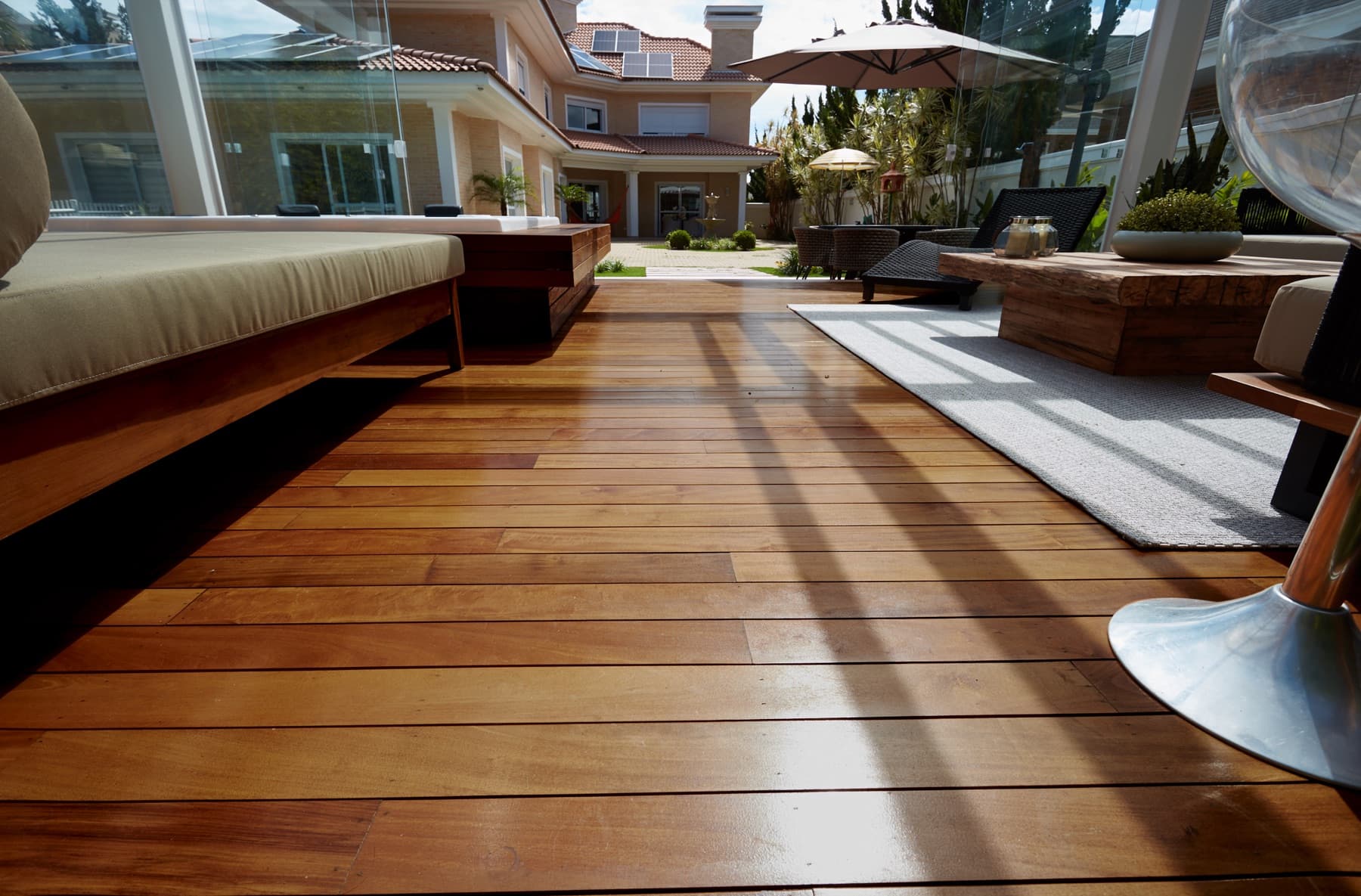
Confirming Hardwood Species and Grade
Before any order is placed, finalize the specific hardwood species for your deck. Common choices include Ipe, known for its exceptional density and resistance, and Cumaru, which offers similar durability with a slightly different color palette. Each species has distinct characteristics that impact appearance, working properties, and long-term maintenance.
Discuss with your contractor the chosen species and any specific grade requirements. While hardwoods are naturally durable, consistency in milling and appearance can vary. Ensure both you and your contractor are clear on the visual expectations and physical properties of the selected material. For example, Ipe is recognized for its reddish-brown to olive-brown tones and minimal post-installation movement. (S1)
Review any samples with your contractor to confirm the color, grain, and overall aesthetic meet your expectations. This step helps prevent misunderstandings once the material arrives on site.
Verifying Dimensions and Profiles
Hardwood decking is available in various standard and custom profiles. These details directly influence the deck's appearance, structural integrity, and installation method.
Your contractor's build plan will dictate the required board lengths. While some species like Ipe are available in lengths from 3 to 24 feet (S1), ordering the correct distribution of lengths can minimize waste and optimize the installation process. Discuss the proposed layout and how board lengths will be utilized to achieve a clean, efficient design, especially for features like picture-frame borders or diagonal patterns.
For fascia and other trim elements, ensure that compatible profiles are selected and specified. These often require different dimensions or milling than the main decking boards to create a finished look.
Accounting for Fastener Systems
The choice of fastener system significantly impacts both the appearance and installation of hardwood decking. Hidden fasteners create a clean, unblemished surface, while face-fastening offers a traditional look and can sometimes simplify installation. Each system has specific requirements for board milling and spacing.
If using hidden fasteners, confirm that the chosen decking boards are compatible with the system. This often means boards with a specific grooved edge. For face-fastening, discuss the type of fasteners (e.g., stainless steel screws), pilot hole requirements, and whether plugs will be used for a concealed look. Your contractor will have experience with various systems and can advise on the best approach for your chosen hardwood and project.
Proper board spacing is essential for drainage and to accommodate natural wood movement. The manufacturer's guidelines for the specific hardwood species and fastener system should always be followed. This is a critical detail that your contractor will manage during installation.
Calculating Material Quantities with Your Contractor
Accurate material takeoff is vital to avoid delays and control costs. While you may have initial measurements, your contractor's detailed plan will provide the precise quantities needed, including allowances for cuts, waste, and any potential future repairs. This is where a detailed discussion of the deck's dimensions, board layout, and any special features is essential.
Consider a hypothetical 10-foot by 15-foot rectangular deck, requiring coverage for 150 square feet. If you are using 1x6 (nominal) Ipe decking boards, which are typically 5.5 inches wide, you would need approximately 33 boards to cover the 10-foot width (10 feet * 12 inches/foot / 5.5 inches/board = 21.8 boards, rounded up to 22, plus additional for waste and cuts). For the 15-foot length, if boards are ordered in 16-foot lengths, you would need 22 boards at 16 feet each. This calculation is simplified and does not account for specific cut plans, waste factor, or any special patterns. Always rely on your contractor's final material list.
It's also important to factor in any additional materials like joists, beams, posts, flashing, and proper ventilation components. A well-ventilated under-deck space is crucial for the longevity of hardwood decking. Your contractor will include these in the overall material list.
Reviewing Delivery, Storage, and Site Access
Hardwood decking is a significant investment, and proper handling before and during installation is key. Discuss with your contractor the logistics of material delivery. Confirm the delivery address, access points for large trucks, and a suitable, protected area on-site for storing the lumber. Hardwood should be stored off the ground, covered, and in a way that allows for air circulation to prevent warping or damage.
Some hardwoods, like Ipe and Cumaru, are very dense and heavy. (S1, S2) This impacts how they are unloaded and moved around the job site. Ensure your contractor has the necessary equipment and crew to handle the material safely and efficiently. Planning for these logistical details in advance can prevent delays and potential damage to the decking.
Maintenance and Long-Term Care Considerations
While hardwood decking is renowned for its low maintenance, discuss the long-term care plan with your contractor. Hardwoods like Ipe and Cumaru can be left untreated to weather to a silvery-gray patina, or they can be oiled annually to maintain their original rich color. (S1, S2) Understanding these options and their implications for maintenance is important.
Clarify who will be responsible for the initial cleaning and any sealing or oiling after installation. This discussion helps set expectations for the deck's appearance over time and outlines any post-installation tasks. Regular cleaning, typically a wash once a year, is generally recommended regardless of whether you choose to oil the deck. (S2)
Before you order
- Confirmed hardwood species and grade with contractor.
- Verified exact board dimensions (width, thickness) and profiles (e.g., grooved, smooth).
- Agreed on required board lengths and how they will be used in the layout.
- Specified compatible fastener system (hidden or face-fastened) and necessary board milling.
- Reviewed and approved contractor's detailed material takeoff for all decking components.
- Discussed delivery logistics, on-site storage requirements, and material handling plan.
- Understood long-term maintenance options (oiling vs. natural weathering) and responsibilities.
- Obtained a final, itemized material list from the contractor for quoting.
Confirm installation details, approved uses and warranty terms in the current instructions for the exact product and profile. Your installer should verify the substrate, structure and applicable project requirements.
Questions to help you decide
Why is it important to involve my contractor in the material ordering process?
Your contractor's expertise is crucial for accurate material takeoff, verifying specific dimensions and profiles needed for the build, and ensuring compatibility with the chosen fastener system. Their input minimizes waste, prevents delays, and ensures the ordered materials align precisely with the construction plan.
What is the difference between Ipe and Cumaru hardwood decking?
Both Ipe and Cumaru are durable tropical hardwoods.
Do I need to order extra decking boards for waste?
Yes, it is generally recommended to order a percentage of extra material to account for cuts, potential waste, and any unforeseen issues during installation. Your contractor will calculate a precise waste factor based on the deck's design, board lengths, and complexity of the layout. Always confirm this percentage with them.
Ready to Plan Your Hardwood Decking Order?
Provide your project dimensions, desired hardwood profile, and ZIP code to request a material quote. Our team can help confirm current availability and service options for your contractor.
Request a material quote →