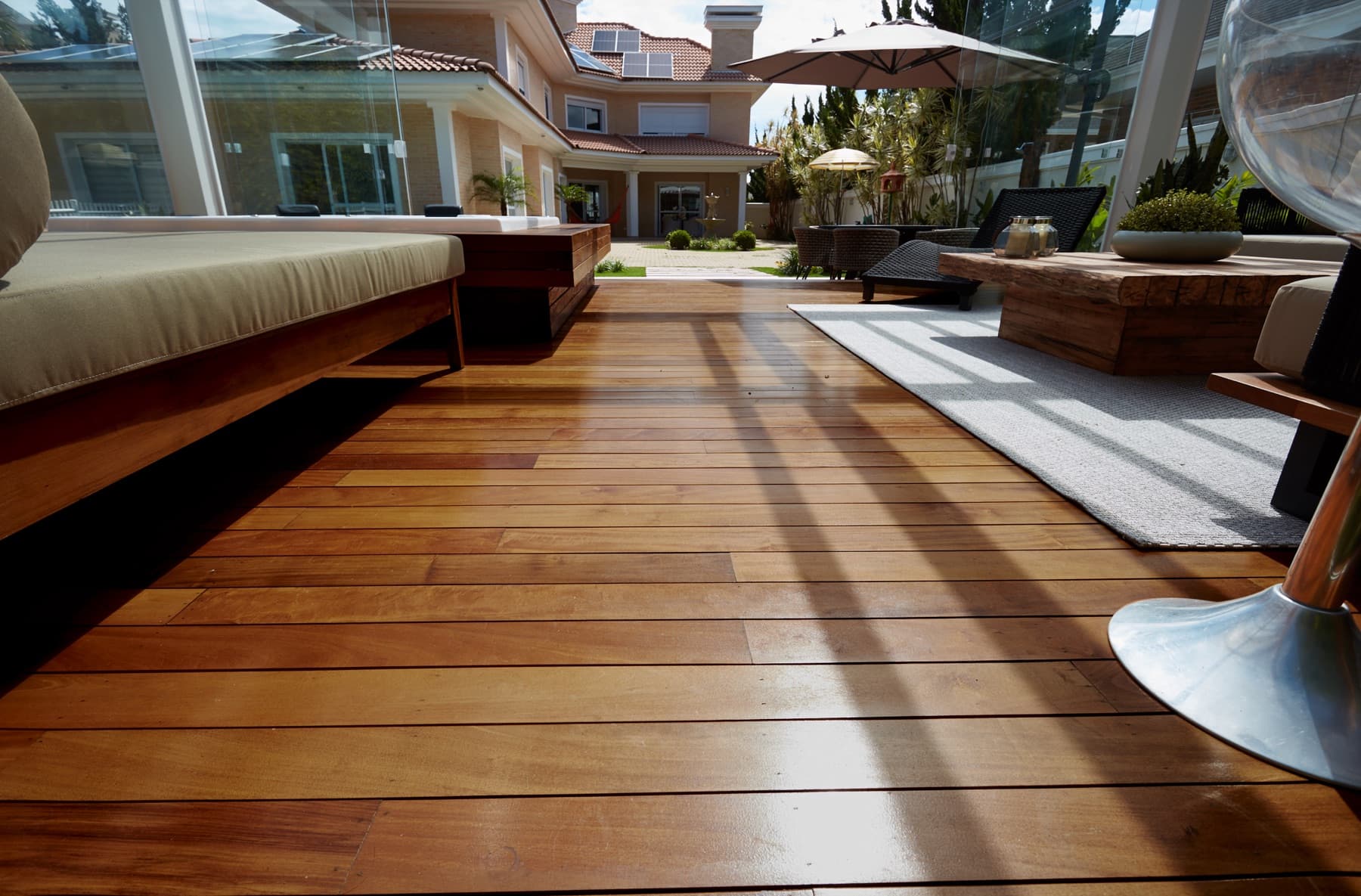
The Coastal Challenge: Salt, Sun, and Humidity
Coastal environments present a distinct set of stressors for outdoor building materials. Salt spray can accelerate corrosion in metals and degrade certain finishes. High humidity contributes to moisture absorption, potentially leading to warping or fungal growth in less resilient woods. Intense sunlight and UV radiation can cause fading and surface damage over time. Any decking material chosen for a coastal home must offer inherent properties that counteract these effects.
Hardwoods like Ipe and Cumaru are frequently specified for marine-grade applications, including boardwalks, docks, and seawall caps, precisely because of their natural resilience to these conditions. Their density and natural oils help them resist moisture penetration and salt-laden air, making them a suitable choice where other materials might falter. This inherent resistance means they do not rely on chemical treatments to withstand the elements.
Choosing a material with proven performance in these conditions can reduce long-term maintenance needs and help ensure the deck remains structurally sound and visually appealing for decades.
Why Ipe and Cumaru for Coastal Applications?
Ipe and Cumaru are tropical hardwoods known for their exceptional density and durability, making them well-suited for demanding outdoor applications, including coastal projects.
It exhibits minimal movement post-installation and offers natural resistance to weather changes, mold, and termites. Its natural oils protect it from cracking or warping, even in environments with significant moisture exposure. Ipe is frequently specified for marine-grade applications and public boardwalks due to its longevity.
It is resistant to termites and weather changes. Like Ipe, Cumaru's density contributes to its stability and resistance to environmental stressors, making it a dependable choice for projects requiring robust performance against the elements.
Both species are noted for their natural resistance to rot, insects, and fungi, which is a significant advantage in humid coastal climates. They achieve a high level of resistance without the need for pressure treatments or chemical applications. This natural defense mechanism is a key factor in their suitability for coastal homes, where material integrity is paramount.
Compatible Hardware for Coastal Hardwood Decks
The hardware used to install hardwood decking in a coastal environment is as critical as the decking material itself. Standard fasteners may corrode quickly when exposed to salt spray and humidity, compromising the structural integrity of the deck and leaving unsightly stains.
For coastal applications, it is essential to use marine-grade stainless steel fasteners. Specifically, 316-grade stainless steel offers superior corrosion resistance compared to 304-grade, making it the preferred choice for areas with direct salt exposure. This applies to screws, hidden fastening clips, and any other metal components, such as joist hangers or ledger board connectors. Confirming the exact grade of stainless steel with your supplier and installer is a vital step.
When planning your project, ensure that all fasteners and connectors are specified for use in corrosive environments. Using incompatible hardware can lead to premature failure, staining of the decking, and costly repairs down the line. It is always recommended to consult with your builder or a qualified professional to ensure all hardware meets the specific demands of your coastal location.
Installation Considerations for Coastal Climates
Proper installation is key to maximizing the lifespan of any deck, especially in a coastal setting. Hardwood decking, particularly dense species like Ipe and Cumaru, requires specific installation techniques.
Due to their density, pre-drilling is typically necessary for face-fastening to prevent splitting and ensure secure attachment. When using hidden fastening systems, ensure the clips and screws are specifically designed for dense hardwoods and are also made of marine-grade stainless steel.
Adequate ventilation beneath the deck is crucial in humid coastal areas to prevent moisture buildup, which can lead to mold or mildew. Proper spacing between deck boards allows for drainage and air circulation, contributing to the deck's longevity. Always follow the manufacturer's specific recommendations for board spacing, as this can vary by species and board profile. These details are important to confirm before starting installation.
Consider the substructure as well. While the hardwood decking itself is highly resistant to coastal conditions, the supporting frame must also be designed and built to withstand the environment. Using pressure-treated lumber rated for ground contact or marine environments, or even steel framing, can provide a robust foundation for your hardwood deck.
Worked Example: Decking for a Coastal Porch
Imagine a coastal home in a region with consistent salt spray, planning a new 10-foot by 20-foot elevated porch deck using Ipe hardwood. The design calls for a face-fastened installation.
First, calculate the deck area: 10 ft x 20 ft = 200 square feet. If using standard 1x6 (nominal) Ipe decking boards, which are approximately 5.5 inches wide, you would need approximately 2.18 linear feet of board per square foot (12 inches / 5.5 inches). For 200 square feet, this translates to roughly 436 linear feet of Ipe decking, accounting for some waste. Given that Ipe is available in lengths from 3 to 24 feet, a mix of lengths would be ordered to minimize cuts and waste.
The elevation of the porch would allow for good airflow underneath, crucial for mitigating moisture in a humid coastal climate. This detailed approach ensures that every component is selected to withstand the specific challenges of the coastal environment.
Maintenance and Long-Term Appearance
Hardwood decking, especially Ipe and Cumaru, is considered low-maintenance in coastal environments compared to many other materials. While it is naturally resistant to rot and insects, some basic care can help preserve its appearance and extend its life.
A simple annual wash with mild soap and water can remove accumulated salt, dirt, and mildew. This is particularly important in coastal areas where salt buildup can occur.
If left untreated, both Ipe and Cumaru will naturally weather to a silvery-gray patina, a common and desirable aesthetic for coastal homes. This process does not compromise the structural integrity of the wood. If you prefer to maintain the wood's original reddish-brown or olive-brown tones, an annual application of a UV-blocking oil or sealer is recommended. This helps to protect the surface from UV degradation and retain its color.
Regular inspection for any loose fasteners or minor damage can also prevent small issues from becoming larger problems. Addressing these promptly ensures the deck remains safe and beautiful for many years.
Before you order
- Confirm local building codes for coastal construction, including wind ratings and material requirements.
- Verify the specific type of salt exposure (e.g., direct spray, salt air) to inform material and hardware choices.
- Choose Ipe or Cumaru for superior natural resistance to rot, insects, and moisture in coastal conditions.
- Plan for adequate under-deck ventilation to manage humidity and prevent moisture buildup.
- Consult with an experienced builder or installer familiar with hardwood decking in coastal environments.
- Decide on the desired long-term appearance: natural silvering or periodic oiling to retain original color.
- Request a detailed material quote including specific hardwood species, profiles, lengths, and hardware type.
Confirm installation details, approved uses and warranty terms in the current instructions for the exact product and profile. Your installer should verify the substrate, structure and applicable project requirements.
Questions to help you decide
Do Ipe and Cumaru really withstand salt spray?
Yes, Ipe and Cumaru are frequently used in marine environments, including docks and boardwalks, specifically because of their natural density and oil content, which make them highly resistant to salt spray, humidity, and general weathering without needing chemical treatments. Their performance in coastal Florida's demanding conditions is well-documented.
What kind of fasteners should I use for a coastal hardwood deck?
This grade offers superior corrosion resistance compared to other stainless steel types (like 304) and is essential for hardware exposed to salt air and spray. Ensure all screws, hidden clips, and structural connectors meet this specification.
Will my hardwood deck turn gray in a coastal environment?
If left untreated, Ipe and Cumaru hardwood decks will naturally weather to a beautiful silvery-gray patina over time due to UV exposure, regardless of whether they are in a coastal environment. This aesthetic is often desired for coastal homes. If you prefer to maintain the original brown tones, an annual application of a UV-blocking oil or sealer will be necessary.
Ready to Plan Your Coastal Hardwood Deck?
Contact us to request a material quote for Ipe or Cumaru hardwood decking. Provide your project dimensions, desired profile, and ZIP code to confirm current availability and service options for your coastal home.
Request a material quote →