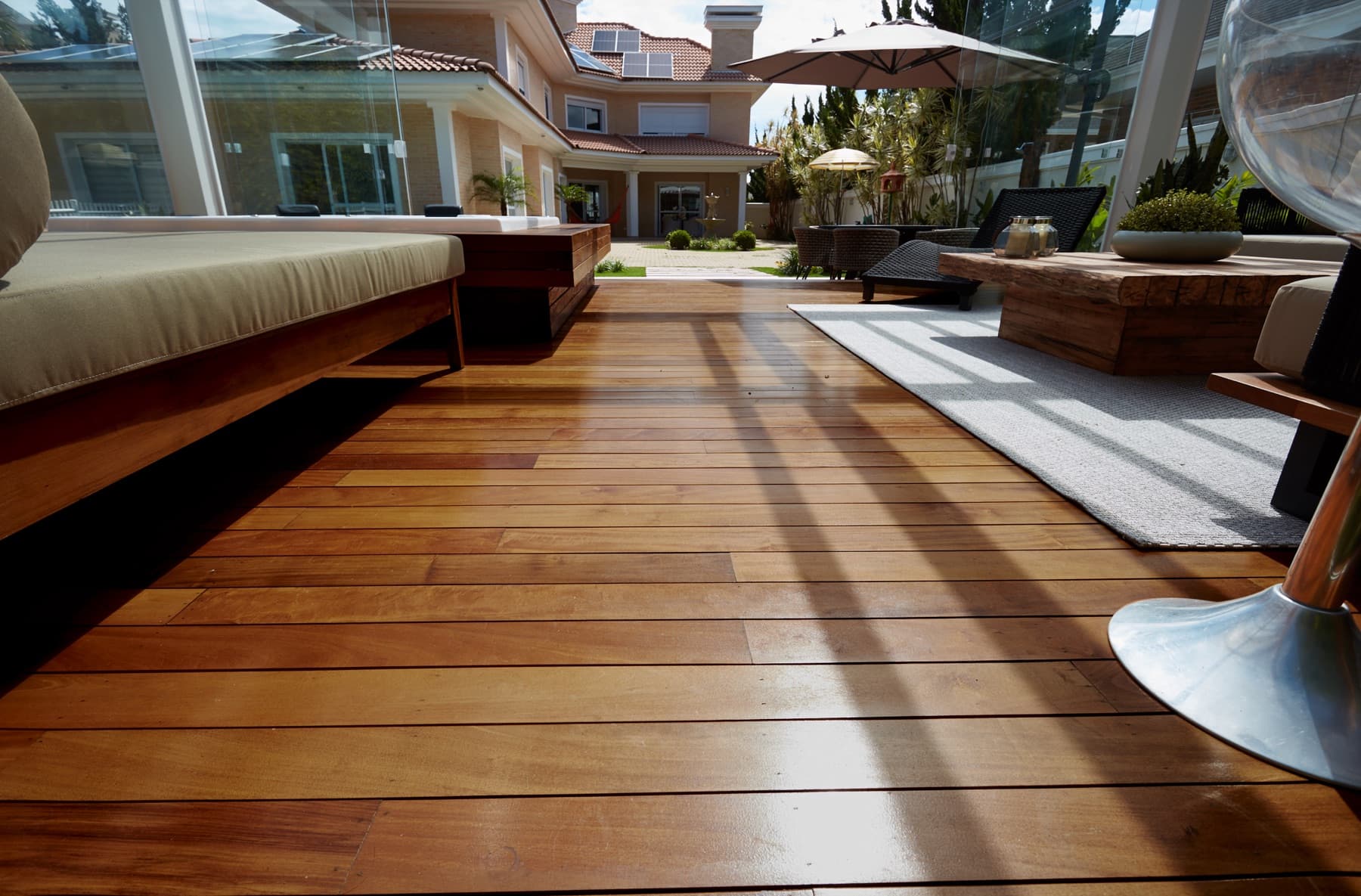
Prioritize Manufacturer Recommendations for Your Hardwood Species
The most reliable source for cleaning product compatibility is the specific care guide provided by your decking manufacturer or supplier. Hardwood species like Ipe, Cumaru, Garapa, and Tigerwood each possess unique characteristics, including natural oils and densities, that react differently to various cleaning agents. What works well for one species might be detrimental to another.
For example, Ipe (Handroanthus spp.), known for its exceptional density and natural resistance to rot and insects, benefits from minimal chemical exposure. Its natural oils protect it from cracking or warping, and aggressive cleaners can strip these protective elements. Always consult documentation that came with your specific hardwood order. If you no longer have it, contact your supplier with your original order details to request the correct care instructions.
General advice for tropical hardwoods often suggests a simple wash once a year. If you choose to apply an annual oil to maintain the original brown color, ensure the cleaning process does not interfere with the oil's application or effectiveness. Skipping the oil will allow the deck to silver to a driftwood grey with no structural difference, simplifying cleaning to just a wash.
Identify and Avoid Harmful Chemicals and Abrasive Cleaners
Many common household cleaners contain harsh chemicals that can damage hardwood decking. Bleach, ammonia-based cleaners, and strong detergents can strip natural oils, leading to dryness, cracking, and discoloration. These substances can also degrade the wood fibers, making the deck more susceptible to rot and insect infestation, even in naturally resistant species.
Avoid abrasive cleaning tools such as steel wool, stiff-bristled brushes, or high-pressure washers set to an aggressive setting. While these might seem effective at removing stubborn dirt, they can scratch the surface, create microscopic grooves that trap dirt, or even erode the wood, compromising its integrity and appearance. For routine cleaning, a soft-bristle brush or a mop with a mild solution is generally sufficient.
Understand the Impact of Finishes and Sealers on Cleaning Choices
The type of finish or sealer applied to your hardwood deck significantly influences cleaning product compatibility. An unfinished deck, allowed to weather to a silvery-gray patina, may tolerate different cleaning methods than a deck treated with a UV-blocking sealer to preserve its original color. Always ensure your chosen cleaning product is compatible with any applied finishes to prevent stripping or damage.
For decks treated with a UV-blocking sealer, using cleaners that are too harsh can remove the protective layer, necessitating reapplication sooner than expected. If your deck has an oil-based finish, select cleaners specifically designed for oiled wood surfaces to maintain the finish's integrity and appearance.
Test Cleaning Products in an Inconspicuous Area
Before applying any new cleaning product to your entire deck, perform a patch test in a small, inconspicuous area. This allows you to observe any adverse reactions, such as discoloration, dulling, or damage, without impacting the overall appearance of your deck.
Apply the cleaner according to the manufacturer's instructions, let it sit for the recommended time, and then rinse thoroughly. Allow the area to dry completely before evaluating the results. This simple step can prevent widespread damage and ensure the product is suitable for your specific hardwood and finish.
Hypothetical Example: Cleaning an Ipe Deck with a UV-Blocking Sealer
Consider a hypothetical 10x15 foot Ipe deck that was sealed two years ago with a clear, UV-blocking oil to maintain its reddish-brown to olive-brown color. The homeowner notices some dirt and mildew accumulation after a rainy spring.
First, the homeowner consults the Ipe decking care guide provided by Lumber Plus (or the original supplier). The guide specifies using a pH-neutral, non-abrasive deck cleaner and recommends avoiding bleach or strong detergents to preserve the UV-blocking oil.
The homeowner selects a commercially available deck cleaner labeled as 'safe for sealed hardwoods' and 'pH-neutral.' Before full application, a small 1x1 foot section under a planter is chosen for a patch test. The cleaner is mixed according to instructions (e.g., 1 part cleaner to 10 parts water). It is applied with a soft-bristle brush, scrubbed gently, and left for 5 minutes. After rinsing with a garden hose and allowing it to dry, the test area shows no discoloration or damage to the sealer.
Satisfied with the test, the homeowner proceeds to clean the entire deck, working in manageable sections. This methodical approach ensures the Ipe's natural beauty and the protective sealer are maintained without harm.
Daily Cleaning and Maintenance for Hardwood Decking
Regular, gentle cleaning is often the most effective way to maintain hardwood decking. Sweep or blow leaves and debris regularly to prevent moisture retention and staining. Promptly clean up spills to avoid permanent marks. For general cleaning, a simple solution of mild soap and water applied with a soft brush or mop, followed by a thorough rinse, is often sufficient for most hardwood types.
This routine helps prevent the buildup of dirt, grime, and mildew, reducing the need for more aggressive cleaning methods. Remember that Ipe and Cumaru are naturally resistant to mold, but regular cleaning still helps maintain their aesthetic appeal.
Before you order
- Consult original manufacturer/supplier care guide for your specific hardwood species.
- Identify if your deck is unfinished, oiled, or otherwise sealed.
- Read product labels carefully, checking for pH-neutral formulas.
- Avoid cleaners containing bleach, ammonia, strong acids, or harsh abrasives.
- Rule out abrasive tools (steel wool, stiff brushes) and high-pressure washers (unless specifically recommended by manufacturer at low settings).
- Perform a patch test in an inconspicuous area before full application.
- Consider a simple mild soap and water solution for routine cleaning.
- Confirm compatibility with any existing sealers or finishes.
Confirm installation details, approved uses and warranty terms in the current instructions for the exact product and profile. Your installer should verify the substrate, structure and applicable project requirements.
Questions to help you decide
Can I use a pressure washer on my hardwood deck?
Using a pressure washer on hardwood decking requires caution. While it can be effective for cleaning, an incorrect setting or nozzle can damage the wood fibers, leaving marks or splintering the surface. If you choose to use one, ensure it's on a very low-pressure setting (under 1000 PSI) and use a wide-angle nozzle. Always test on an inconspicuous area first, and avoid holding the nozzle too close to the wood. Often, a garden hose with a spray nozzle and a soft-bristle brush is safer and sufficient.
How often should I clean my hardwood deck?
The frequency of cleaning depends on your deck's exposure to elements, foot traffic, and local climate. Generally, a thorough cleaning once a year is recommended to remove accumulated dirt, pollen, and mildew. Regular sweeping or blowing off debris every few weeks, and promptly cleaning spills, will help maintain its appearance between deep cleans.
What happens if I use the wrong cleaning product on my hardwood deck?
Using an incompatible cleaning product can lead to several issues. Harsh chemicals can strip the wood's natural oils, causing discoloration, dryness, cracking, or even permanent stains. They can also degrade protective sealers, making the wood more vulnerable to UV damage, moisture absorption, and biological growth. In severe cases, it can compromise the wood's structural integrity or void product warranties. Always refer to manufacturer guidelines and test products in a small area first.
Request a Material Quote for Your Hardwood Decking Project
Ready to plan your hardwood decking project or need specific care advice for your Lumber Plus materials? Contact us with your project dimensions, desired hardwood profile, and ZIP code. We can confirm current availability, service options, and provide guidance on maintaining your investment.
Request a material quote →