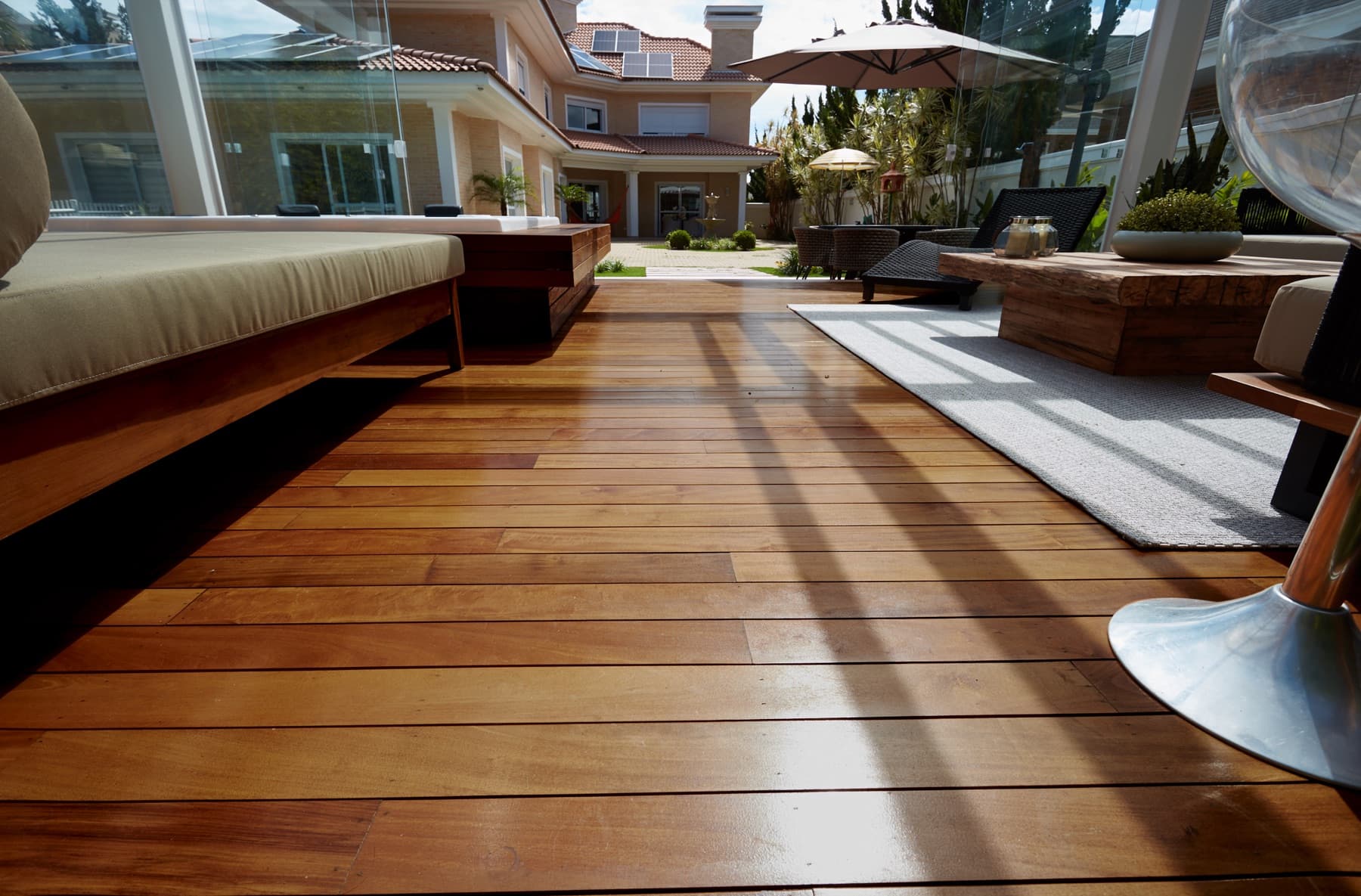
Standard Hardwood Decking Board Widths
Hardwood decking, such as Ipe and Cumaru, is commonly available in a range of widths to suit various design preferences and structural needs. While specific availability can vary, typical widths you might encounter include 1x4 (nominal 3/4" x 3 1/2" actual), 1x6 (nominal 3/4" x 5 1/2" actual), and sometimes wider profiles like 1x8 (nominal 3/4" x 7 1/4" actual). These dimensions refer to the actual milled size of the board, not the rough lumber dimension.
The choice between these standard widths depends on several factors, including the overall size of your deck, the desired visual effect, and how the boards will integrate with surrounding elements. For instance, a narrower board might create a more linear, detailed appearance, while wider boards can offer a more expansive, uniform look.
Visual Impact of Board Widths
The width of your decking boards directly influences the visual perception of your outdoor space.
Narrower boards, such as 1x4 profiles, tend to create a more intricate and detailed surface. The increased number of board lines can make a smaller deck appear longer or wider, guiding the eye across the space. This can be particularly effective for modern designs or when you want to highlight the linear pattern of the deck.
Wider boards, like 1x6 or 1x8 profiles, generally lend a more expansive and robust feel. With fewer visible seams, they can make a larger deck appear even grander and more seamless. This choice often suits traditional or rustic designs, where a solid, less busy surface is preferred. The natural grain and color variations of the hardwood become more prominent across wider planks.
Planning for Your Deck's Scale and Shape
Consider the dimensions and shape of your deck when selecting board widths. For a large, open deck, wider boards can minimize visual clutter and enhance the sense of spaciousness. If your deck has intricate angles, curves, or multiple levels, narrower boards might be easier to work with, allowing for more precise cuts and less material waste.
For example, a long, narrow deck might benefit from narrower boards laid perpendicular to the length, making the space feel wider. Conversely, a square deck could use wider boards to create a balanced, uniform appearance. Think about how the board lines will interact with the overall geometry of your deck and the surrounding landscape.
Worked Example: Calculating Board Quantities for a 12x10 Foot Deck
Let's consider a hypothetical 12-foot by 10-foot rectangular deck. We will compare using 1x4 (actual 3.5 inches wide) versus 1x6 (actual 5.5 inches wide) Ipe decking boards, laid parallel to the 12-foot dimension.
For 1x4 boards:
For the 10-foot (120-inch) width, you would need 120 / 3.625 = 33.10 boards. Rounding up, you would need 34 boards. Since each board is 12 feet long, the total linear footage would be 34 boards * 12 feet/board = 408 linear feet.
For 1x6 boards:
For the 10-foot (120-inch) width, you would need 120 / 5.625 = 21.33 boards. Rounding up, you would need 22 boards. Since each board is 12 feet long, the total linear footage would be 22 boards * 12 feet/board = 264 linear feet.
This example illustrates that while 1x6 boards cover more area per board, you need fewer of them, leading to less linear footage and potentially fewer cuts. This calculation is a starting point; always add an allowance for waste, typically 10-15%, depending on the complexity of your deck layout and the lengths of boards you can source.
Complementary Products and Considerations
Beyond the decking boards themselves, consider how your chosen width will integrate with other deck components. Fascia boards, stair treads, and railing systems should ideally complement the main deck surface. For a cohesive look, you might choose fascia boards of a similar species and finish, or select a contrasting material for visual interest.
When planning, also think about the subframe and joist spacing. While hardwood decking is strong, ensuring proper support for your chosen board width is crucial for long-term stability. Consult product-specific installation guidelines for recommended joist spacing.
Explore related products like Hardwood Decking, Ipe Hardwood Decking, Composite Decking, and PVC Decking to understand the full range of options available for your project.
Before you order
- Consider the overall size and shape of your deck: Wider boards for larger, simpler decks; narrower boards for intricate or smaller spaces.
- Visualize the aesthetic: Do you prefer a detailed, linear look (narrower boards) or an expansive, seamless surface (wider boards)?
- Account for waste: Always factor in an additional 10-15% for cuts and potential imperfections.
- Check product availability: Confirm the exact widths and lengths of your chosen hardwood species are available.
- Coordinate with complementary materials: Ensure fascia, stairs, and railings align with your chosen board width and style.
Confirm installation details, approved uses and warranty terms in the current instructions for the exact product and profile. Your installer should verify the substrate, structure and applicable project requirements.
Questions to help you decide
Does board width affect the durability of hardwood decking?
The inherent durability of hardwood decking, such as Ipe or Cumaru, comes from the wood species itself, not directly from the board width. However, wider boards may show more movement across their width due to moisture changes compared to narrower boards. Proper installation with appropriate gapping and fastening is key for all widths.
Are wider hardwood deck boards more expensive?
Pricing for hardwood decking often varies by species, grade, and profile. Generally, wider boards might have a higher per-linear-foot cost due to the larger timber required, but this is not always the case. It's important to compare prices based on your total project coverage (square footage or linear footage) and factor in potential savings on installation time with fewer, wider boards.
Can I use different board widths on the same deck?
Mixing board widths can create a custom, patterned look, but it requires careful planning to ensure a cohesive design and proper installation. If you choose to mix widths, ensure your design is well-thought-out and that all boards are compatible in terms of thickness and installation requirements. This approach is often best discussed with a professional designer or contractor.
Ready to Plan Your Hardwood Deck?
Request a material quote with your project dimensions, exact profile, and ZIP code. Confirm current availability and service options for your chosen hardwood decking boards.
Request a material quote →