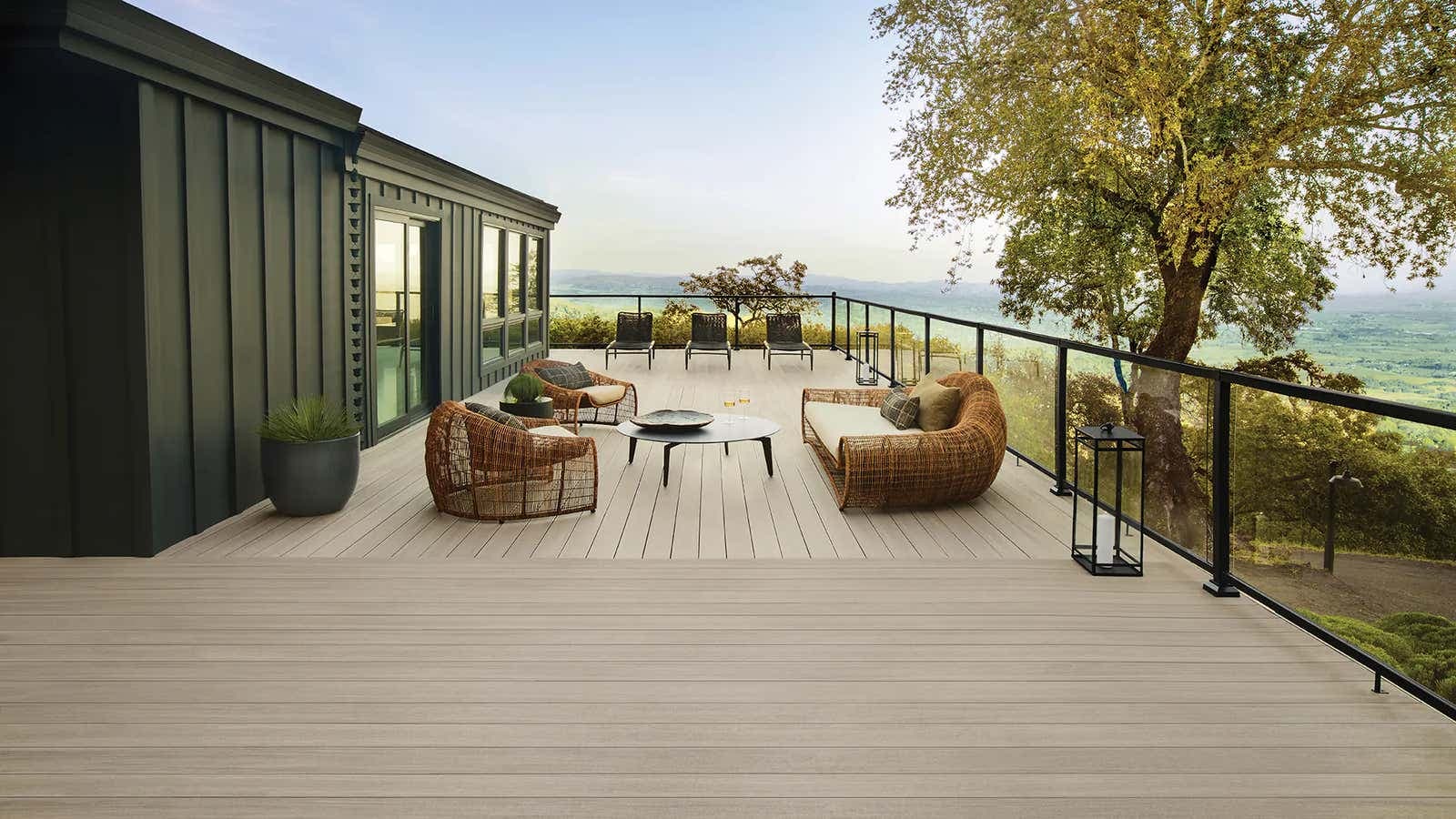
Understanding Composite Decking's Performance in Winter
Composite decking is engineered from a blend of wood fibers and plastic, often with a protective cap that encases the core. This construction helps it resist moisture absorption and degradation compared to traditional wood, which can be prone to rot, warping, and splintering when exposed to repeated freeze-thaw cycles. The capped shell found on many composite boards is designed to shrug off humidity, contributing to its stability in varying temperatures.
However, it is important to understand that no decking material is entirely unaffected by temperature fluctuations. All materials expand and contract with changes in heat and cold. Proper installation with manufacturer-specified gapping is crucial to accommodate this movement and prevent issues like buckling or warping under winter stress. The consistent color and grain of composite boards, compared to natural wood, means that any minor surface changes due to expansion and contraction are less likely to disrupt the overall aesthetic.
Moisture Management and Drainage
Effective moisture management is paramount for any deck exposed to winter conditions. Snow and ice accumulation, followed by melting, introduce significant water to the deck surface and structure. While composite boards resist water absorption, ensuring proper drainage prevents water from pooling on the deck surface or becoming trapped within the substructure.
Design your deck with a slight slope away from any adjacent structures to facilitate water runoff. Adequate spacing between deck boards, as specified by the manufacturer, is also critical. These gaps allow melted snow and ice to drain through, rather than sitting on the surface and potentially refreezing, which can create slip hazards. Consider the placement of gutters and downspouts around your deck to direct roof runoff away from the decking surface.
Snow and Ice Removal
When planning for winter, consider how you will remove snow and ice from your composite deck. Generally, composite decking can withstand snow loads, but regular removal is advisable to prevent excessive accumulation and maintain access. Always use a plastic shovel or snow pusher to clear snow, avoiding metal shovels or sharp tools that can scratch or damage the deck surface. For stubborn ice, consider using rock salt or calcium chloride-based deicers, but always confirm compatibility with your specific composite decking product's manufacturer guidelines. Some deicers can potentially leave a residue or affect the surface finish if not used correctly or rinsed off promptly.
A useful tip is to clear snow relatively soon after it falls, before it compacts or turns to ice, making removal easier and reducing the risk of surface damage. For light dusting or frost, a broom may suffice. Always prioritize safety during snow and ice removal.
Substructure and Ventilation
The substructure beneath your composite deck also plays a vital role in its winter performance. Proper ventilation is essential to prevent moisture buildup, which can lead to mold, mildew, and potential damage to the underlying frame, even if the composite boards themselves are resistant. Ensure there is adequate airflow beneath the deck, especially in areas where snow might drift and accumulate, or where the deck is close to the ground.
For ground-level decks or those with limited clearance, consider strategies to enhance ventilation, such as open lattice skirting or ensuring the perimeter remains clear of obstructions. The framing materials themselves should also be rated for outdoor use and direct ground contact if applicable, to resist moisture-related issues.
While composite decking offers a low-maintenance alternative to traditional wood, it is not maintenance-free. An annual wash with soap and water is typically recommended to keep the deck clean and prevent the buildup of dirt, pollen, and other debris that can trap moisture. This simple step can be performed during milder periods of the year.
During winter, ensure that any potted plants, furniture, or other items that might trap moisture or impede drainage are periodically moved or elevated. This prevents water from sitting in one spot, which could lead to localized staining or ice formation. Regular checks for debris in the gaps between boards can also help maintain proper drainage.
Worked Example: Planning a Composite Deck for a Winter Patio
Consider a hypothetical 10-foot by 12-foot patio deck in an area experiencing regular snowfall. The homeowner wants a durable, low-maintenance surface. They select a capped composite decking board, which typically comes in lengths such as 12, 16, or 20 feet, and a standard width of 5.5 inches.
For a 10-foot width, they will need 22 boards (120 inches / 5.5 inches per board = 21.8, rounded up to 22). Since the deck is 12 feet long, they can use 12-foot boards with no cuts for length, or 16-foot boards cut to 12 feet, with 4-foot offcuts. To minimize waste and simplify installation, 12-foot boards are preferred, requiring 22 boards of this length. This results in 264 linear feet of decking.
To ensure proper drainage, the deck frame will be built with a slight slope of 1/4 inch per foot, away from the house. The deck will be elevated approximately 18 inches off the ground to allow for good ventilation underneath and to facilitate snow removal around the perimeter. The chosen composite decking is compatible with common deicing salts, allowing for safe ice management. The homeowner plans to use a plastic snow shovel to clear snow and will perform an annual soap-and-water wash in spring.
Before you order
- Confirm manufacturer-specific gapping requirements for your chosen composite decking, especially for cold weather.
- Plan for a slight slope (e.g., 1/4 inch per foot) on the deck surface to ensure proper water runoff.
- Verify that the substructure materials are appropriate for the expected moisture exposure and provide adequate ventilation.
- Identify compatible snow removal tools (e.g., plastic shovels) and deicers (if needed) for your specific composite decking product.
- Consider the deck's elevation and proximity to the ground to ensure sufficient airflow and ease of snow clearing.
- Schedule an annual cleaning (e.g., soap and water wash) to prevent debris buildup that can trap moisture.
Confirm installation details, approved uses and warranty terms in the current instructions for the exact product and profile. Your installer should verify the substrate, structure and applicable project requirements.
Questions to help you decide
Can I use rock salt on my composite deck in winter?
It depends on the specific composite decking product. Some composite decking is compatible with rock salt or calcium chloride-based deicers, while others may recommend alternative methods. Always consult the manufacturer's care instructions for your particular decking to confirm compatibility and avoid potential damage or discoloration.
How do I prevent ice from forming on my composite deck?
While it's difficult to completely prevent ice formation in freezing conditions, you can minimize it by ensuring proper drainage. Design the deck with a slight slope, maintain correct board spacing, and promptly clear snow before it melts and refreezes. Using compatible deicers can also help manage ice.
Does composite decking become more brittle in cold weather?
Composite decking is engineered to withstand a range of temperatures. While all materials exhibit some change in properties with extreme cold, composite decking is designed to remain durable and resistant to cracking or brittleness in typical winter conditions. Following manufacturer installation guidelines for gapping helps accommodate temperature-induced expansion and contraction, which is key to long-term performance.
Ready to Plan Your Winter-Ready Composite Deck?
Request a material quote for composite decking with your project dimensions, desired profile, and ZIP code. Confirm current availability and service options to get started.
Request a material quote →